
Pulp Fiction, 1865 · page 123 of 400
The Argosy — page 123: what you’re looking at
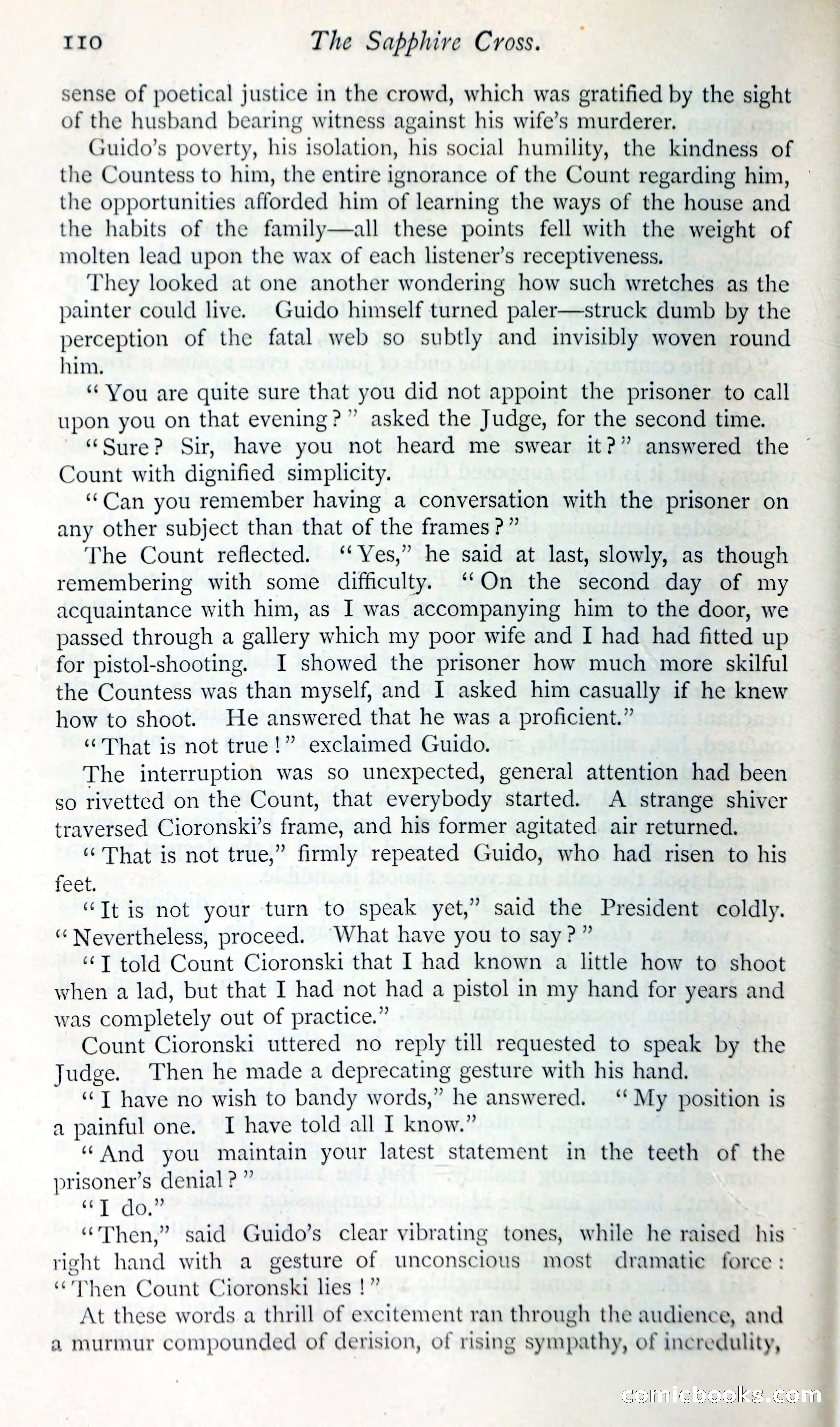
A restored page from Pulp Fiction, 1865. Page through the whole issue in the reader above.
📄 Transcribed text from this page (OCR, searchable)
Machine-transcribed from the original scan — historical spelling and the odd misread are preserved.
IIo The Sapphire Cross. sense of poetical justice in the crowd, which was gratified by the sight of the husband bearing witness against his wife’s murderer. Guido’s poverty, his isolation, his social humility, the kindness of the Countess to him, the entire ignorance of the Count regarding him, the opportunities afforded him of learning the ways of the house and the habits of the family—all these points fell with the weight of molten lead upon the wax of each listener’s receptiveness. They looked at one another wondering how such wretches as the painter could live. Guido himself turned paler—struck dumb by the perception of the fatal web so subtly and invisibly woven round him. ‘Vou are quite sure that you did not appoint the prisoner to call upon you on that evening?” asked the Judge, for the second time. ‘Sure? Sir, have you not heard me swear it?” answered the Count with dignified simplicity. ‘Can you remember having a conversation with the prisoner on any other subject than that of the frames?” — The Count reflected. ‘‘ Yes,” he said at last, slowly, as though remembering with some difficulty. ‘On the second day of my acquaintance with him, as I was accompanying him to the door, we passed through a gallery which my poor wife and I had had fitted up for pistol-shooting. I showed the prisoner how much more skilful the Countess was than myself, and I asked him casually if he knew how to shoot. He answered that he was a proficient.” ‘That is not true!” exclaimed Guido. The interruption was so unexpected, general attention had been so rivetted on the Count, that everybody started. A strange shiver traversed Cioronski’s frame, and his former agitated air returned. ‘That is not true,” firmly repeated Guido, who had risen to his feet. “Tt is not your turn to speak yet,’ said the President coldly. ‘Nevertheless, proceed. What have you to say?” ‘¢T told Count Cioronski that I had known a little how to shoot when a lad, but that I had not had a pistol in my hand for years and was completely out of practice.” Count Cioronski uttered no reply till requested to speak by the Judge. Then he made a deprecating gesture with his hand. ‘‘T have no wish to bandy words,” he answered. ‘‘ My position is a painful one. I have told all I know.” “And you maintain your latest statement in the teeth of the prisoner’s denial ? ” ode.” “Then,” said Guido’s clear vibrating tones, while he raised his right hand with a gesture of unconscious most dramatic force : “Then Count Cioronski hes !” At these words a thrill of excitement ran through the audience, and a murmur compounded of derision, of rising sympathy, of incredulity, Eomichooksnco