
Pulp Fiction, 1865 · page 112 of 400
The Argosy — page 112: what you’re looking at
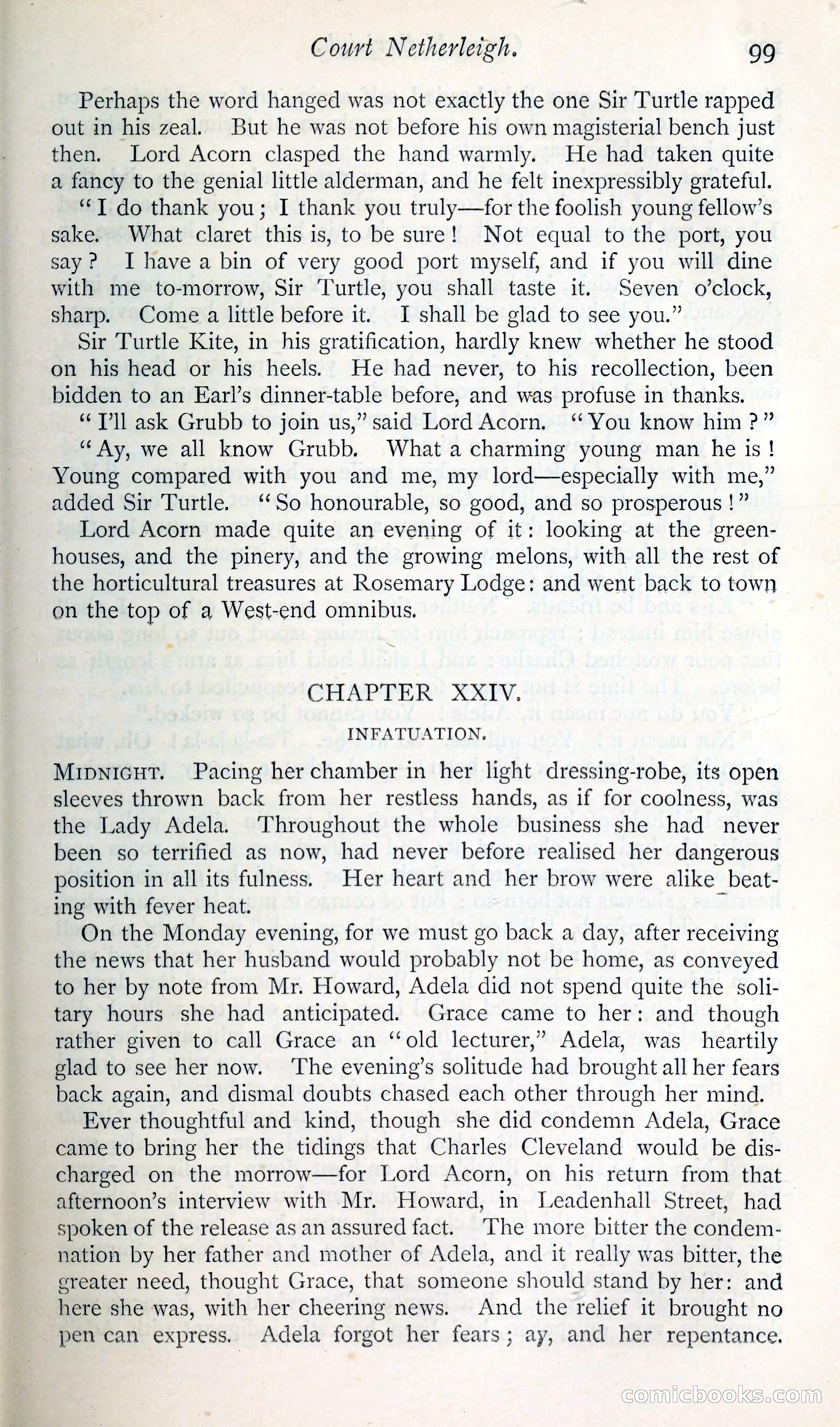
A restored page from Pulp Fiction, 1865. Page through the whole issue in the reader above.
📄 Transcribed text from this page (OCR, searchable)
Machine-transcribed from the original scan — historical spelling and the odd misread are preserved.
Court Netherleigh. 99 Perhaps the word hanged was not exactly the one Sir Turtle rapped out in his zeal. But he was not before his own magisterial bench just then. Lord Acorn clasped the hand warmly. He had taken quite a fancy to the genial little alderman, and he felt inexpressibly grateful. ‘IT do thank you; I thank you truly—for the foolish young fellow’s sake. What claret this 1s, to be sure! Not equal to the port, you say? I havea bin of very good port myself, and if you will dine with me to-morrow, Sir Turtle, you shall taste it. Seven o’clock, sharp. Come a little before it. I shall be glad to see you.” Sir Turtle Kite, in his gratification, hardly knew whether he stood on his head or his heels. He had never, to his recollection, been bidden to an Earl’s dinner-table before, and was profuse in thanks, T’ll ask Grubb to join us,” said Lord Acorn. ‘‘ You know him ?” “Ay, we all know Grubb. What a charming young man hes! Young compared with you and me, my lord—especially with me,” added Sir Turtle. ‘‘So honourable, so good, and so prosperous !” Lord Acorn made quite an evening of it: looking at the green- houses, and the pinery, and the growing melons, with all the rest of the horticultural treasures at Rosemary Lodge: and went back to town on the top of a West-end omnibus. | CHAPTER XXIV, INFATUATION. Mipnicut. Pacing her chamber in her light dressing-robe, its open sleeves thrown back from her restless hands, as if for coolness, was the Lady Adela. ‘Throughout the whole business she had never been so terrified as now, had never before realised her dangerous position in all its fulness. Her heart and her brow were alike beat- ing with fever heat. a On the Monday evening, for we must go back a day, after receiving the news that her husband would probably not be home, as conveyed to her by note from Mr. Howard, Adela did not spend quite the soli- tary hours she had anticipated. Grace came to her: and though rather given to call Grace an ‘‘old lecturer,” Adela, was heartily glad to see her now. ‘The evening’s solitude had brought all her fears back again, and dismal doubts chased each other through her mind. Ever thoughtful and kind, though she did condemn Adela, Grace came to bring her the tidings that Charles Cleveland would be dis- charged on the morrow—for Lord Acorn, on his return from that afternoon’s interview with Mr. Howard, in Leadenhall Street, had spoken of the release as an assured fact. ‘The more bitter the condem- nation by her father and mother of Adela, and it really was bitter, the ereater need, thought Grace, that someone should stand by her: and here she was, with her cheering news. And the relief it brought no pen can express. Adela forgot her fears; ay, and her repentance. CONnNICLOOOKS.EO