
Pulp Fiction, 1865 · page 105 of 400
The Argosy — page 105: what you’re looking at
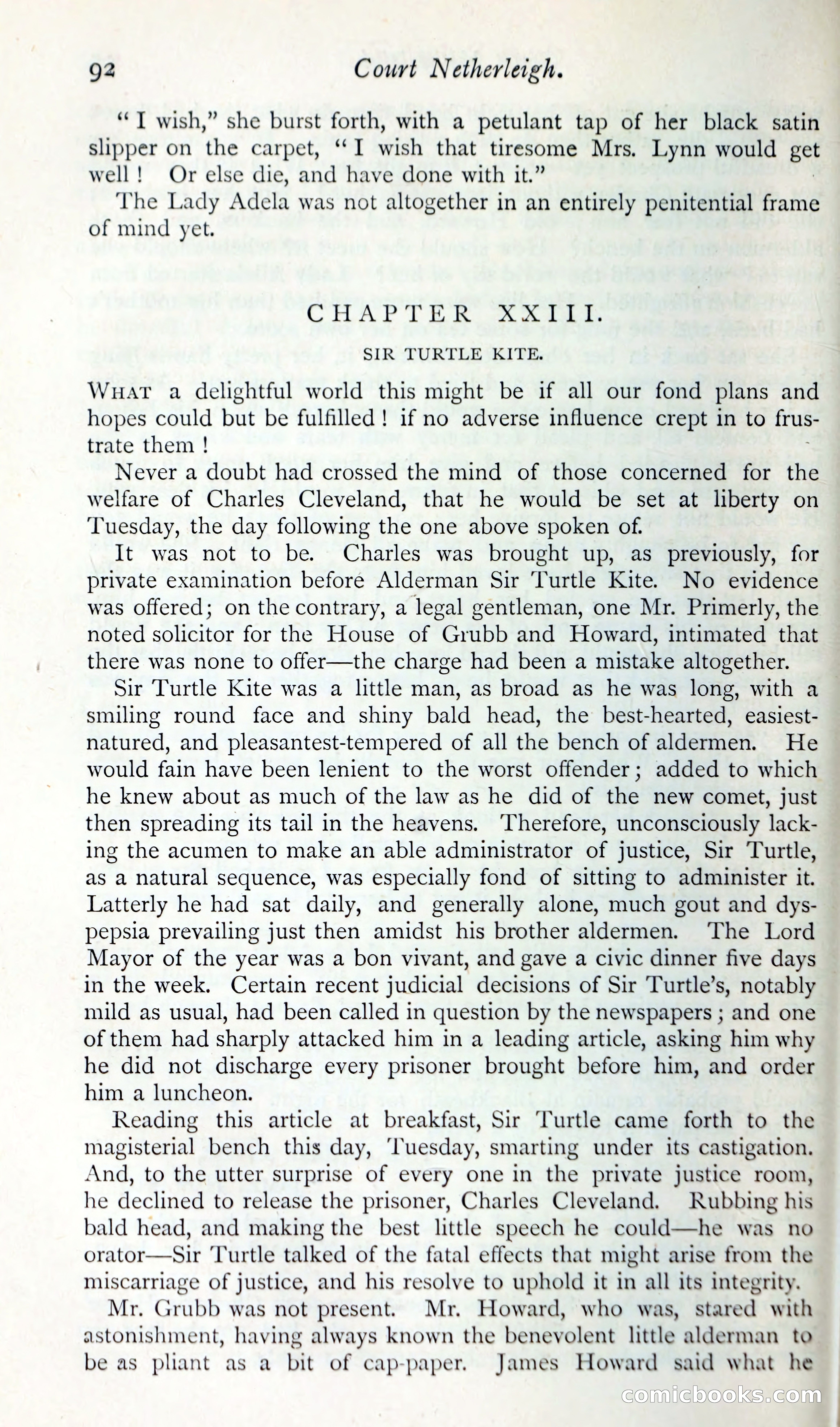
A restored page from Pulp Fiction, 1865. Page through the whole issue in the reader above.
📄 Transcribed text from this page (OCR, searchable)
Machine-transcribed from the original scan — historical spelling and the odd misread are preserved.
92 Court Netherleigh. “T wish,” she burst forth, with a petulant tap of her black satin slipper on the carpet, ‘I wish that tiresome Mrs. Lynn would get well! Or else die, and have done with it.” ‘The Lady Adela was not altogether in an entirely penitential frame of mind yet. CHAPTER Axaae SIR TURTLE KITE. Wuat a delightful world this might be if all our fond plans and hopes could but be fulfilled! if no “adverse influence crept in to frus- trate them ! Never a doubt had crossed the mind of those concerned for the welfare of Charles Cleveland, that he would be set at liberty on Tuesday, the day following the one above spoken of. It was not to be. Charles was brought up, as previously, for private examination before Alderman Sir ‘Turtle Kite. No evidence was offered; on the contrary, a legal gentleman, one Mr. Primerly, the noted solicitor for the House of Grubb and Howard, intimated that there was none to offer—the charge had been a mistake altogether. Sir Turtle Kite was a little man, as broad as he was long, with a smiling round face and shiny bald head, the best-hearted, easiest- natured, and pleasantest-tempered of all the bench of aldermen. He would fain have been lenient to the worst offender; added to which he knew about as much of the law as he did of the new comet, just then spreading its tail in the heavens. Therefore, unconsciously lack- ing the acumen to make an able administrator of justice, Sir Turtle, as a natural sequence, was especially fond of sitting to administer it. Latterly he had sat daily, and generally alone, much gout and dys- pepsia prevailing just then amidst his brother aldermen. ‘The Lord Mayor of the year was a bon vivant, and gave a civic dinner five days in the week. Certain recent judicial decisions of Sir Turtle’s, notably mild as usual, had been called in question by the newspapers ; and one of them had sharply attacked him in a leading article, asking him why he did not discharge every prisoner brought before him, and order him a luncheon. Reading this article at breakfast, Sir Turtle came forth to the magisterial bench this day, ‘Tuesday, smarting under its castigation. And, to the utter surprise of every one in the private justice room, he declined to release the prisoner, Charles Cleveland. Rubbing his bald head, and making the best little speech he could—he was no orator—Sir Turtle talked of the fatal effects that might arise from the miscarriage of justice, and his resolve to uphold it in all its integrity. Mr. Grubb was not present. Mr. Howard, who was, stared with astonishment, having always known the benevolent little alderman to be as pliant as a bit of cap-paper. James Howard said what he Comichbooksieom