
Pulp Fiction, 1865 · page 332 of 400
The Argosy — page 332: what you’re looking at
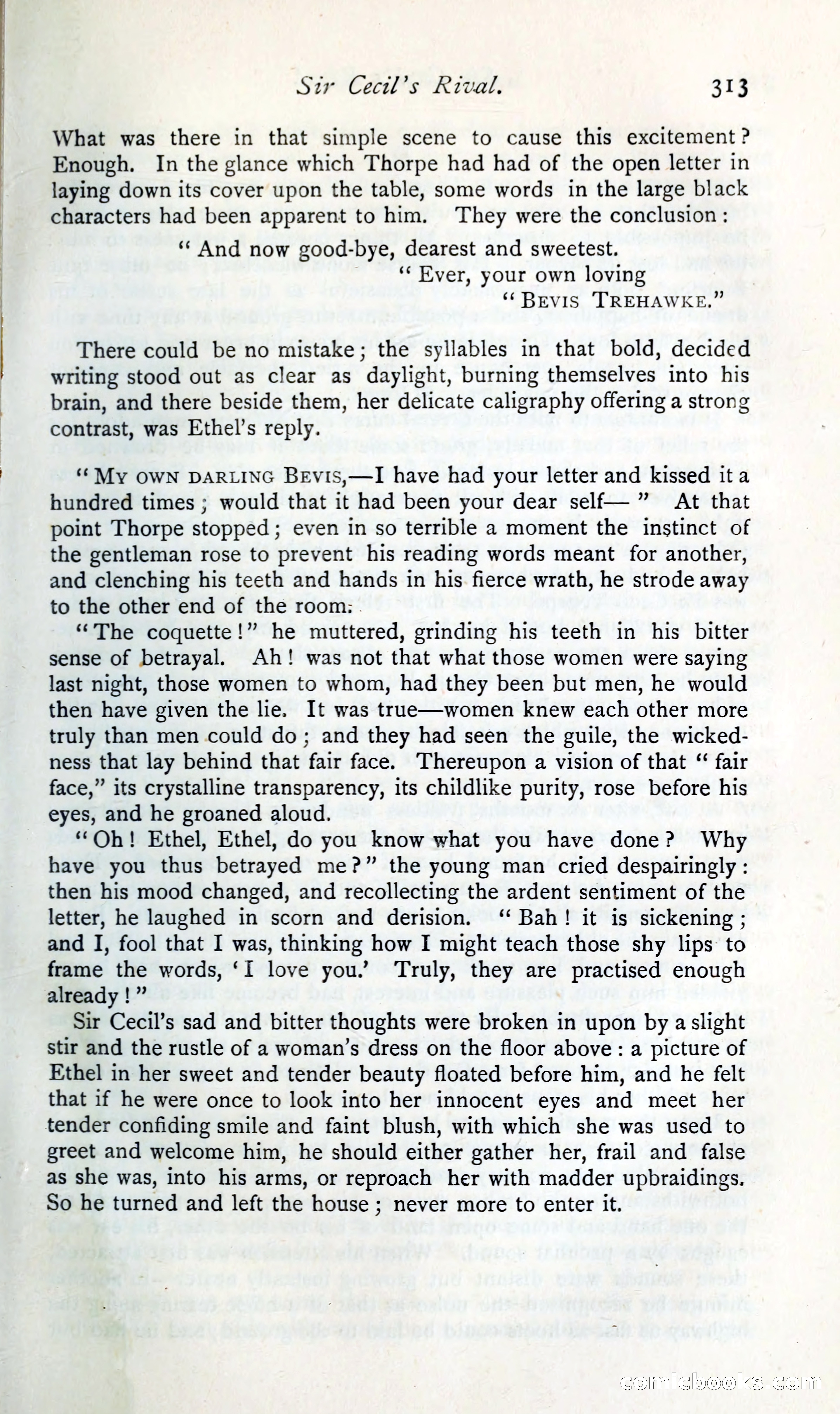
A restored page from Pulp Fiction, 1865. Page through the whole issue in the reader above.
📄 Transcribed text from this page (OCR, searchable)
Machine-transcribed from the original scan — historical spelling and the odd misread are preserved.
Sir Cecil’s Rival. 313 What was there in that simple scene to cause this excitement? Enough. In the glance which Thorpe had had of the open letter in laying down its cover upon the table, some words in the large black characters had been apparent to him. They were the conclusion: ‘* And now good-bye, dearest and sweetest. ' Ever, your own loving “Bevis TREHAWKE.” There could be no mistake; the syllables in that bold, decided writing stood out as clear as daylight, burning themselves into his brain, and there beside them, her delicate caligraphy offering a strong contrast, was Ethel’s reply. ‘My OWN DARLING BeEvis,—I have had your letter and kissed ita hundred times ; would that it had been your dear self— ” At that point Thorpe stopped; even in so terrible a moment the instinct of the gentleman rose to prevent his reading words meant for another, and clenching his teeth and hands in his fierce wrath, he strode away to the other end of the room: “The coquette!” he muttered, grinding his teeth in his bitter sense of betrayal. Ah! was not that what those women were saying last night, those women to whom, had they been but men, he would then have given the lie. It was true—women knew each other more truly than men could do; and they had seen the guile, the wicked- ness that lay behind that fair face. Thereupon a vision of that ‘‘ fair face,” its crystalline transparency, its childlike purity, rose before his eyes, and he groaned aloud. “Oh! Ethel, Ethel, do you know what you have done? Why have you thus betrayed me?” the young man cried despairingly : then his mood changed, and recollecting the ardent sentiment of the letter, he laughed in scorn and derision. ‘ Bah! it is sickening ; and I, fool that I was, thinking how I might teach those shy lips: to frame the words, ‘I love you.’ ‘Truly, they are practised enough already!” Sir Cecil’s sad and bitter thoughts were broken in upon by aslight stir and the rustle of a woman’s dress on the floor above: a picture of Ethel in her sweet and tender beauty floated before him, and he felt that if he were once to look into her innocent eyes and meet her tender confiding smile and faint blush, with which she was used to greet and welcome him, he should either gather her, frail and false as she was, into his arms, or reproach her with madder upbraidings. So he turned and left the house; never more to enter it. connicloooKks (SO) im