
Pulp Fiction, 1865 · page 317 of 400
The Argosy — page 317: what you’re looking at
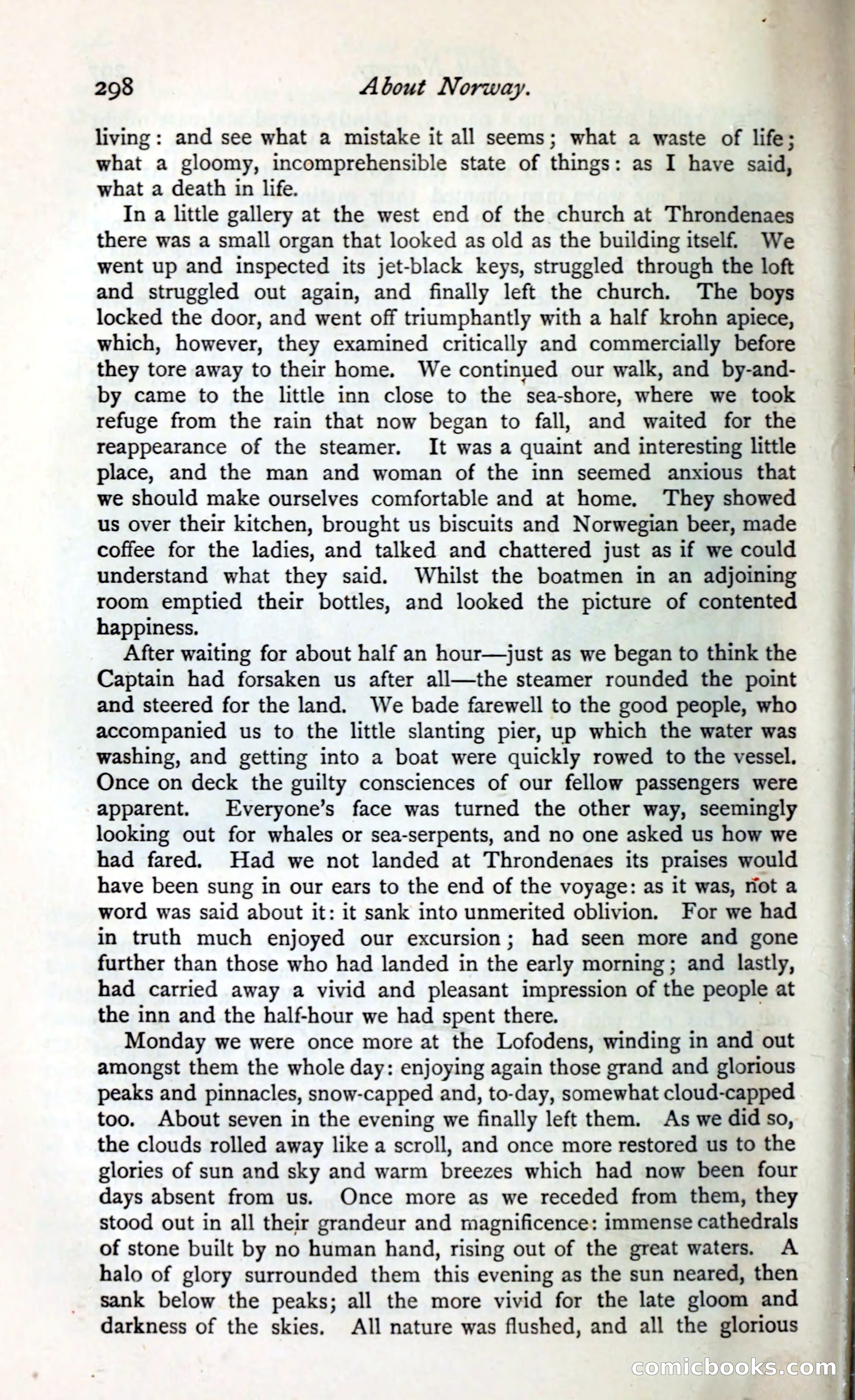
A restored page from Pulp Fiction, 1865. Page through the whole issue in the reader above.
📄 Transcribed text from this page (OCR, searchable)
Machine-transcribed from the original scan — historical spelling and the odd misread are preserved.
298 About Norway. living: and see what a mistake it all seems; what a waste of life; what a gloomy, incomprehensible state of things: as I have said, what a death in life. In a little gallery at the west end of the church at Throndenaes there was a small organ that looked as old as the building itself. We went up and inspected its jet-black keys, struggled through the loft and struggled out again, and finally left the church. The boys locked the door, and went off triumphantly with a half krohn apiece, which, however, they examined critically and commercially before they tore away to their home. We continued our walk, and by-and- by came to the little inn close to the sea-shore, where we took refuge from the rain that now began to fall, and waited for the reappearance of the steamer. It was a quaint and interesting little place, and the man and woman of the inn seemed anxious that we should make ourselves comfortable and at home. They showed us over their kitchen, brought us biscuits and Norwegian beer, made coffee for the ladies, and talked and chattered just as if we could understand what they said. Whilst the boatmen in an adjoining room emptied their bottles, and looked the picture of contented happiness. After waiting for about half an hour—just as we began to think the Captain had forsaken us after all—the steamer rounded the point and steered for the land. We bade farewell to the good people, who accompanied us to the little slanting pier, up which the water was washing, and getting into a boat were quickly rowed to the vessel. — Once on deck the guilty consciences of our fellow passengers were apparent. Everyone’s face was turned the other way, seemingly looking out for whales or sea-serpents, and no one asked us how we had fared. Had we not landed at Throndenaes its praises would have been sung in our ears to the end of the voyage: as it was, not a word was said about it: it sank into unmerited oblivion. For we had in truth much enjoyed our excursion; had seen more and gone further than those who had landed in the early morning; and lastly, had carried away a vivid and pleasant impression of the people at the inn and the half-hour we had spent there. Monday we were once more at the Lofodens, winding in and out amongst them the whole day: enjoying again those grand and glorious peaks and pinnacles, snow-capped and, to-day, somewhat cloud-capped too. About seven in the evening we finally left them. As we did so, the clouds rolled away like a scroll, and once more restored us to the glories of sun and sky and warm breezes which had now been four days absent from us. Once more as we receded from them, they stood out in all their grandeur and magnificence: immense cathedrals of stone built by no human hand, rising out of the great waters. A halo of glory surrounded them this evening as the sun neared, then sank below the peaks; all the more vivid for the late gloom and darkness of the skies. All nature was flushed, and all the glorious Gomilebooks.;com