
Pulp Fiction, 1865 · page 229 of 400
The Argosy — page 229: what you’re looking at
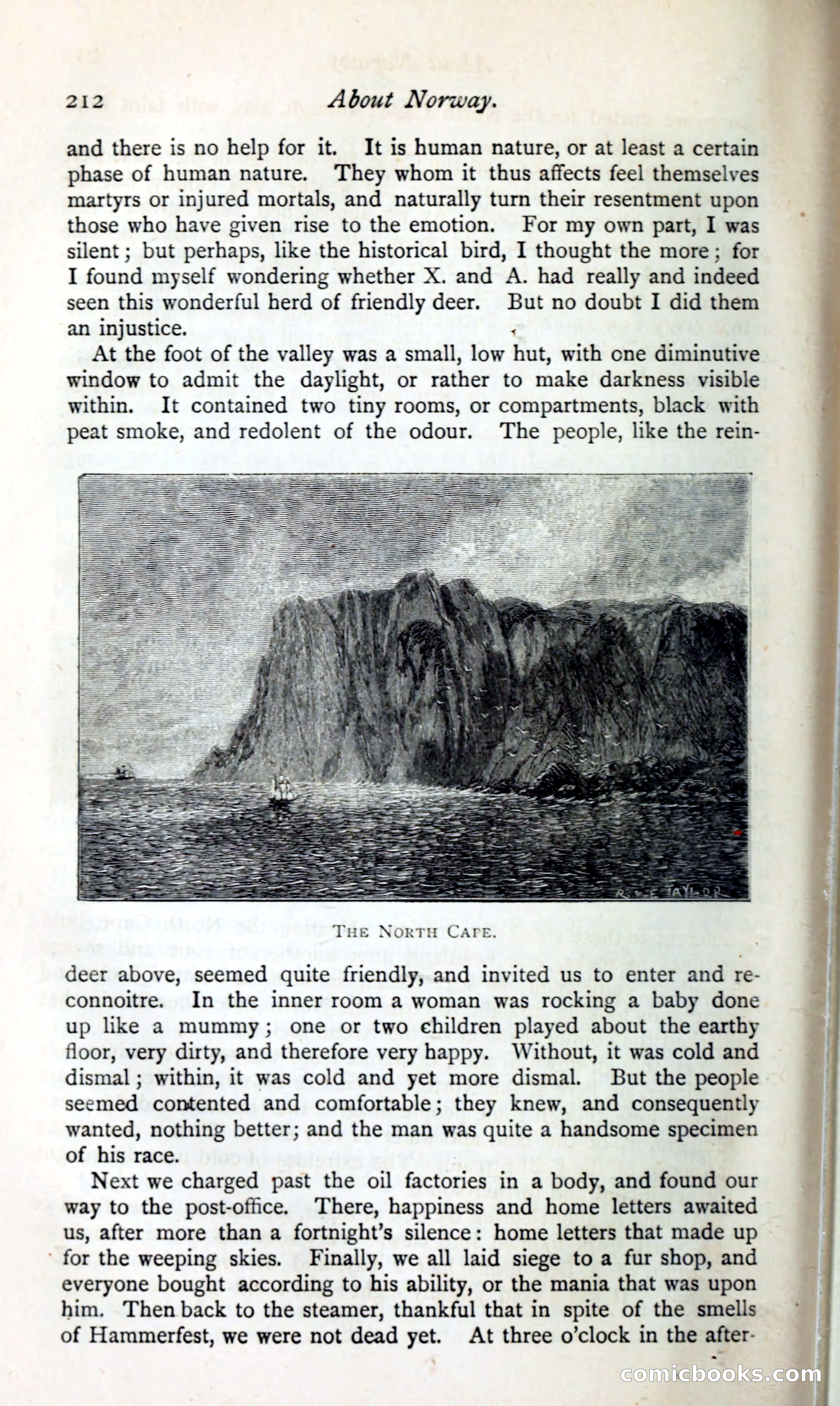
A restored page from Pulp Fiction, 1865. Page through the whole issue in the reader above.
📄 Transcribed text from this page (OCR, searchable)
Machine-transcribed from the original scan — historical spelling and the odd misread are preserved.
212 About Norway. and there is no help for it. It is human nature, or at least a certain phase of human nature. They whom it thus affects feel themselves martyrs or injured mortals, and naturally turn their resentment upon those who have given rise to the emotion. For my own part, I was silent ; but perhaps, like the historical bird, I thought the more; for I found myself wondering whether X. and A. had really and indeed seen this wonderful herd of friendly deer. But no doubt I did them an injustice. ‘ At the foot of the valley was a small, low hut, with one diminutive window to admit the daylight, or rather to make darkness visible within. It contained two tiny rooms, or compartments, black with peat smoke, and redolent of the odour. The people, like the rein- H i mM | | ( tT ——S=S=—SSSSSS—=_ = SSS = Se : = ——— THE NORTH CAPE. deer above, seemed quite friendly, and invited us to enter and re- connoitre. In the inner room a woman was rocking a baby done up like a mummy; one or two children played about the earthy floor, very dirty, and therefore very happy. Without, it was cold and dismal ; within, it was cold and yet more dismal. But the people seemed contented and comfortable; they knew, and consequently wanted, nothing better; and the man was quite a handsome specimen of his race. Next we charged past the oil factories in a body, and found our way to the post-office. There, happiness and home letters awaited us, after more than a fortnight’s silence: home letters that made up for the weeping skies. Finally, we all laid siege to a fur shop, and everyone bought according to his ability, or the mania that was upon him. Then back to the steamer, thankful that in spite of the smells of Hammerfest, we were not dead yet. At three o’clock in the after- , ~ ie, Wey Gomicbooks (ele)