
Pulp Fiction, 1865 · page 227 of 400
The Argosy — page 227: what you’re looking at
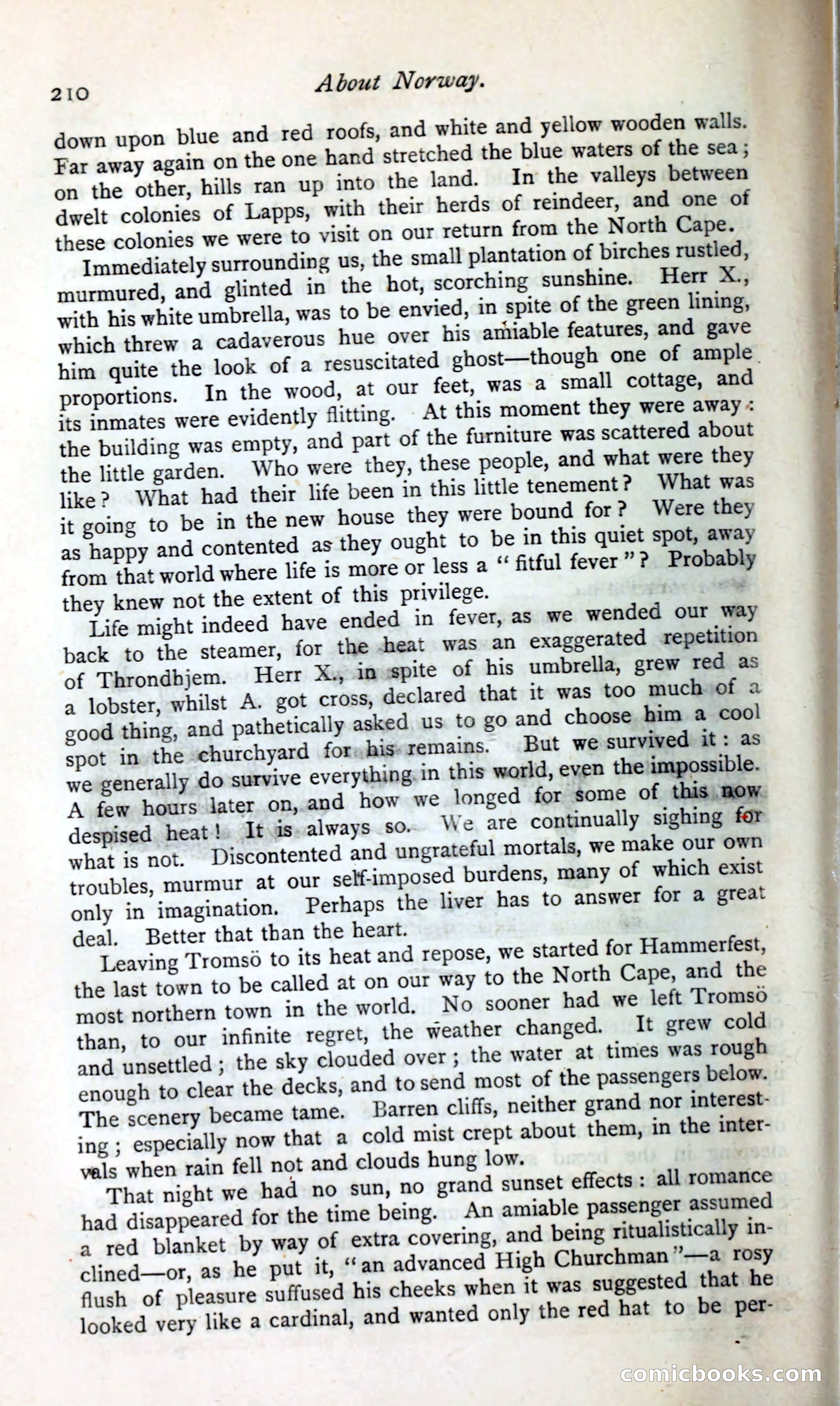
A restored page from Pulp Fiction, 1865. Page through the whole issue in the reader above.
📄 Transcribed text from this page (OCR, searchable)
Machine-transcribed from the original scan — historical spelling and the odd misread are preserved.
210 About Norway. down upon blue and red roofs, and white and yellow wooden walls. Far away again on the one hand stretched the blue waters of the sea ; on the other, hills ran up into the land. In the valleys between dwelt colonies of Lapps, with their herds of reindeer, and one of these colonies we were to visit on our return from the North Cape. Immediately surrounding us, the small plantation of birches rustled, murmured, and glinted in the hot, scorching sunshine. Herr X., with his white umbrella, was to be envied, in spite of the green lining, which threw a cadaverous hue over his amiable features, and gave him quite the look of a resuscitated ghost—though one of ample proportions. In the wood, at our feet, was a small cottage, and ‘ts inmates were evidently flitting. At this moment they were away « the building was empty, and part of the furniture was scattered about the little garden. Who were they, these people, and what were they like? What had their life been in this little tenement? What was it going to be in the new house they were bound for? Were they as happy and contented as they ought to be in this quiet spot, away from that world where life is more or less a “fitful fever”? Probably they knew not the extent of this privilege. ) oe Life might indeed have ended in fever, as we wended our way back to the steamer, for the -heat was an exaggerated repetition of Throndhjem. Herr X., in spite of his umbrella, grew red as a lobster, whilst A. got cross, declared that it was too much of a good thing, and pathetically asked us to go and choose him a cool spot in the churchyard for higexemains. But we survived it: as we generally do survive everything. in this world, even the impossible. A few hours later on,.and how we longed for some of this, mow. despised heat! It as. always so. We are continually sighing for what is not. Discontented and ungrateful mortals, we make our own troubles, murmur at our self-imposed burdens, many of which exist only in imagination. Perhaps the liver has to answer for a great deal. Better that than the heart. . Leaving Troms6 to its heat and repose, we started for Hammerfest, the last town to be called at on our way to the North Cape, and the most northern town in the world. No sooner had we left Tromso than, to our infinite regret, the weather changed. It grew cold and unsettled ; the sky clouded over ; the water at times was rough enough to clear the decks, and to send most of the passengers below. | The scenery became tame. Barren cliffs, neither grand nor interest- ing ; especially now that a cold mist crept about them, in the inter- vals when rain fell not and clouds hung low. That night we had no sun, no grand sunset effects : all romance had disappeared for the time being. An amiable passenger assumed a red blanket by way of extra covering, and being ritualistically in- clined—or, as he put it, “an advanced High Churchman ”—a rosy flush of pleasure suffused his cheeks when it was suggested that he looked very like a cardinal, and wanted only the red hat to be per-— Gomicbooks.com