
Pulp Fiction, 1865 · page 99 of 400
The Argosy — page 99: what you’re looking at
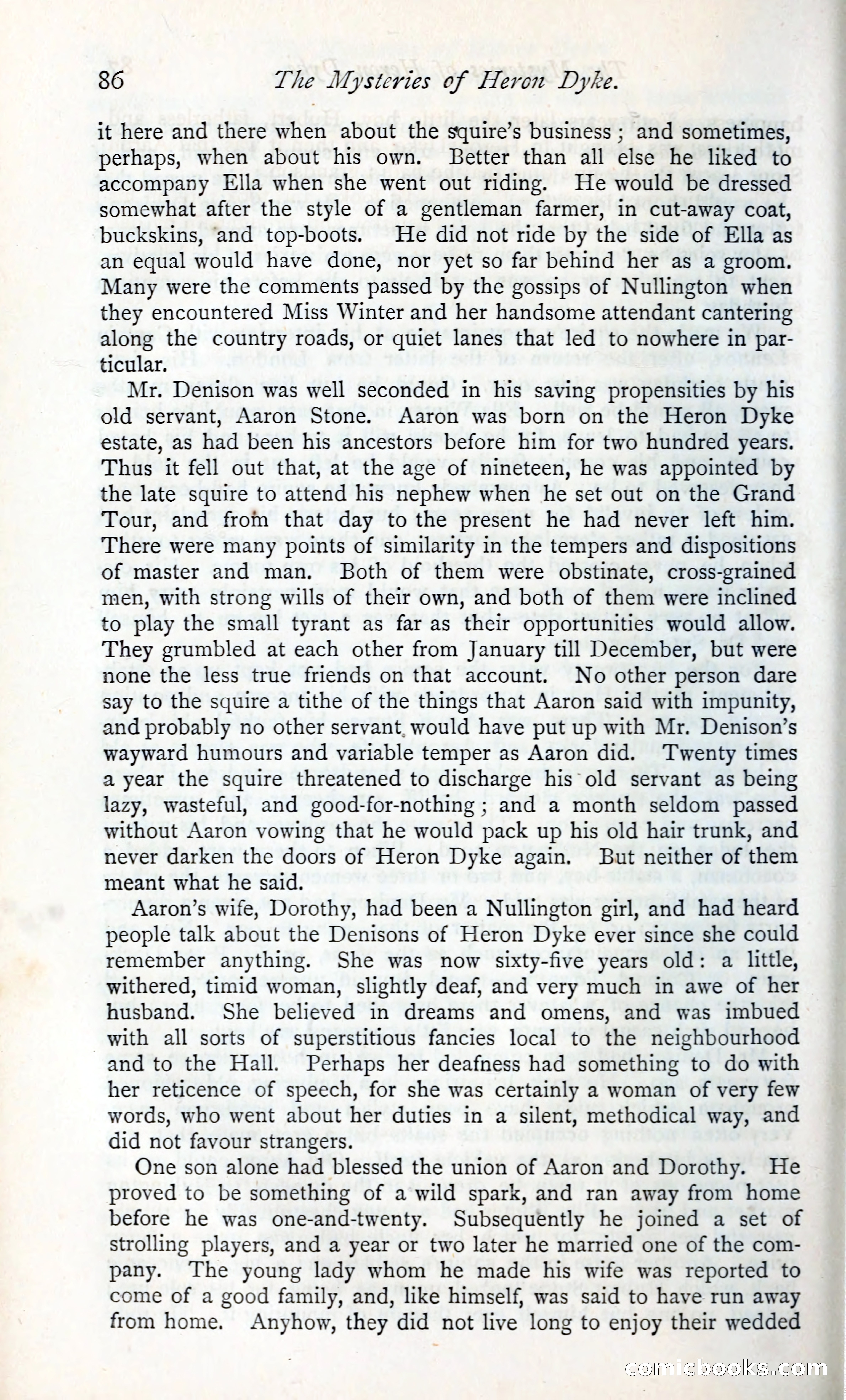
A restored page from Pulp Fiction, 1865. Page through the whole issue in the reader above.
📄 Transcribed text from this page (OCR, searchable)
Machine-transcribed from the original scan — historical spelling and the odd misread are preserved.
86 The Mysteries of Heron Dyke. it here and there when about the squire’s business ; and sometimes, perhaps, when about his own. Better than all else he liked to accompany Ella when she went out riding. He would be dressed somewhat after the style of a gentleman farmer, in cut-away coat, buckskins, and top-boots. He did not ride by the side of Ella as an equal would have done, nor yet so far behind her as a groom. Many were the comments passed by the gossips of Nullington when they encountered Miss Winter and her handsome attendant cantering along the country roads, or quiet lanes that led to nowhere in par- ticular. Mr. Denison was well seconded in his saving propensities by his old servant, Aaron Stone. Aaron was born on the Heron Dyke estate, as had been his ancestors before him for two hundred years. Thus it fell out that, at the age of nineteen, he was appointed by the late squire to attend his nephew when he set out on the Grand Tour, and from that day to the present he had never left him. There were many points of similarity in the tempers and dispositions of master and man. Both of them were obstinate, cross-grained men, with strong wills of their own, and both of them were inclined to play the small tyrant as far as their opportunities would allow. They grumbled at each other from January till December, but were none the less true friends on that account. No other person dare say to the squire a tithe of the things that Aaron said with impunity, and probably no other servant, would have put up with Mr. Denison’s wayward humours and variable temper as Aaron did. ‘Twenty times a year the squire threatened to discharge his old servant as being lazy, wasteful, and good-for-nothing ; and a month seldom passed without Aaron vowing that he would pack up his old hair trunk, and never darken the doors of Heron Dyke again. But neither of them meant what he said. Aaron’s wife, Dorothy, had been a Nullington girl, and had heard people talk about the Denisons of Heron Dyke ever since she could remember anything. She was now sixty-five years old: a little, withered, timid woman, slightly deaf, and very much in awe of her husband. She believed in dreams and omens, and was imbued with all sorts of superstitious fancies local to the neighbourhood and to the Hall. Perhaps her deafness had something to do with her reticence of speech, for she was certainly a woman of very few words, who went about her duties in a silent, methodical way, and did not favour strangers. One son alone had blessed the union of Aaron and Dorothy. He proved to be something of a wild spark, and ran away from home before he was one-and-twenty. Subsequently he joined a set of strolling players, and a year or two later he married one of the com- pany. The young lady whom he made his wife was reported to come of a good family, and, like himself, was said to have run away from home. Anyhow, they did not live long to enjoy their wedded m ECORNICLIOOKS, (EC)