
Pulp Fiction, 1865 · page 355 of 400
The Argosy — page 355: what you’re looking at
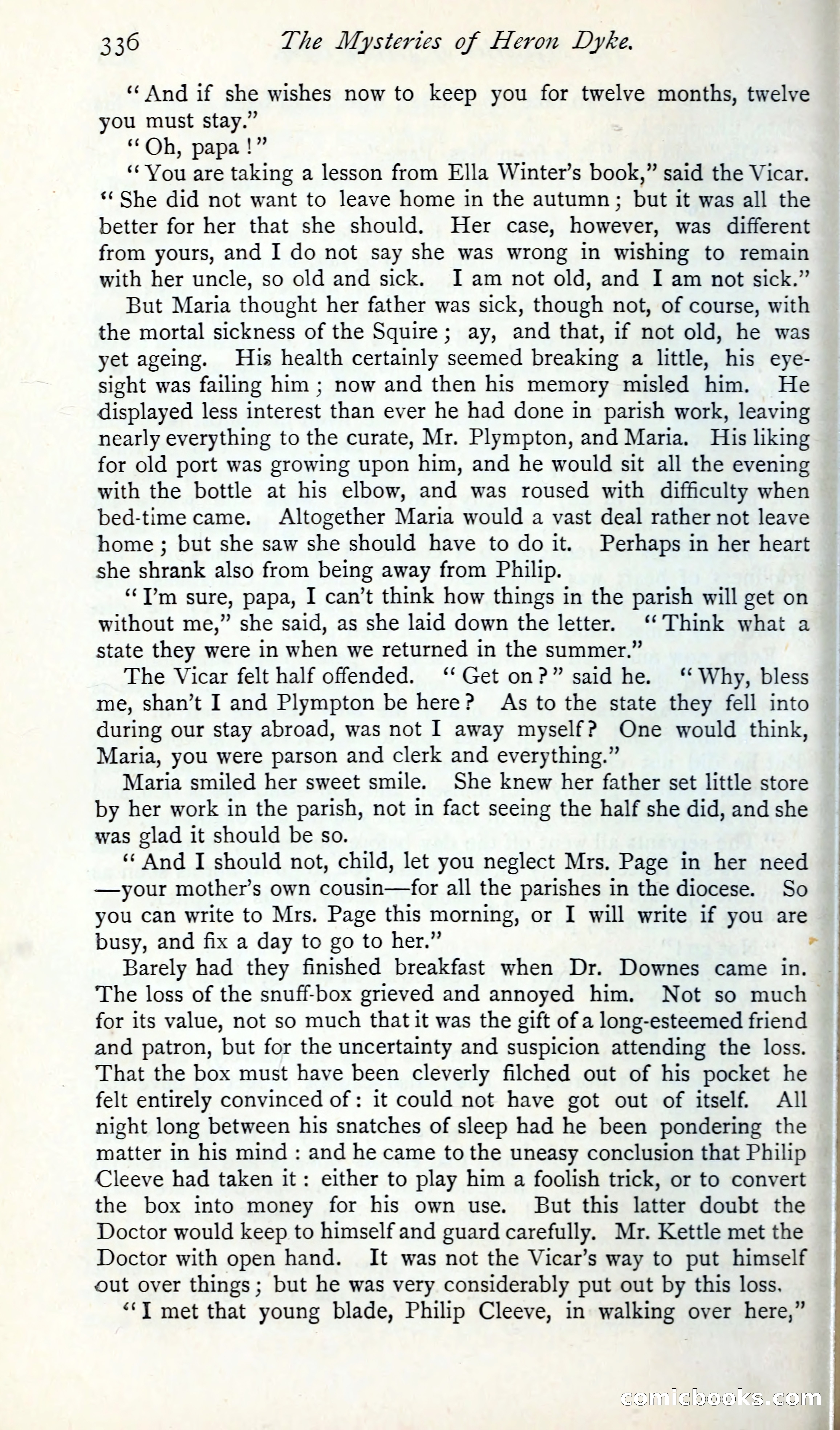
A restored page from Pulp Fiction, 1865. Page through the whole issue in the reader above.
📄 Transcribed text from this page (OCR, searchable)
Machine-transcribed from the original scan — historical spelling and the odd misread are preserved.
330 The Mysteries of Fleron Dyke. ‘And if she wishes now to keep you for twelve months, twelve you must stay.” “Oh, papa!” ‘Vou are taking a lesson from Ella Winter’s book,” said the Vicar. ‘¢ She did not want to leave home in the autumn; but it was all the better for her that she should. Her case, however, was different from yours, and I do not say she was wrong in wishing to remain with her uncle, so old and sick. Jam not old, and I am not sick.” But Maria thought her father was sick, though not, of course, with the mortal sickness of the Squire; ay, and that, if not old, he was yet ageing. His health certainly seemed breaking a little, his eye- sight was failing him ; now and then his memory misled him. He displayed less interest than ever he had done in parish work, leaving nearly everything to the curate, Mr. Plympton, and Maria. His liking for old port was growing upon him, and he would sit all the evening with the bottle at his elbow, and was roused with difficulty when bed-time came. Altogether Maria would a vast deal rather not leave home ; but she saw she should have to doit. Perhaps in her heart she shrank also from being away from Philip. ‘‘T’m sure, papa, I can’t think how things in the parish will get on without me,” she said, as she laid down the letter. ‘‘ Think what a state they were in when we returned in the summer.” The Vicar felt half offended. ‘‘ Get on?” said he. ‘‘ Why, bless me, shan’t I and Plympton be here? As to the state they fell into during our stay abroad, was not I away myself? One would think, Maria, you were parson and clerk and everything.” Maria smiled her sweet smile. She knew her father set little store by her work in the parish, not in fact seeing the half she did, and she was glad it should be so. ‘And I should not, child, let you neglect Mrs. Page in her need —your mother’s own cousin—for all the parishes in the diocese. So you can write to Mrs. Page this morning, or I will write if you are busy, and fix a day to go to her.” r Barely had they finished breakfast when Dr. Downes came in. The loss of the snuff-box grieved and annoyed him. Not so much for its value, not so much that it was the gift of a long-esteemed friend and patron, but for the uncertainty and suspicion attending the loss. That the box must have been cleverly filched out of his pocket he felt entirely convinced of: it could not have got out of itself. All night long between his snatches of sleep had he been pondering the matter in his mind : and he came to the uneasy conclusion that Philip Cleeve had taken it: either to play him a foolish trick, or to convert the box into money for his own use. But this latter doubt the Doctor would keep to himself and guard carefully. Mr. Kettle met the Doctor with open hand. It was not the Vicar’s way to put himself out over things; but he was very considerably put out by this loss, “‘T met that young blade, Philip Cleeve, in walking over here,” COMMIECMDOOKS COL 9)