
Pulp Fiction, 1865 · page 342 of 400
The Argosy — page 342: what you’re looking at
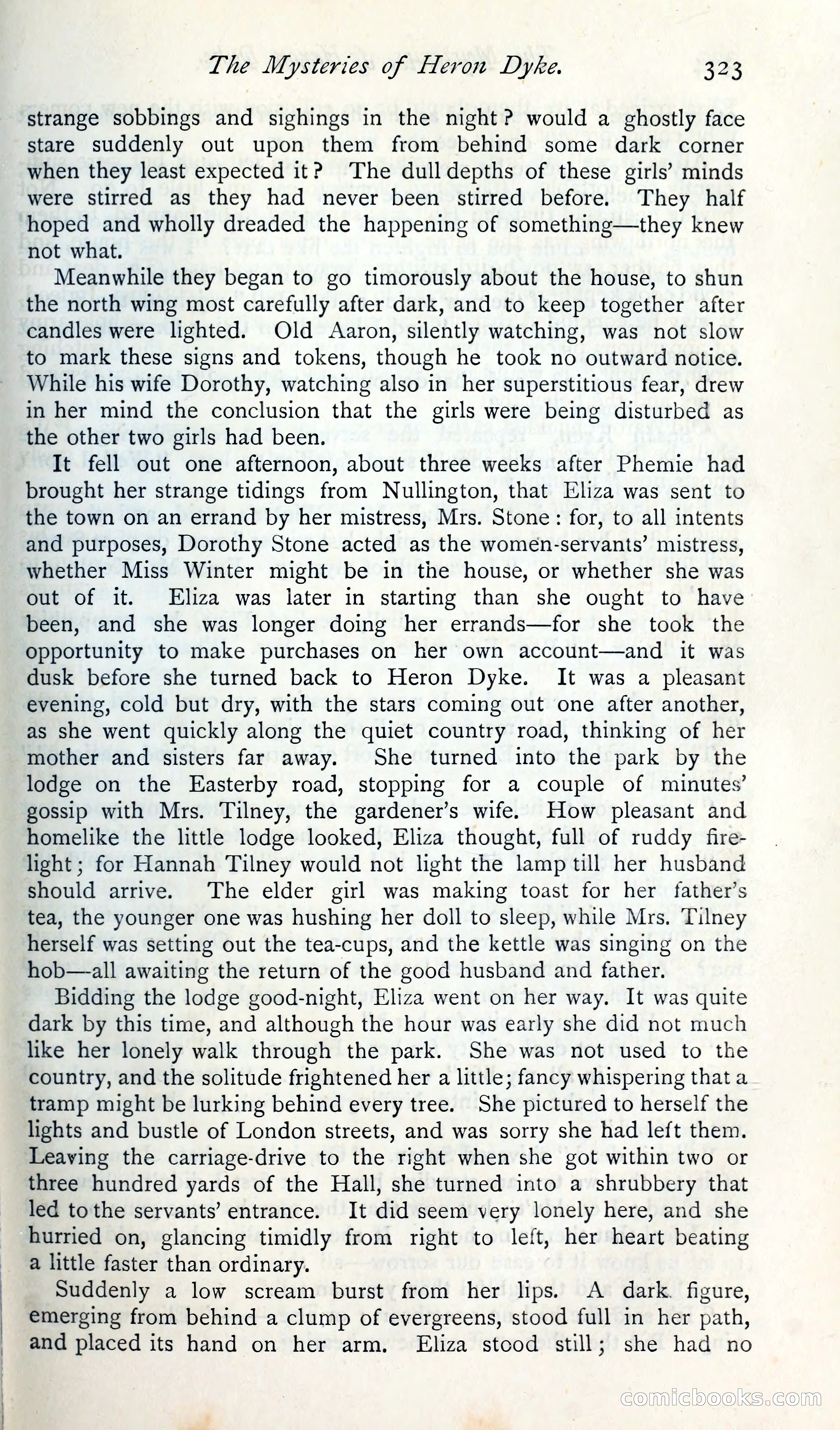
A restored page from Pulp Fiction, 1865. Page through the whole issue in the reader above.
📄 Transcribed text from this page (OCR, searchable)
Machine-transcribed from the original scan — historical spelling and the odd misread are preserved.
The Mysteries of Heron Dyke. 433 strange sobbings and sighings in the night? would a ghostly face stare suddenly out upon them from behind some dark corner when they least expected it? The dulldepths of these girls’ minds were stirred as they had never been stirred before. They half hoped and wholly dreaded the happening of something—they knew not what. Meanwhile they began to go timorously about the house, to shun the north wing most carefully after dark, and to keep together after candles were lighted. Old Aaron, silently watching, was not slow to mark these signs and tokens, though he took no outward notice. While his wife Dorothy, watching also in her superstitious fear, drew in her mind the conclusion that the girls were being disturbed as the other two girls had been. It fell out one afternoon, about three weeks after Phemie had brought her strange tidings from Nullington, that Eliza was sent to the town on an errand by her mistress, Mrs. Stone: for, to all intents and purposes, Dorothy Stone acted as the women-servants’ mistress, whether Miss Winter might be in the house, or whether she was out of it. Eliza was later in starting than she ought to have been, and she was longer doing her errands—for she took the opportunity to make purchases on her own account—and it was dusk before she turned back to Heron Dyke. It was a pleasant evening, cold but dry, with the stars coming out one after another, as she went quickly along the quiet country road, thinking of her mother and sisters far away. She turned into the park by the lodge on the Easterby road, stopping for a couple of minutes’ gossip with Mrs. Tilney, the gardener’s wife. How pleasant and homelike the little lodge looked, Eliza thought, full of ruddy fire- light; for Hannah Tilney would not light the lamp till her husband should arrive. The elder girl was making toast for her father’s tea, the younger one was hushing her doll to sleep, while Mrs. Tilney herself was setting out the tea-cups, and the kettle was singing on the hob—all awaiting the return of the good husband and father. Bidding the lodge good-night, Eliza went on her way. It was quite dark by this time, and although the hour was early she did not much like her lonely walk through the park. She was not used to the country, and the solitude frightened her a little; fancy whispering that a tramp might be lurking behind every tree. She pictured to herself the lights and bustle of London streets, and was sorry she had left them. Leaving the carriage-drive to the right when she got within two or three hundred yards of the Hall, she turned into a shrubbery that led tothe servants’ entrance. It did seem very lonely here, and she hurried on, glancing timidly from right to left, her heart beating a little faster than ordinary. Suddenly a low scream burst from her lips. A dark. figure, emerging from behind a clump of evergreens, stood full in her path, and placed its hand on her arm. Eliza stood still; she had no GOnlGaoolks (C©) An