
Pulp Fiction, 1865 · page 323 of 400
The Argosy — page 323: what you’re looking at
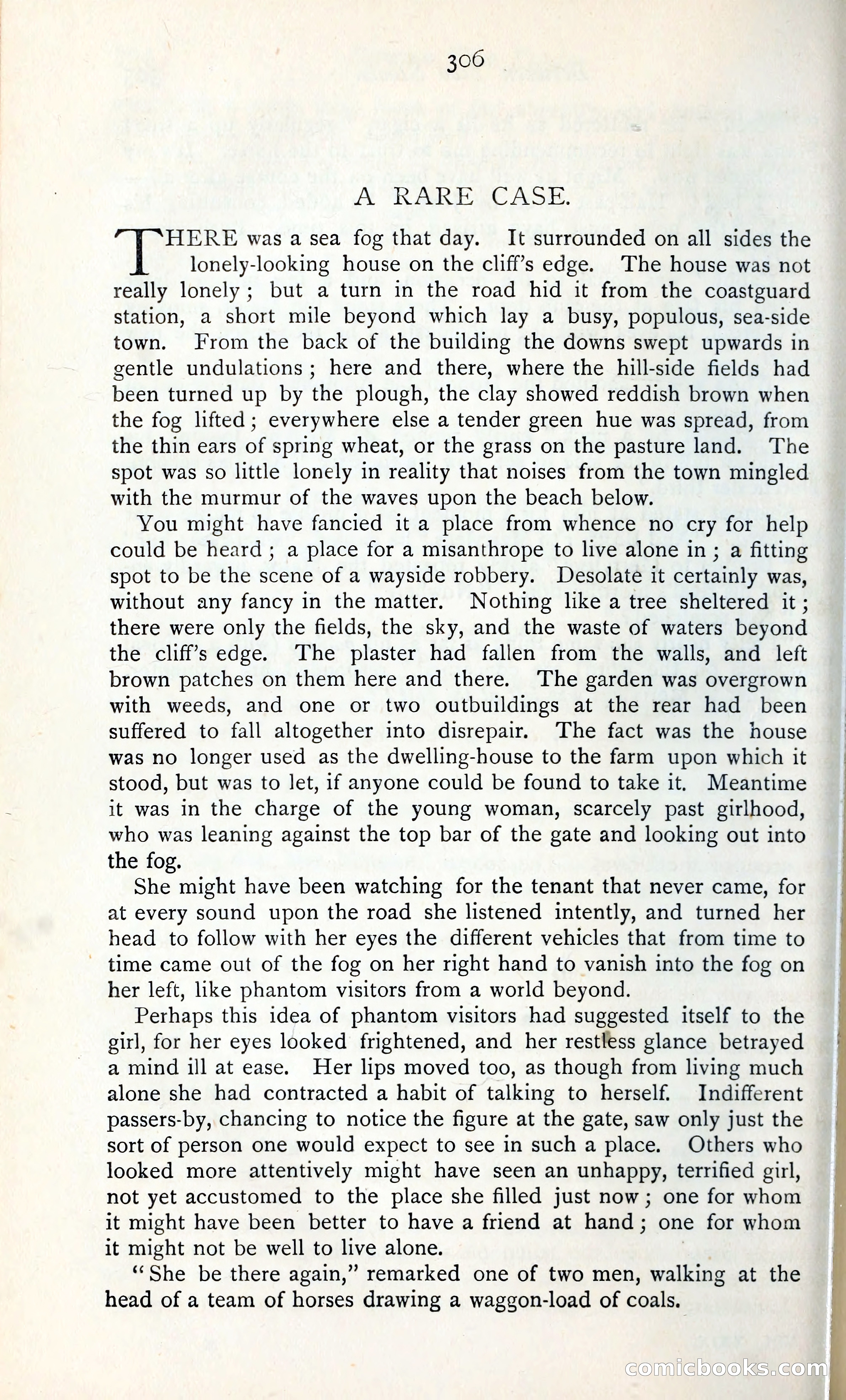
A restored page from Pulp Fiction, 1865. Page through the whole issue in the reader above.
📄 Transcribed text from this page (OCR, searchable)
Machine-transcribed from the original scan — historical spelling and the odd misread are preserved.
300 A RARE ASI. HERE was a sea fog that day. It surrounded on all sides the lonely-looking house on the cliff’s edge. The house was not really lonely ; but a turn in the road hid it from the coastguard station, a short mile beyond which lay a busy, populous, sea-side town. From the back of the building the downs swept upwards in gentle undulations ; here and there, where the hill-side fields had been turned up by the plough, the clay showed reddish brown when the fog lifted; everywhere else a tender green hue was spread, from the thin ears of spring wheat, or the grass on the pasture land. The spot was so little lonely in reality that noises from the town mingled with the murmur of the waves upon the beach below. You might have fancied it a place from whence no cry for help could be heard ; a place for a misanthrope to live alone in ; a fitting spot to be the scene of a wayside robbery. Desolate it certainly was, without any fancy in the matter. Nothing like a tree sheltered it; there were only the fields, the sky, and the waste of waters beyond the cliffs edge. The plaster had fallen from the walls, and left brown patches on them here and there. The garden was overgrown with weeds, and one or two outbuildings at the rear had been suffered to fall altogether into disrepair. ‘The fact was the house was no longer used as the dwelling-house to the farm upon which it stood, but was to let, if anyone could be found to take it. Meantime it was in the charge of the young woman, scarcely past girlhood, who was leaning against the top bar of the gate and looking out into the fog. She might have been watching for the tenant that never came, for at every sound upon the road she listened intently, and turned her head to follow with her eyes the different vehicles that from time to - time came out of the fog on her right hand to vanish into the fog on her left, ike phantom visitors from a world beyond. Perhaps this idea of phantom visitors had suggested itself to the girl, for her eyes looked frightened, and her restless glance betrayed a mind ill at ease. Her lips moved too, as though from living much alone she had contracted a habit of talking to herself. Indifferent passers-by, chancing to notice the figure at the gate, saw only just the sort of person one would expect to see in such a place. Others who looked more attentively might have seen an unhappy, terrified girl, not yet accustomed to the place she filled just now; one for whom it might have been better to have a friend at hand; one for whom it might not be well to live alone. “She be there again,” remarked one of two men, ae at the head of a team of horses drawing a waggon-load of coals. EORNIELIOO KS, (E00)