
Pulp Fiction, 1865 · page 304 of 400
The Argosy — page 304: what you’re looking at
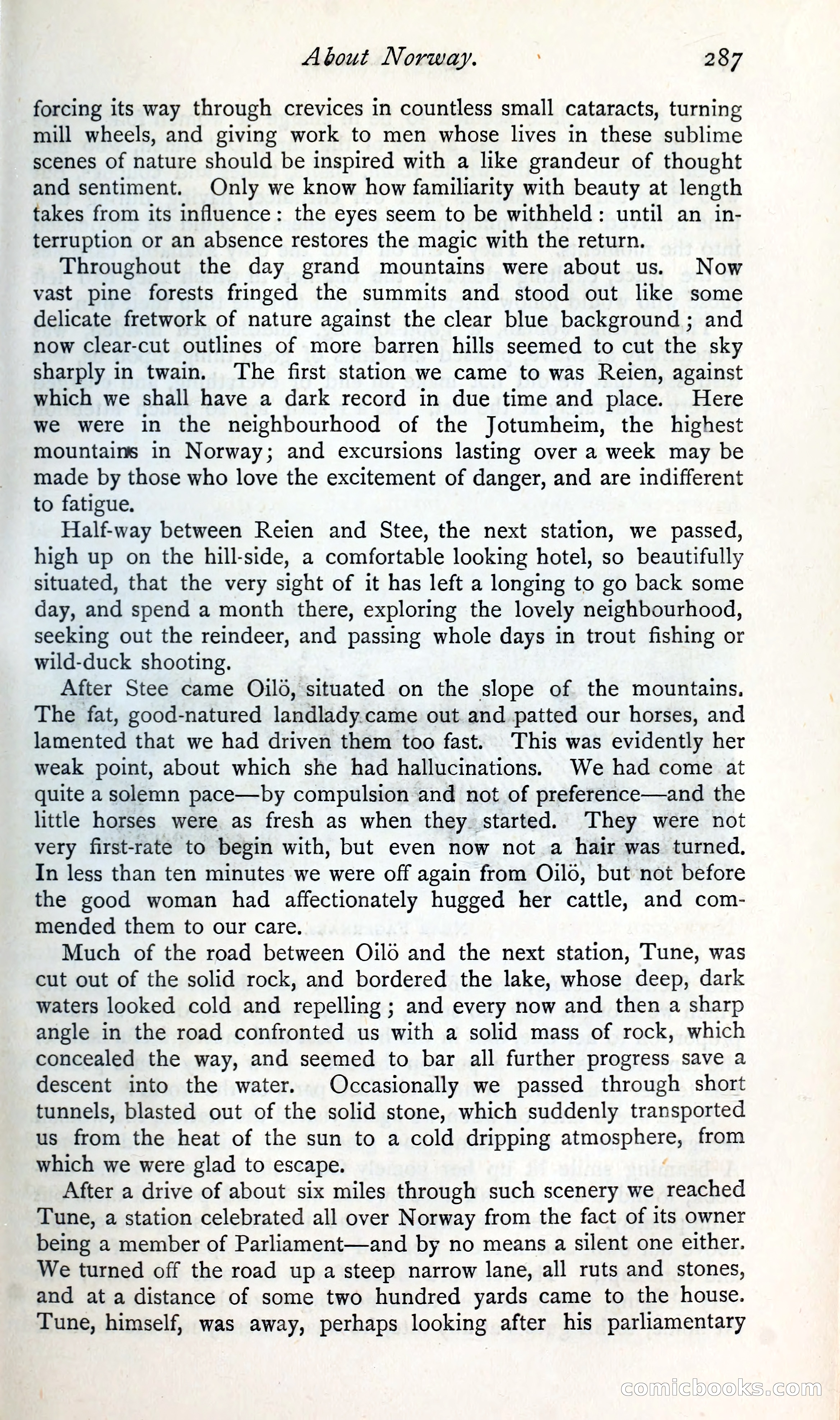
A restored page from Pulp Fiction, 1865. Page through the whole issue in the reader above.
📄 Transcribed text from this page (OCR, searchable)
Machine-transcribed from the original scan — historical spelling and the odd misread are preserved.
About Norway. | 287 forcing its way through crevices in countless small cataracts, turning mill wheels, and giving work to men whose lives in these sublime scenes of nature should be inspired with a like grandeur of thought and sentiment. Only we know how familiarity with beauty at length takes from its influence: the eyes seem to be withheld: until an in- terruption or an absence restores the magic with the return. Throughout the day grand mountains were about us. Now vast pine forests fringed the summits and stood out like some delicate fretwork of nature against the clear blue background; and now clear-cut outlines of more barren hills seemed to cut the sky sharply in twain. The first station we came to was Reien, against which we shall have a dark record in due time and place. Here we were in the neighbourhood of the Jotumheim, the highest mountains in Norway; and excursions lasting over a week may be made by those who love the excitement of danger, and are indifferent to fatigue. Half-way between Reien and Stee, the next station, we passed, high up on the hill-side, a comfortable looking hotel, so beautifully situated, that the very sight of it has left a longing to go back some day, and spend a month there, exploring the lovely neighbourhood, seeking out the reindeer, and passing whole days in trout fishing or wild-duck shooting. After Stee came QOilo, situated on the slope of the mountains. The fat, good-natured landlady.came out and patted our horses, and lamented that we had driven them too fast. This was evidently her weak point, about which she had hallucinations. We had come at quite a solemn pace—by compulsion and not of preference—and the little horses were as fresh as when they started. They were not very first-rate to begin with, but even now not a hair was turned, In less than ten minutes we were off again from Oilo, but not before the good woman had affectionately hugged her cattle, and com- mended them to our care. Much of the road between Oilo and the next station, Tune, was cut out of the solid rock, and bordered the lake, whose deep, dark waters looked cold and repelling ; and every now and then a sharp angle in the road confronted us with a solid mass of rock, which concealed the way, and seemed to bar all further progress save a descent into the water. Occasionally we passed through short tunnels, blasted out of the solid stone, which suddenly transported us from the heat of the sun to a cold dripping mac Se from which we were glad to escape. After a drive of about six miles through such scenery we reached Tune, a station celebrated all over Norway from the fact of its owner being a member of Parliament—and by no means a silent one either. We turned off the road up a steep narrow lane, all ruts and stones, and at a distance of some two hundred yards came to the house. Tune, himself, was away, perhaps looking after his parliamentary COMmMiIcoooks (C©) im