
Pulp Fiction, 1865 · page 159 of 400
The Argosy — page 159: what you’re looking at
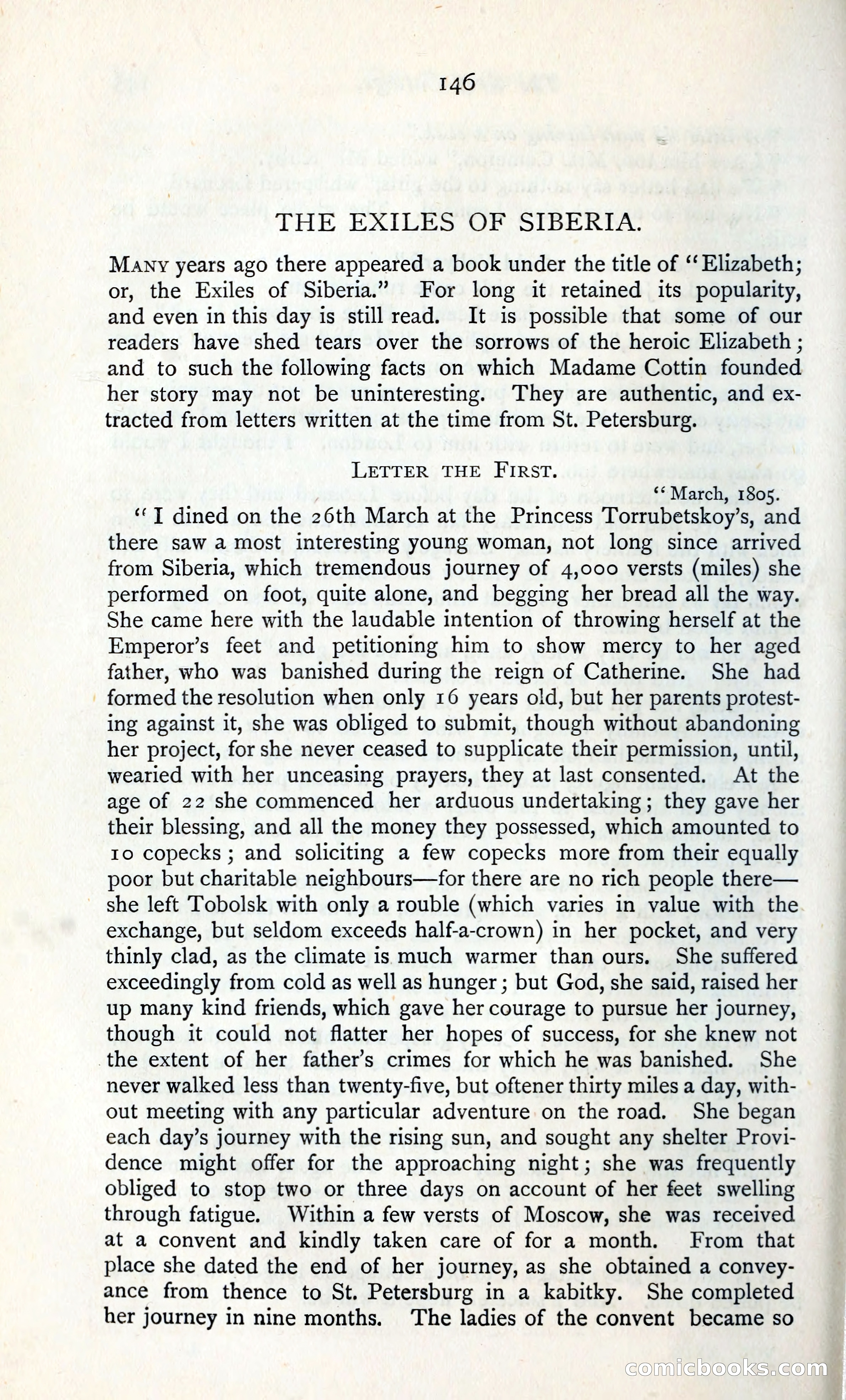
A restored page from Pulp Fiction, 1865. Page through the whole issue in the reader above.
📄 Transcribed text from this page (OCR, searchable)
Machine-transcribed from the original scan — historical spelling and the odd misread are preserved.
146 THE EXILES OF SIBERIA. Many years ago there appeared a book under the title of ‘‘ Elizabeth; or, the Exiles of Siberia.” For long it retained its popularity, and even in this day is still read. It is possible that some of our readers have shed tears over the sorrows of the heroic Elizabeth ; and to such the following facts on which Madame Cottin founded her story may not be uninteresting. ‘They are authentic, and ex- tracted from letters written at the time from St. Petersburg. LETTER THE FIRST. ** March, 1805. ‘‘T dined on the 26th March at the Princess Torrubetskoy’s, and there saw a most interesting young woman, not long since arrived from Siberia, which tremendous journey of 4,000 versts (miles) she performed on foot, quite alone, and begging her bread all the way. She came here with the laudable intention of throwing herself at the Emperor’s feet and petitioning him to show mercy to her aged father, who was banished during the reign of Catherine. She had formed the resolution when only 16 years old, but her parents protest- ing against it, she was obliged to submit, though without abandoning her project, for she never ceased to supplicate their permission, until, wearied with her unceasing prayers, they at last consented. At the age of 22 she commenced her arduous undertaking; they gave her their blessing, and all the money they possessed, which amounted to to copecks ; and soliciting a few copecks more from their equally poor but charitable neighbours—for there are no rich people there— she left Tobolsk with only a rouble (which varies in value with the exchange, but seldom exceeds half-a-crown) in her pocket, and very thinly clad, as the climate is much warmer than ours. She suffered exceedingly from cold as well as hunger ; but God, she said, raised her up many kind friends, which gave her courage to pursue her journey, though it could not flatter her hopes of success, for she knew not the extent of her father’s crimes for which he was banished. She never walked less than twenty-five, but oftener thirty miles a day, with- out meeting with any particular adventure on the road. She began each day’s journey with the rising sun, and sought any shelter Provi- dence might offer for the approaching night; she was frequently obliged to stop two or three days on account of her feet swelling through fatigue. Within a few versts of Moscow, she was received at a convent and kindly taken care of for a month. From that place she dated the end of her journey, as she obtained a convey- ance from thence to St. Petersburg in a kabitky. She completed her journey in nine months. ‘The ladies of the convent became so ECORNIECLOOKS, (EC) m