
Pulp Fiction, 1865 · page 149 of 400
The Argosy — page 149: what you’re looking at
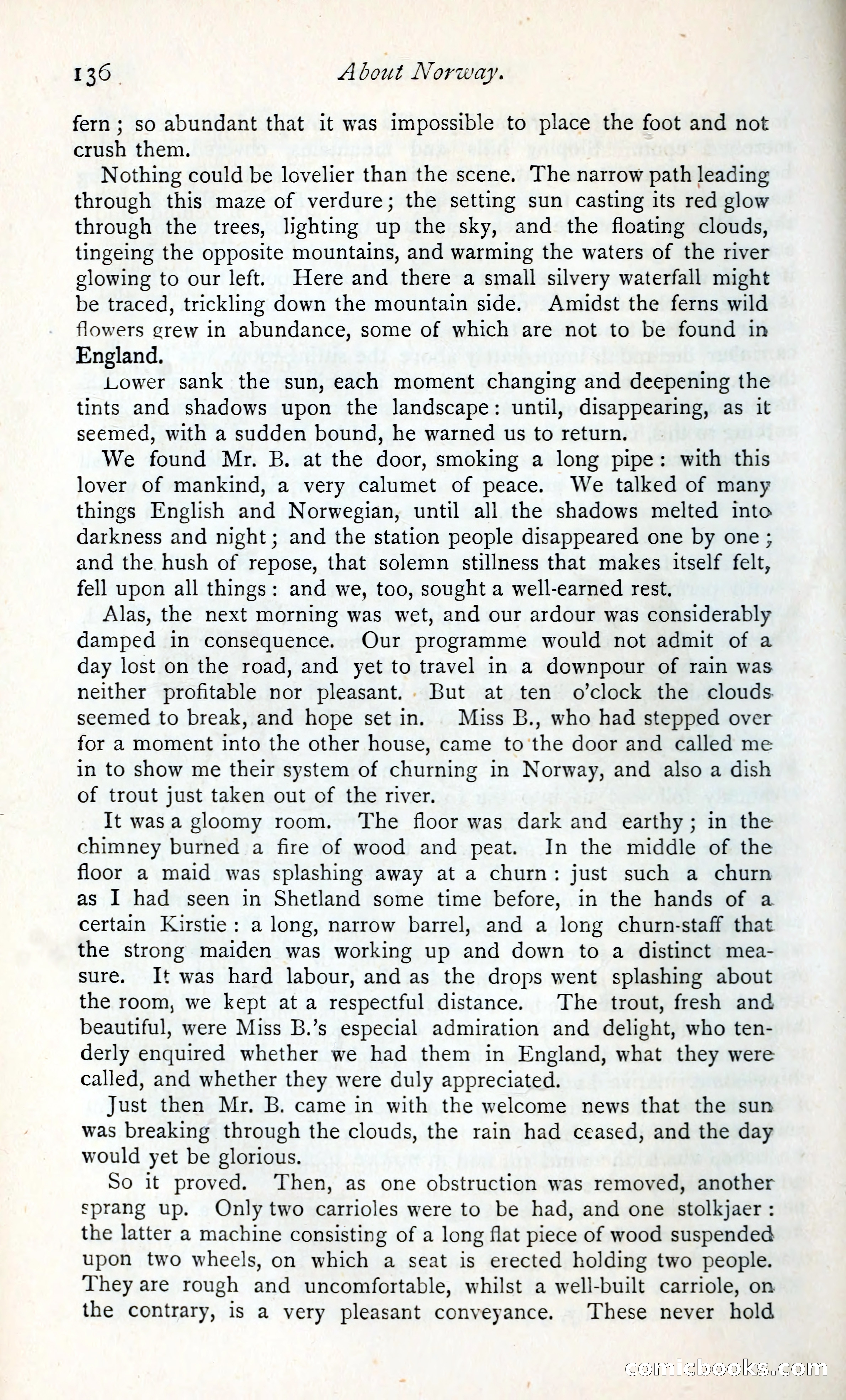
A restored page from Pulp Fiction, 1865. Page through the whole issue in the reader above.
📄 Transcribed text from this page (OCR, searchable)
Machine-transcribed from the original scan — historical spelling and the odd misread are preserved.
136. About N Orway. fern; so abundant that it was impossible to place the foot and not crush them. Nothing could be lovelier than the scene. The narrow path leading through this maze of verdure; the setting sun casting its red glow through the trees, lighting up the sky, and the floating clouds, tingeing the opposite mountains, and warming the waters of the river glowing to our left. Here and there a small silvery waterfall might be traced, trickling down the mountain side. Amidst the ferns wild flowers grew in abundance, some of which are not to be found in England. ‘Lower sank the sun, each moment changing and deepening the tints and shadows upon the landscape: until, disappearing, as it seemed, with a sudden bound, he warned us to return. We found Mr. B. at the door, smoking a long pipe: with this lover of mankind, a very calumet of peace. We talked of many things English and Norwegian, until all the shadows melted into darkness and night; and the station people disappeared one by one ; and the hush of repose, that solemn stillness that makes itself felt, fell upon all things: and we, too, sought a well-earned rest. Alas, the next morning was wet, and our ardour was considerably damped in consequence. Our programme would not admit of a day lost on the road, and yet to travel in a downpour of rain was neither profitable nor pleasant.. But at ten o’clock the clouds. seemed to break, and hope set in. Muss B., who had stepped over for a moment into the other house, came to'the door and called me in to show me their system of churning in Norway, and also a dish of trout just taken out of the river. It wasa gloomy room. The floor was dark and earthy; in the chimney burned a fire of wood and peat. In the middle of the floor a maid was splashing away at a churn: just such a churn as I had seen in Shetland some time before, in the hands of a certain Kirstie: a long, narrow barrel, and a long churn-staff that the strong maiden was working up and down to a distinct mea- sure. It was hard labour, and as the drops went splashing about the room, we kept at a respectful distance. The trout, fresh and beautiful, were Miss B.’s especial admiration and delight, who ten- derly enquired whether we had them in England, what they were called, and whether they were duly appreciated. Just then Mr. B. came in with the welcome news that the sun was breaking through the clouds, the rain had ceased, and the day would yet be glorious. So it proved. ‘Then, as one obstruction was removed, another sprang up. Only two carrioles were to be had, and one stolkjaer: the latter a machine consisting of a long flat piece of wood suspended upon two wheels, on which a seat is erected holding two people. They are rough and uncomfortable, whilst a well-built carriole, on the contrary, is a very pleasant conveyance. These never hold CORnNIECLOOKS m