
Pulp Fiction, 1865 · page 355 of 400
The Argosy — page 355: what you’re looking at
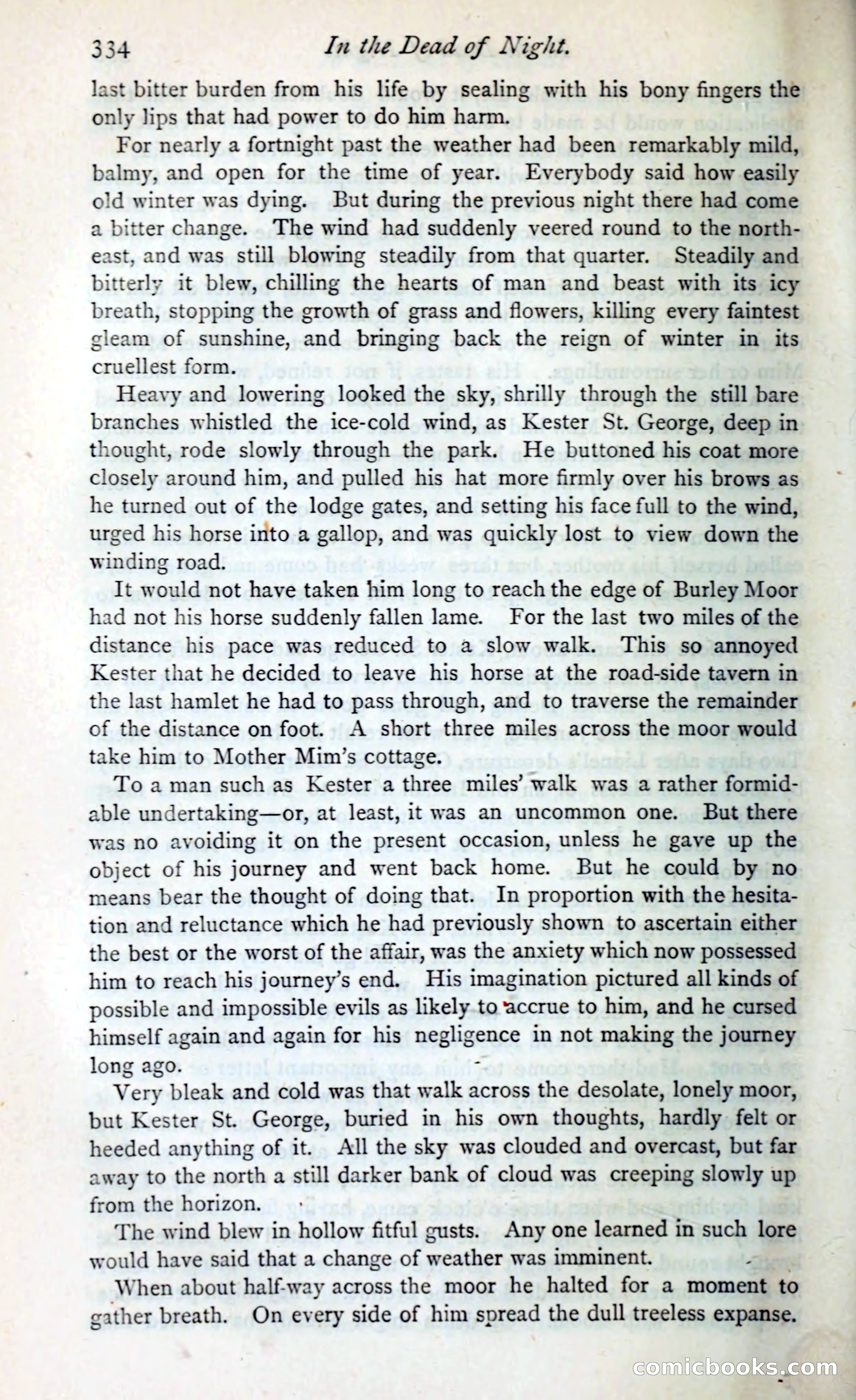
A restored page from Pulp Fiction, 1865. Page through the whole issue in the reader above.
📄 Transcribed text from this page (OCR, searchable)
Machine-transcribed from the original scan — historical spelling and the odd misread are preserved.
* 334 In the Dead of Night. , last bitter burden from his life by sealing with his bony fingers the only lips that had power to do him harm. For nearly a fortnight past the weather had been remarkably mild, balmy, and open for the time of year. Everybody said how easily old winter was dying. But during the previous night there had come a bitter change. ‘The wind had suddenly veered round to the north- east, and was still blowing steadily from that quarter. Steadily and bitterly it blew, chilling the hearts of man and beast with its icy breath, stopping the growth of grass and flowers, killing every faintest cleam of sunshine, and bringing back the reign of winter in its cruellest form. Heavy and lowering looked the sky, shrilly through the still bare branches whistled the ice-cold wind, as Kester St. George, deep in thought, rode slowly through the park. He buttoned his coat more closely around him, and pulled his hat more firmly over his brows as he turned out of the lodge gates, and setting his face full to the wind, urged his horse into a gallop, and was quickly lost to view down the winding road. It would not have taken him long to reach the edge of Burley Moor had not his horse suddenly fallen lame. For the last two miles of the distance his pace was reduced to a slow walk. This so annoyed Kester that he decided to leave his horse at the road-side tavern in the last hamlet he had to pass through, and to traverse the remainder of the distance on foot. A short three miles across the moor would take him to Mother Mim’s cottage. To a man such as Kester a three miles’ walk was a rather formid- able undertaking—or, at least, it was an uncommon one. But there was no avoiding it on the present occasion, unless he gave up the object of his journey and went back home. But he could by no means bear the thought of doing that. In proportion with the hesita- tion and reluctance which he had previously shown to ascertain either the best or the worst of the affair, was the anxiety which now possessed him to reach his journey’s end. His imagination pictured all kinds of possible and impossible evils as likely to ‘accrue to him, and he cursed himself again and again for his negligence in not making the journey long ago. F Very bleak and cold was that walk across the desolate, lonely moor, but Kester St. George, buried in his own thoughts, hardly felt or heeded anything of it. All the sky was clouded and overcast, but far away to the north a still darker bank of cloud was creeping slowly up from the horizon. The wind blew in hollow fitful gusts. Any one learned in such lore would have said that a change of weather was imminent. ies When about half-way across the moor he halted for a moment to gather breath. On every side of him spread the dull treeless expanse. (COMMICEl exeyxe) s.com