
Pulp Fiction, 1865 · page 319 of 400
The Argosy — page 319: what you’re looking at
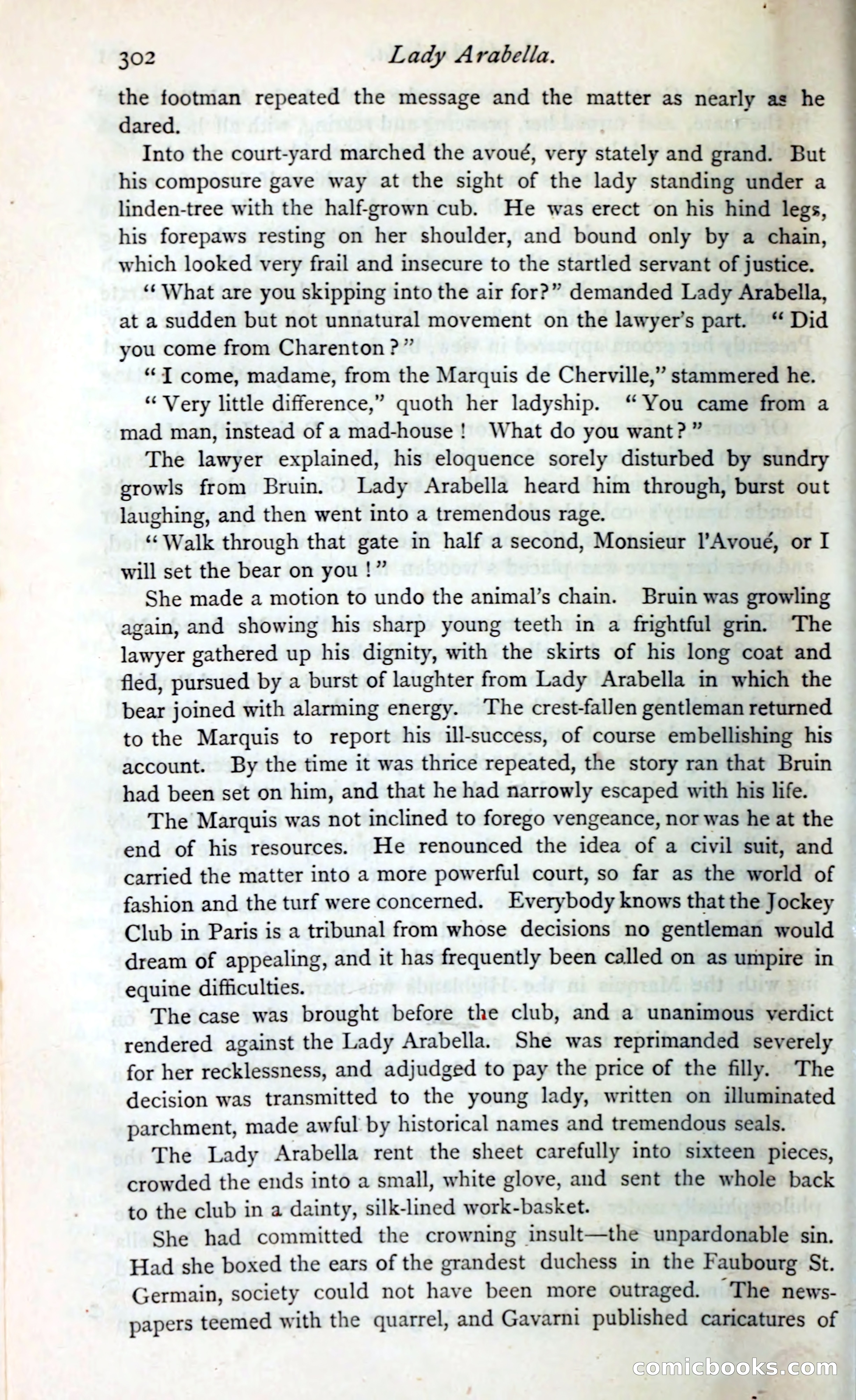
A restored page from Pulp Fiction, 1865. Page through the whole issue in the reader above.
📄 Transcribed text from this page (OCR, searchable)
Machine-transcribed from the original scan — historical spelling and the odd misread are preserved.
302 Lady Arabella. the footman repeated the message and the matter as nearly as he dared. | ) Into the court-yard marched the avoué, very stately and grand. But his composure gave way at the sight of the lady standing under a linden-tree with the half-grown cub. He was erect on his hind legs, his forepaws resting on her shoulder, and bound only by a chain, which looked very frail and insecure to the startled servant of justice. ‘¢ What are you skipping into the air for?” demanded Lady Arabella, at a sudden but not unnatural movement on the lawyer’s part. ‘“ Did you come from Charenton ?” “I come, madame, from the Marquis de Cherville,” stammered he. ‘“‘ Very little difference,” quoth her ladyship. “You came from a mad man, instead of a mad-house! What do you want?” The lawyer explained, his eloquence sorely disturbed by sundry srowls from Bruin. Lady Arabella heard him through, burst out laughing, and then went into a tremendous rage. ‘‘Walk through that gate in half a second, Monsieur l’Avoué, or I will set the bear on you !” She made a motion to undo the animal’s chain. Bruin was growling again, and showing his sharp young teeth in a frightful grin. The lawyer gathered up his dignity, with the skirts of his long coat and fled, pursued by a burst of laughter from Lady Arabella in which the bear joined with alarming energy. The crest-fallen gentleman returned to the Marquis to report his ill-success, of course embellishing his account. By the time it was thrice repeated, the story ran that Bruin had been set on him, and that he had narrowly escaped with his life. The Marquis was not inclined to forego vengeance, nor was he at the end of his resources. He renounced the idea of a civil suit, and carried the matter into a more powerful court, so far as the world of fashion and the turf were concerned. Everybody knows that the Jockey Club in Paris is a tribunal from whose decisions no gentleman would dream of appealing, and it has frequently been called on as umpire in equine difficulties. The case was brought before the club, and a unanimous verdict rendered against the Lady Arabella. She was reprimanded severely for her recklessness, and adjudged to pay the price of the filly. The decision was transmitted to the young lady, written on illuminated parchment, made awful by historical names and tremendous seals. The Lady Arabella rent the sheet carefully into sixteen pieces, crowded the ends into a small, white glove, and sent the whole back to the club in a dainty, silk-lined work-basket. She had committed the crowning insult—the unpardonable sin. Had she boxed the ears of the grandest duchess in the Faubourg St. Germain, society could not have been more outraged. The news- papers teemed with the quarrel, and Gavarni published caricatures of Gomicbooks.com