
Pulp Fiction, 1865 · page 288 of 400
The Argosy — page 288: what you’re looking at
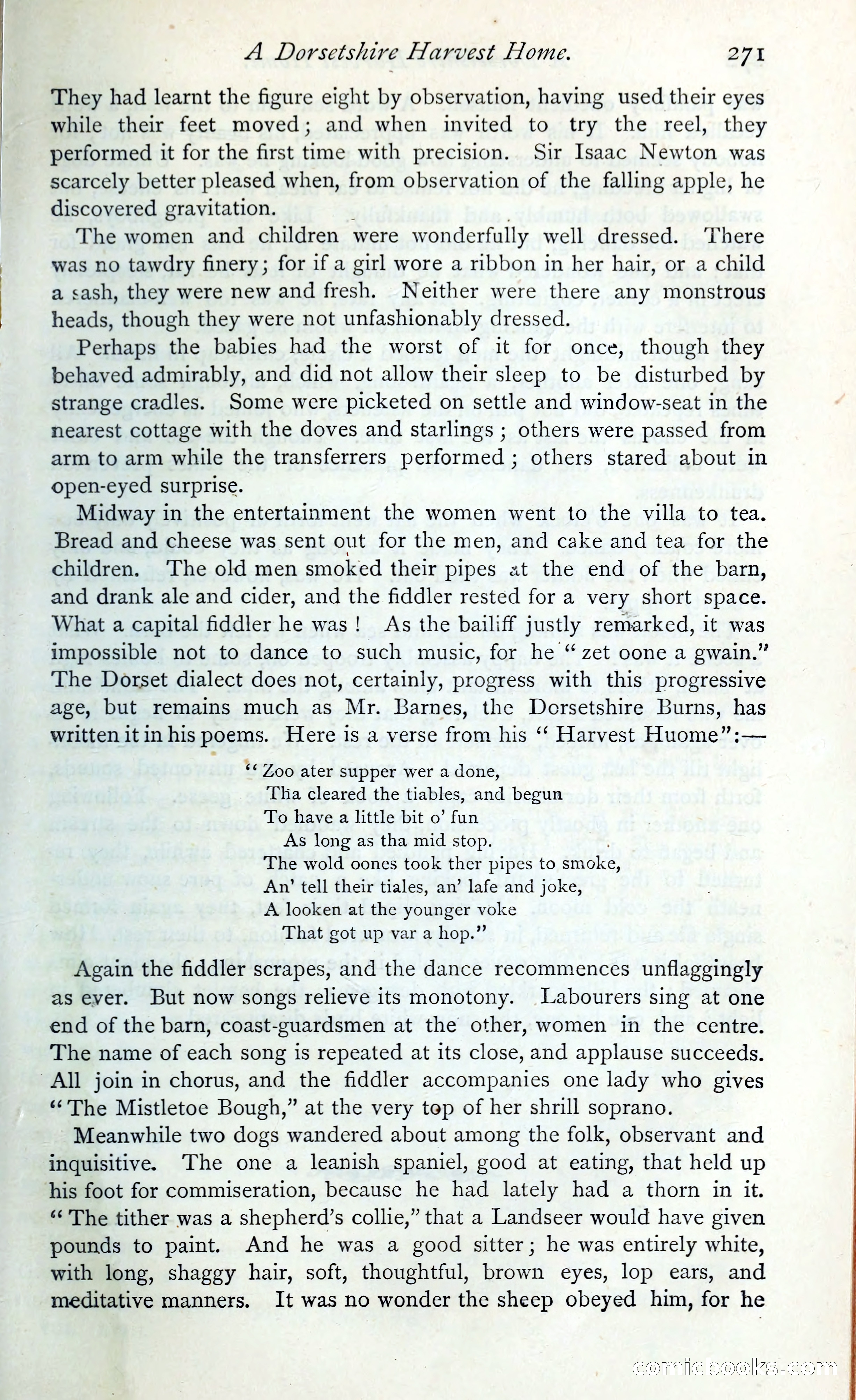
A restored page from Pulp Fiction, 1865. Page through the whole issue in the reader above.
📄 Transcribed text from this page (OCR, searchable)
Machine-transcribed from the original scan — historical spelling and the odd misread are preserved.
A Dorsetshire Harvest Home. 271 They had learnt the figure eight by observation, having used their eyes while their feet moved; and when invited to try the reel, they performed it for the first time with precision. Sir Isaac Newton was scarcely better pleased when, from observation of the falling apple, he discovered gravitation. The women and children were wonderfully well dressed. ‘There was no tawdry finery; for if a girl wore a ribbon in her hair, or a child a sash, they were new and fresh. Neither were there any monstrous heads, though they were not unfashionably dressed. Perhaps the babies had the worst of it for once, though they behaved admirably, and did not allow their sleep to be disturbed by strange cradles. Some were picketed on settle and window-seat in the nearest cottage with the doves and starlings ; others were passed from arm to arm while the transferrers performed; others stared about in open-eyed surprise. Midway in the entertainment the women went to the villa to tea. Bread and cheese was sent out for the men, and cake and tea for the children. ‘The old men smoked their pipes at the end of the barn, and drank ale and cider, and the fiddler rested for a very short space. What a capital fiddler he was! As the bailiff justly remarked, it was impossible not to dance to such music, for he “ zet oone a gwain.” The Dorset dialect does not, certainly, progress with this progressive age, but remains much as Mr. Barnes, the Dorsetshire Burns, has written itin his poems. Here is a verse from his ‘‘ Harvest Huome”:— ‘¢ Zoo ater supper wer a done, Tha cleared the tiables, and begun To have a little bit o’ fun As long as tha mid stop. The wold oones took ther pipes to smoke: An’ tell their tiales, an’ lafe and joke, A looken at the younger voke That got up var a hop.” Again the fiddler scrapes, and the dance recommences unflaggingly as ever. But now songs relieve its monotony. Labourers sing at one end of the barn, coast-guardsmen at the other, women in the centre. The name of each song is repeated at its close, and applause succeeds. All join in chorus, and the fiddler accompanies one lady who gives ‘The Mistletoe Bough,” at the very tep of her shrill soprano. Meanwhile two dogs wandered about among the folk, observant and inquisitive. ‘The one a leanish spaniel, good at eating, that held up his foot for commiseration, because he had lately had a thorn in it. “‘ The tither was a shepherd’s collie,” that a Landseer would have given pounds to paint. And he was a good sitter; he was entirely white, with long, shaggy hair, soft, thoughtful, brown eyes, lop ears, and meditative manners. It was no wonder the sheep obeyed him, for he connicloooks (SO)