
Pulp Fiction, 1865 · page 60 of 400
The Argosy — page 60: what you’re looking at
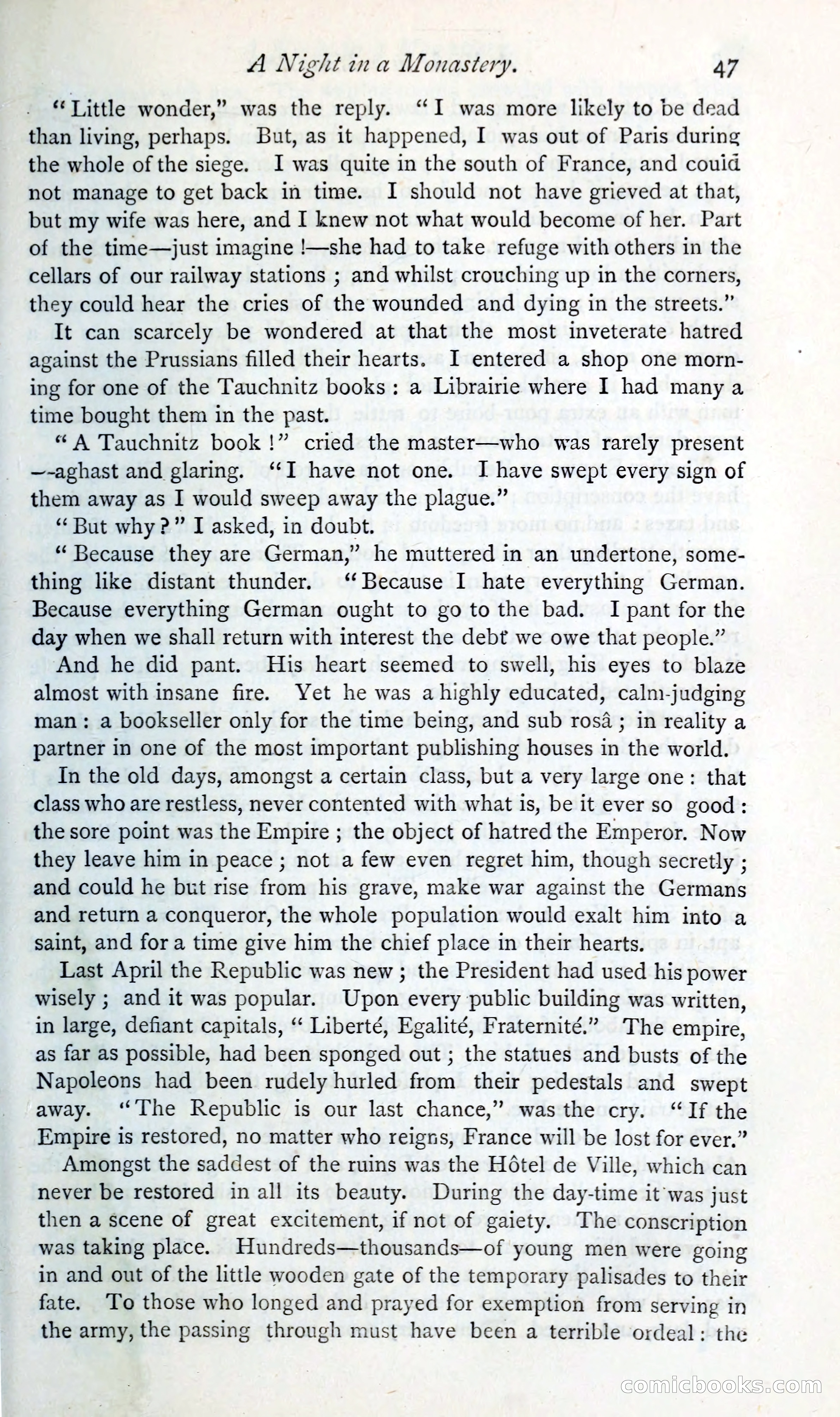
A restored page from Pulp Fiction, 1865. Page through the whole issue in the reader above.
📄 Transcribed text from this page (OCR, searchable)
Machine-transcribed from the original scan — historical spelling and the odd misread are preserved.
A Night ina Monastery. 47 ‘Little wonder,” was the reply. “I was more likely to be dead than living, perhaps. But, as it happened, I was out of Paris during the whole of the siege. I was quite in the south of France, and couid not manage to get back in time. I should not have grieved at that, but my wife was here, and I knew not what would become of her. Part of the time—just imagine !—she had to take refuge with others in the cellars of our railway stations ; and whilst crouching up in the corners, they could hear the cries of the wounded and dying in the streets.” It can scarcely be wondered at that the most inveterate hatred against the Prussians filled their hearts. I entered a shop one morn- ing for one of the Tauchnitz books: a Librairie where I had many a time bought them in the past. “ A Tauchnitz book!” cried the master—who was rarely present —-aghast and glaring. ‘‘I have not one. I have swept every sign of them away as I would sweep away the plague.” “ But why 2?” I asked, in doubt. * Because they are German,” he muttered in an undertone, some- thing like distant thunder. ‘‘ Because I hate everything German. Because everything German ought to gotothe bad. I pant for the day when we shall return with interest the debt we owe that people.” And he did pant. His heart seemed to swell, his eyes to blaze almost with insane fire. Yet he was ahighly educated, calm-judging man: a bookseller only for the time being, and sub rosa; in reality a partner in one of the most important publishing houses in the world. In the old days, amongst a certain class, but a very large one: that class who are restless, never contented with what is, be it ever so good: the sore point was the Empire ; the object of hatred the Emperor. Now they leave him in peace ; not a few even regret him, though secretly ; and could he but rise from his grave, make war against the Germans and return a conqueror, the whole population would exalt him into a saint, and for a time give him the chief place in their hearts. Last April the Republic was new ; the President had used his power wisely ; and it was popular. Upon every public building was written, in large, defiant capitals, “ Liberté, Egalité, Fraternité.” The empire, as far as possible, had been sponged out ; the statues and busts of the Napoleons had been rudely hurled from their pedestals and swept away. ‘The Republic is our last chance,” wasthe cry. “If the Empire is restored, no matter who reigns, France will be lost for ever.” Amongst the saddest of the ruins was the Hotel de Ville, which can never be restored in all its beauty. During the day-time it 'was just then a scene of great excitement, if not of gaiety. The conscription was taking place. Hundreds—thousands—of young men were going in and out of the little wooden gate of the temporary palisades to their fate. To those who longed and prayed for exemption from serving In the army, the passing through must have been a terrible ordeal: the CoOnniclooolkks (SO) mM