
Pulp Fiction, 1865 · page 33 of 400
The Argosy — page 33: what you’re looking at
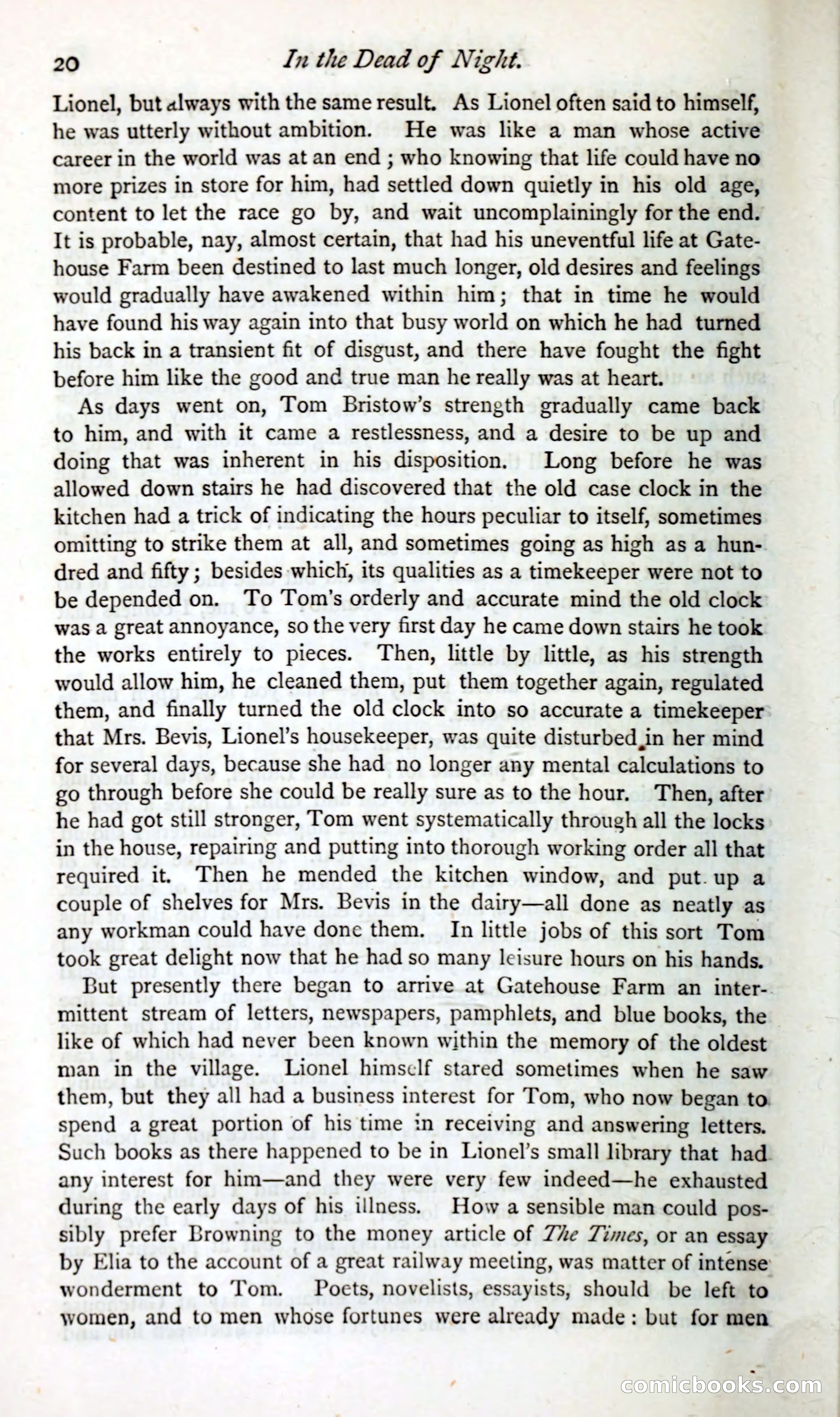
A restored page from Pulp Fiction, 1865. Page through the whole issue in the reader above.
📄 Transcribed text from this page (OCR, searchable)
Machine-transcribed from the original scan — historical spelling and the odd misread are preserved.
20 In the Dead of Night. Lionel, but always with the same result. As Lionel often said to himself, he was utterly without ambition. He was like a man whose active career in the world was at an end ; who knowing that life could have no more prizes in store for him, had settled down quietly in his old age, content to let the race go by, and wait uncomplainingly for the end. It is probable, nay, almost certain, that had his uneventful life at Gate- house Farm been destined to last much longer, old desires and feelings would gradually have awakened within him; that in time he would have found his way again into that busy world on which he had turned his back in a transient fit of disgust, and there have fought the fight before him like the good and true man he really was at heart. As days went on, Tom Bristow’s strength gradually came back to him, and with it came a restlessness, and a desire to be up and doing that was inherent in his disposition. Long before he was allowed down stairs he had discovered that the old case clock in the kitchen had a trick of indicating the hours peculiar to itself, sometimes omitting to strike them at all, and sometimes going as high as a hun- dred and fifty ; besides which, its qualities as a timekeeper were not to be depended on. To Tom’s orderly and accurate mind the old clock was a great annoyance, so the very first day he came down stairs he took the works entirely to pieces. Then, little by little, as his strength would allow him, he cleaned them, put them together again, regulated them, and finally turned the old clock into so accurate a timekeeper that Mrs. Bevis, Lionel’s housekeeper, was quite disturbed,in her mind for several days, because she had no longer any mental calculations to go through before she could be really sure as to the hour. Then, after he had got still stronger, Tom went systematically through all the locks in the house, repairing and putting into thorough working order all that required it. Then he mended the kitchen window, and put.up a couple of shelves for Mrs. Bevis in the dairy—all done as neatly as any workman could have done them. In little jobs of this sort Tom took great delight now that he had so many leisure hours on his hands. But presently there began to arrive at Gatehouse Farm an inter-. mittent stream of letters, newspapers, pamphlets, and blue books, the like of which had never been known within the memory of the oldest man in the village. Lionel himsclf stared sometimes when he saw them, but they all had a business interest for Tom, who now began to. spend a great portion of his time in receiving and answering letters. Such books as there happened to be in Lionel’s small library that had. any interest for him—and they were very few indeed—he exhausted during the early days of his illness. How a sensible man could pos- sibly prefer Browning to the money article of Zhe Zimes, or an essay by Elia to the account of a great railway meeting, was matter of intense wonderment to Tom. Poets, novelists, essayists, should be left to women, and to men whose fortunes were already made: but for men coal Gomichvooks.co m