
Pulp Fiction, 1865 · page 297 of 400
The Argosy — page 297: what you’re looking at
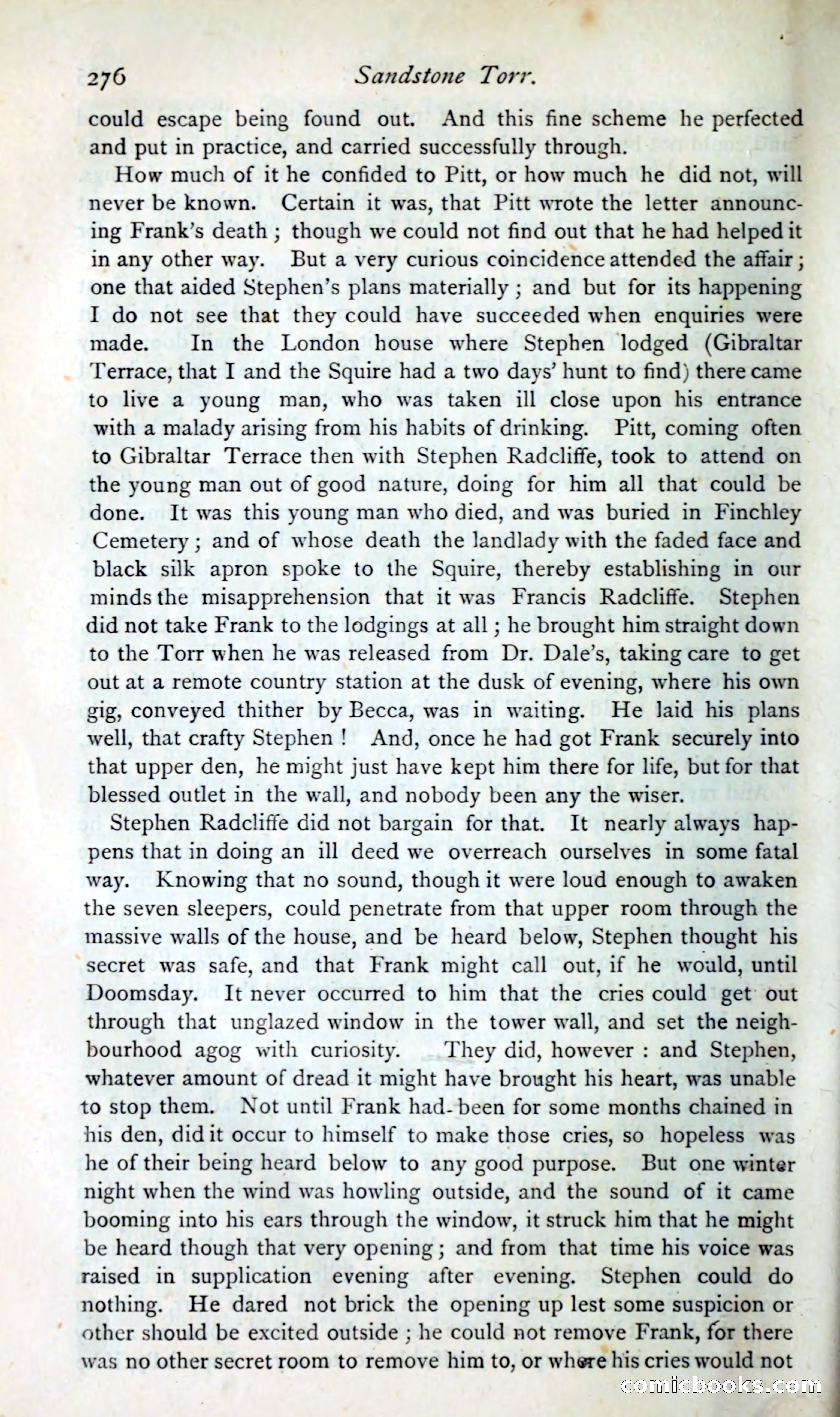
A restored page from Pulp Fiction, 1865. Page through the whole issue in the reader above.
📄 Transcribed text from this page (OCR, searchable)
Machine-transcribed from the original scan — historical spelling and the odd misread are preserved.
276 Sandstone Torr. could escape being found out. And this fine scheme he perfected and put in practice, and carried successfully through. How much of it he confided to Pitt, or how much he did not, will never be known. Certain it was, that Pitt wrote the letter announc- ing Frank’s death ; though we could not find out that he had helped it in any other way. But a very curious coincidence attended the affair ; one that aided Stephen’s plans materially ; and but for its happening I do not see that they could have succeeded when enquiries were made. In the London house where Stephen lodged (Gibraltar Terrace, that I and the Squire had a two days’ hunt to find) there came to live a young man, who was taken ill close upon his entrance with a malady arising from his habits of drinking. Pitt, coming often to Gibraltar Terrace then with Stephen Radcliffe, took to attend on the young man out of good nature, doing for him all that could be done. It was this young man who died, and was buried in Finchley Cemetery ; and of whose death the Jandlady with the faded face and black silk apron spoke to the Squire, thereby establishing in our mindsthe misapprehension that it was Francis Radcliffe. Stephen did not take Frank to the lodgings at all ; he brought him straight down to the Torr when he was released from Dr. Dale’s, taking care to get out at a remote country station at the dusk of evening, where his own gig, conveyed thither by Becca, was in waiting. He laid his plans well, that crafty Stephen! And, once he had got Frank securely into that upper den, he might just have kept him there for life, but for that blessed outlet in the wall, and nobody been any the wiser. Stephen Radcliffe did not bargain for that. It nearly always hap- pens that in doing an ill deed we overreach ourselves in some fatal way. Knowing that no sound, though it were loud enough to awaken the seven sleepers, could penetrate from that upper room through the massive walls of the house, and be heard below, Stephen thought his secret was safe, and that Frank might call out, if he would, until Doomsday. It never occurred to him that the cries could get out through that unglazed window in the tower wall, and set the neigh- bourhood agog with curiosity. They did, however : and Stephen, whatever amount of dread it might have brought his heart, was unable to stop them. Not until Frank had-been for some months chained in his den, did it occur to himself to make those cries, so hopeless was he of their being heard below to any good purpose. But one winter night when the wind was howling outside, and the sound of it came booming into his ears through the window, it struck him that he might be heard though that very opening ; and from that time his voice was raised in supplication evening after evening. Stephen could do nothing. He dared not brick the opening up lest some suspicion or other should be excited outside ; he could not remove Frank, for there was no other secret room to remove him to, or where his cries would not Eomichbooks.co