
Pulp Fiction, 1865 · page 277 of 400
The Argosy — page 277: what you’re looking at
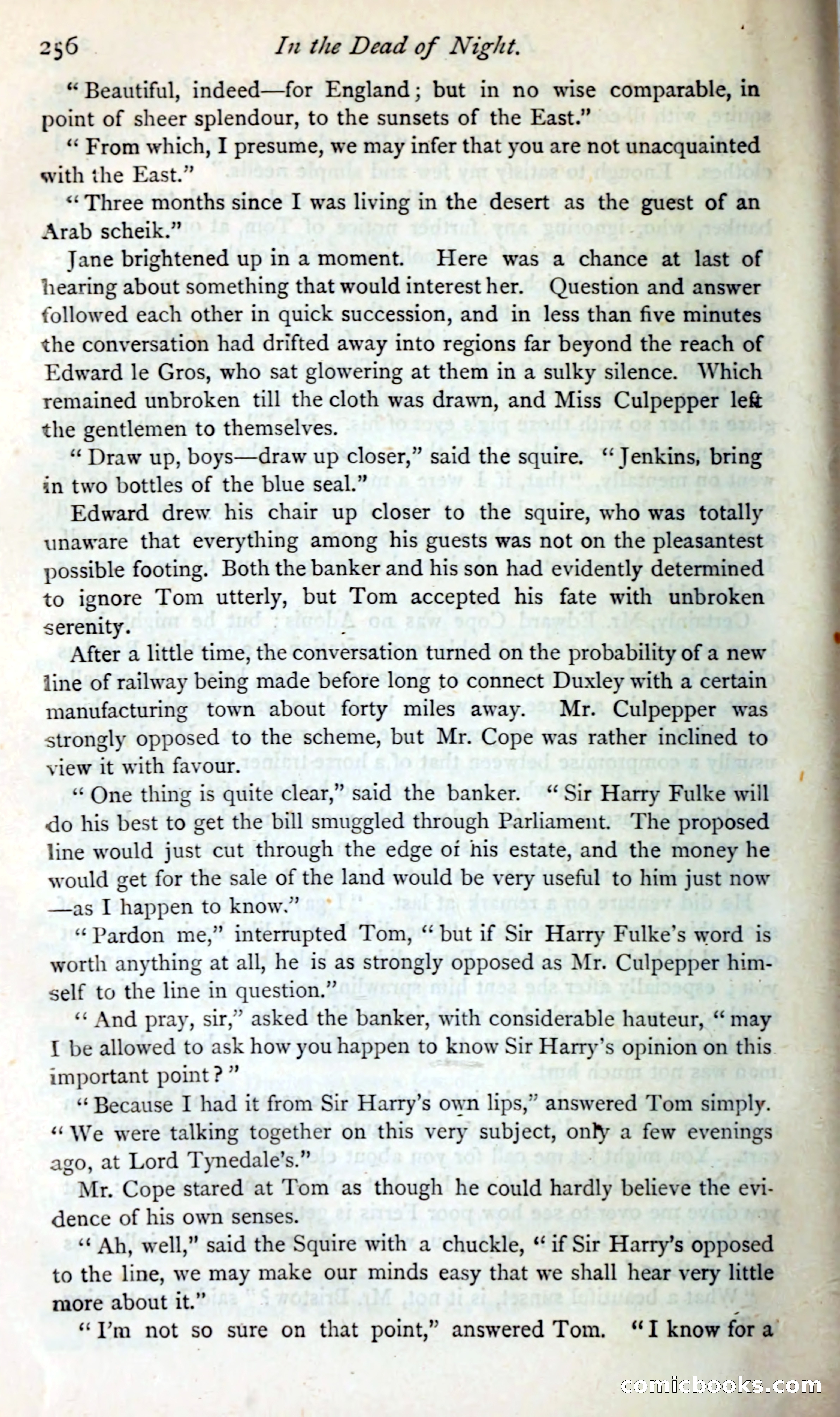
A restored page from Pulp Fiction, 1865. Page through the whole issue in the reader above.
📄 Transcribed text from this page (OCR, searchable)
Machine-transcribed from the original scan — historical spelling and the odd misread are preserved.
256 In the Dead of Night 4 “ Beautiful, indeed—for England; but in no wise comparable, in point of sheer splendour, to the sunsets of the East.” | “From which, I presume, we may infer that you are not unacquainted with the East.” “‘Three months since I was living in the desert as the guest of an Arab scheik.” Jane brightened up ina moment. Here was a chance at last of hearing about something that would interest her. Question and answer followed each other in quick succession, and in less than five minutes the conversation had drifted away into regions far beyond the reach of Edward le Gros, who sat glowering at them in a sulky silence. Which remained unbroken till the cloth was drawn, and Miss Culpepper left the gentlemen to themselves. “Draw up, boys—draw up closer,” said the squire. ‘‘ Jenkins, bring in two bottles of the blue seal.” Edward drew his chair up closer to the squire, who was totally unaware that everything among his guests was not on the pleasantest possible footing. Both the banker and his son had evidently determined to ignore Tom utterly, but Tom accepted his fate with unbroken serenity. After a little time, the conversation turned on the probability of a new line of railway being made before long to connect Duxley with a certain manufacturing town about forty miles away. Mr. Culpepper was strongly opposed to the scheme, but Mr. Cope was rather inclined to view it with favour. “One thing is quite clear,” said the banker. “Sir Harry Fulke will do his best to get the bill smuggled through Parliament. The proposed line would just cut through the edge of his estate, and the money he would get for the sale of the land would be very useful to him just now —as I happen to know.” ‘Pardon me,” interrupted Tom, “ but if Sir Harry Fulke’s word is worth anything at all, he is as strongly opposed as Mr. Culpepper him- self to the line in » eget ‘¢ And pray, sir,” asked the banker, with considerable hauteur, “‘ may { be allowed to ask how you happen to know Sir Harry’s opinion on this. important point ?” ‘Because I had it from Sir Harry’s own lips,” answered Tom simply. ‘‘ We were talking together on this very subject, — a few evenings ago, at Lord Tynedale’s.” Mr. Cope stared at Tom as though he could hardly believe the evi- dence of his own senses. ‘¢ Ah, well,” said the Squire with a chuckle, “ if Sir Harry’s oniblodl to the line, we may make our minds easy that we shall hear very little more about it.” ‘i “Tm not so sure on that point,” answered Tom. “I know fora’ Gomiregbooks.con : ¢