
Pulp Fiction, 1865 · page 271 of 400
The Argosy — page 271: what you’re looking at
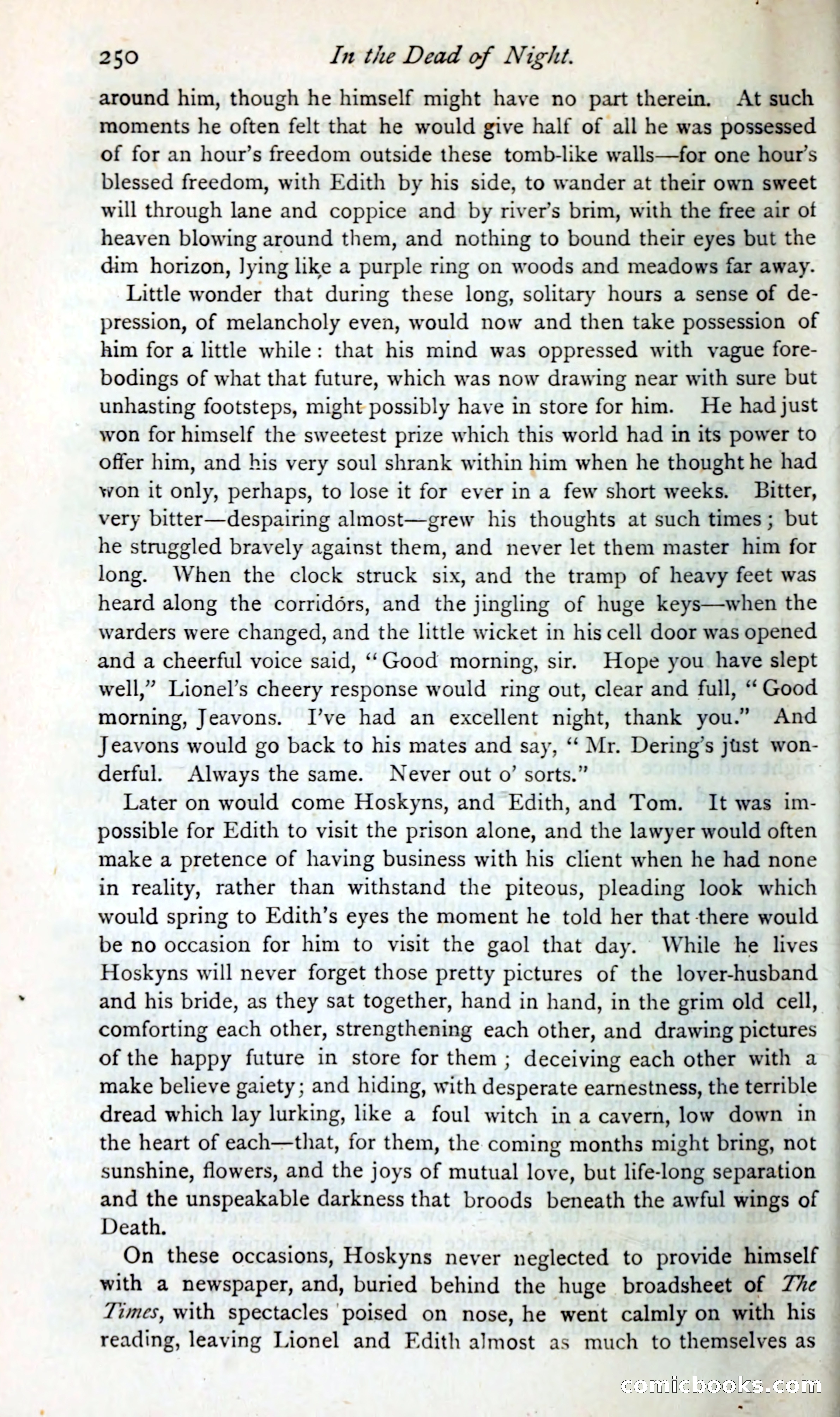
A restored page from Pulp Fiction, 1865. Page through the whole issue in the reader above.
📄 Transcribed text from this page (OCR, searchable)
Machine-transcribed from the original scan — historical spelling and the odd misread are preserved.
250 In the Dead of Night. around him, though he himself might have no part therein. At such moments he often felt that he would give half of all he was possessed — of for an hour’s freedom outside these tomb-like walls—for one hour’s blessed freedom, with Edith by his side, to wander at their own sweet will through lane and coppice and by river’s brim, with the free air of heaven blowing around them, and nothing to bound their eyes but the dim horizon, lying like a purple ring on woods and meadows far away. Little wonder that during these long, solitary hours a sense of de- pression, of melancholy even, would now and then take possession of him for a little while: that his mind was oppressed with vague fore- bodings of what that future, which was now drawing near with sure but unhasting footsteps, might possibly have in store for him. He hadjust won for himself the sweetest prize which this world had in its power to offer him, and his very soul shrank within him when he thought he had won it only, perhaps, to lose it for ever in a few short weeks. Bitter, very bitter—despairing almost—grew his thoughts at such times; but he struggled bravely against them, and never let them master him for long. When the clock struck six, and the tramp of heavy feet was heard along the corridors, and the jingling of huge keys—when the warders were changed, and the little wicket in his cell door was opened and a cheerful voice said, ‘Good morning, sir. Hope you have slept well,” Lionel’s cheery response would ring out, clear and full, “ Good morning, Jeavons. I’ve had an excellent night, thank you.” And Jeavons would go back to his mates and say, ‘‘ Mr. Dering’s jist won- derful. Always the same. Never out o’ sorts.” Later on would come Hoskyns, and Edith, and Tom. It was im- possible for Edith to visit the prison alone, and the lawyer would often make a pretence of having business with his client when he had none in reality, rather than withstand the piteous, pleading look which would spring to Edith’s eyes the moment he told her that there would be no occasion for him to visit the gaol that day. While he lives Hoskyns will never forget those pretty pictures of the lover-husband and his bride, as they sat together, hand in hand, in the grim old cell, comforting each other, strengthening each other, and drawing pictures of the happy future in store for them ; deceiving each other with a make believe gaiety; and hiding, with desperate earnestness, the terrible dread which lay lurking, like a foul witch in a cavern, low down in the heart of each—that, for them, the coming months might bring, not sunshine, flowers, and the joys of mutual love, but life-long separation — and the unspeakable darkness that broods beneath the awful wings of — Death. | On these occasions, Hoskyns never neglected to provide himself with a newspaper, and, buried behind the huge broadsheet of Ze Times, with spectacles poised on nose, he went calmly on with his reading, leaving Lionel and Edith almost as much to themselves as Eomichbooks.com