
Pulp Fiction, 1875 · page 393 of 400
The Argosy — page 393: what you’re looking at
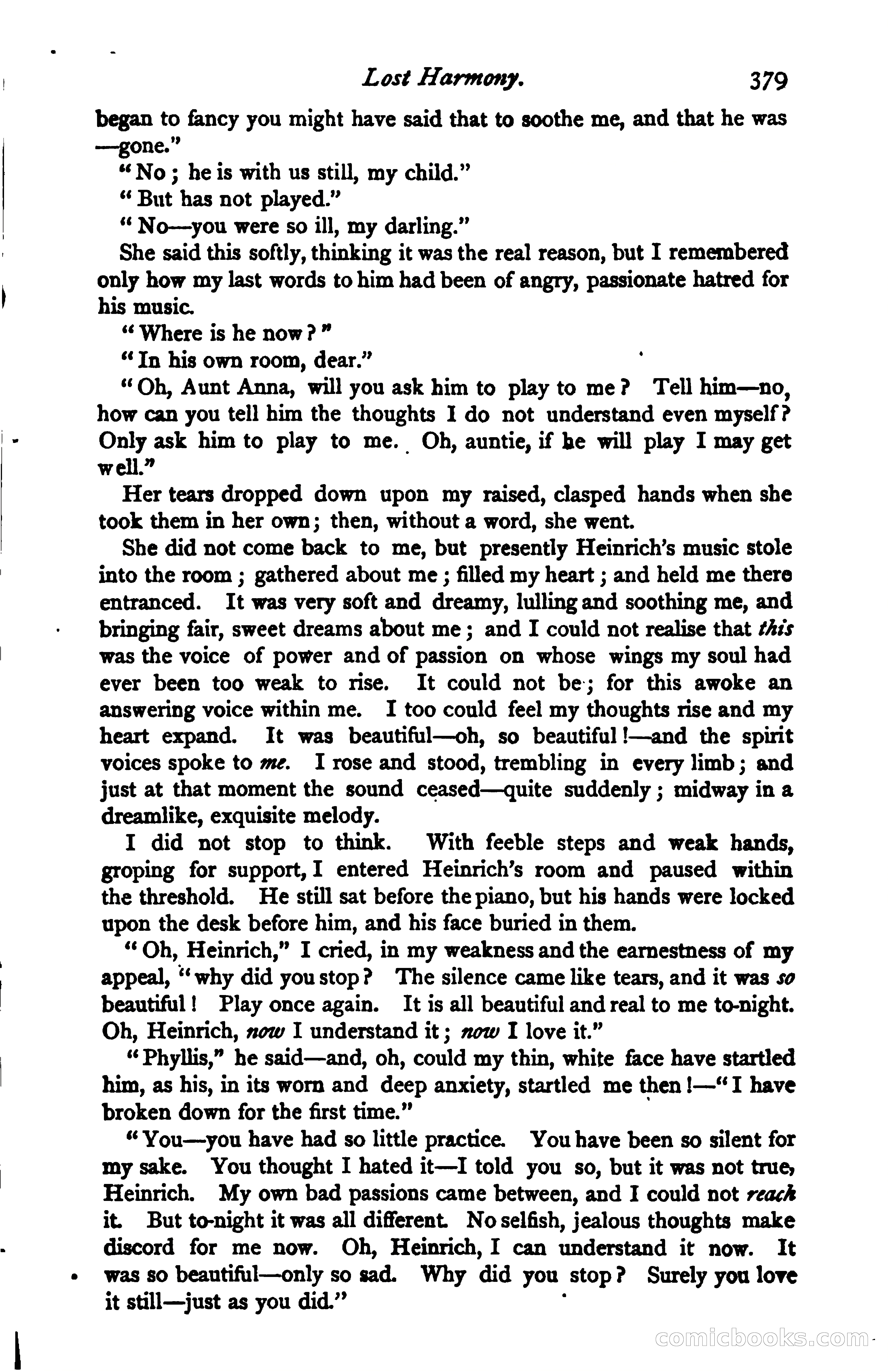
A restored page from Pulp Fiction, 1875. Page through the whole issue in the reader above.
📄 Transcribed text from this page (OCR, searchable)
Machine-transcribed from the original scan — historical spelling and the odd misread are preserved.
Lost Harmony. 379 began to fancy you might have said that to soothe me, and that he was —gone.” **No; he is with us still, my child.” * But has not played.” ** No—you were so il], my darling.” She said this softly, thinking it was the real reason, but I remembered only how my last words to him had been of angry, passionate hatred tor his music. ‘‘ Where is he now?” ‘Tn his own room, dear.” “Oh, Aunt Anna, will you ask him to play to me? Tell him—no, how can you tell him the thoughts I do not understand even myself? Only ask him to play to me. Oh, auntie, if be will play I may get well.” Her tears dropped down upon my raised, clasped hands when she took them in her own; then, without a word, she went. She did not come back to me, but presently Heinrich’s music stole into the room ; gathered about me; filled my heart ; and held me there entranced. It was very soft and dreamy, lulling and soothing me, and bringing fair, sweet dreams about me; and I could not realise that sh#s was the voice of power and of passion on whose wings my soul had ever been too weak to mse. It could not be; for this awoke an answering voice within me. I too could feel my thoughts rise and my heart expand. It was beautiful—oh, so beautiful !—and the spint voices spoke to me. I rose and stood, trembling in every limb; and just at that moment the sound ceased—quite suddenly ; midway in a dreamlike, exquisite melody. I did not stop to think. With feeble steps and weak hands, groping for support, I entered Heinrich’s room and paused within the threshold. He still sat before the piano, but his hands were locked upon the desk before him, and his face buried in them. ‘¢Oh, Heinrich,” I cried, in my weakness and the earnestness of my appeal, “‘why did youstop? The silence came like tears, and it was so beautiful! Play once again. It is all beautiful and real to me to-night. Oh, Heinrich, now I understand it; zow I love it.” ‘‘ Phyllis,” he said—and, oh, could my thin, white face have startled him, as his, in its worn and deep anxiety, startled me then !—“T have broken down for the first time.” “ You—you have had so little practice. You have been so silent for my sake. You thought I hated it—I told you so, but it was not true, Heinrich. My own bad passions came between, and I could not reack it. But to-night it was all different. Noselfish, jealous thoughts make discord for me now. Oh, Heinrich, I can understand it now. It was so beautiful—only so sad. Why did you stop P Surely you love it still—just as you did.” CORnniclooolkks (CO)