
Pulp Fiction, 1875 · page 372 of 400
The Argosy — page 372: what you’re looking at
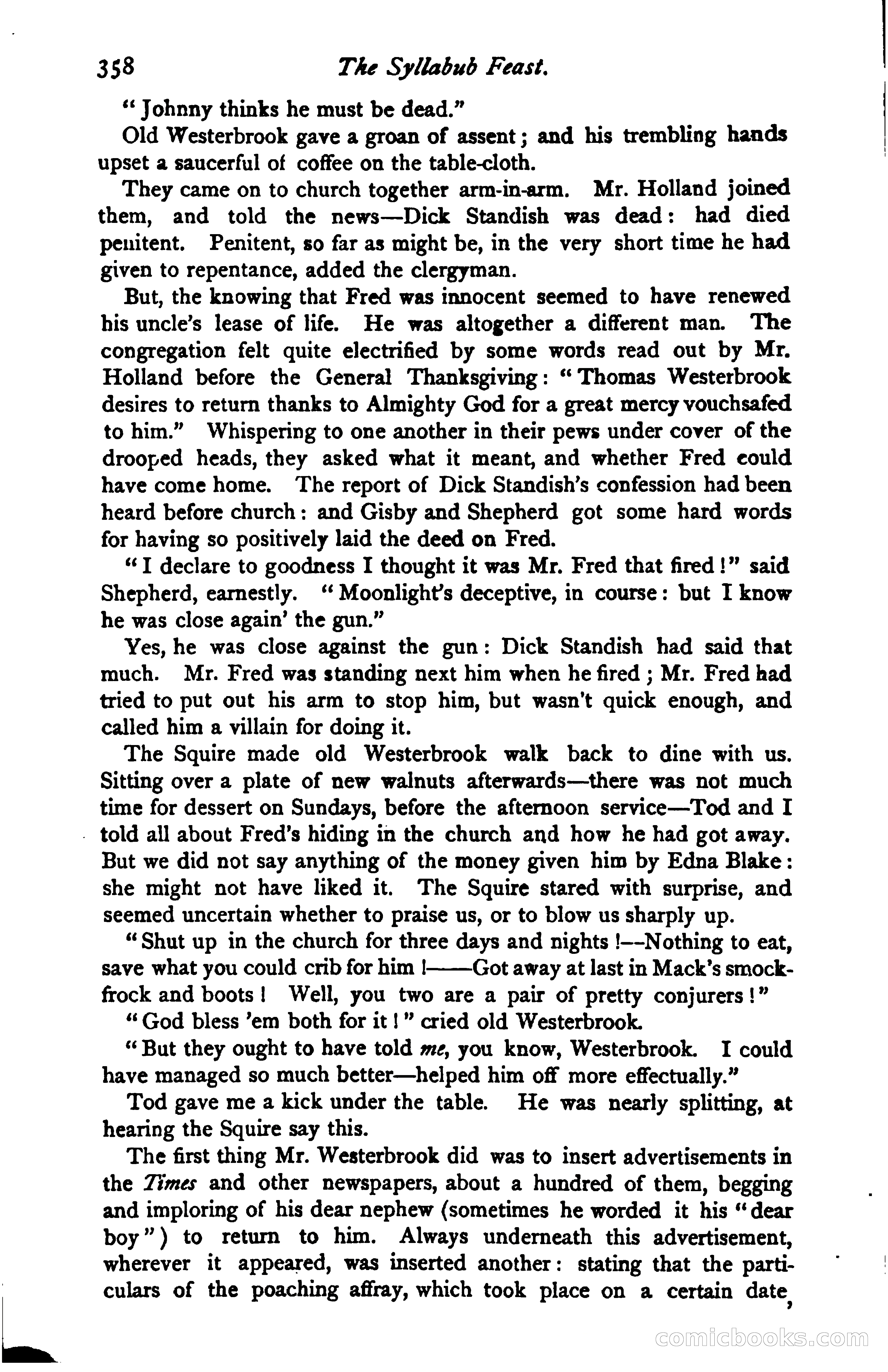
A restored page from Pulp Fiction, 1875. Page through the whole issue in the reader above.
📄 Transcribed text from this page (OCR, searchable)
Machine-transcribed from the original scan — historical spelling and the odd misread are preserved.
358 The Syllabub Feast. ‘¢ Johnny thinks he must be dead.” Old Westerbrook gave a groan of assent; and his trembling hands upset a saucerful of coffee on the table-cloth. They came on to church together arm-in-arm. Mr. Holland joined them, and told the news—Dick Standish was dead: had died penitent. Penitent, so far as might be, in the very short time he had given to repentance, added the clergyman. But, the knowing that Fred was innocent seemed to have renewed his uncle’s lease of life. He was altogether a different man. The congregation felt quite electrified by some words read out by Mr. Holland before the General Thanksgiving: “ Thomas Westerbrook desires to return thanks to Almighty God for a great mercy vouchsafed to him.” Whispering to one another in their pews under cover of the drooped heads, they asked what it meant, and whether Fred could have come home. The report of Dick Standish’s confession had been heard before church: and Gisby and Shepherd got some hard words for having so positively laid the deed on Fred. ‘‘T declare to goodness I thought it was Mr. Fred that fired!” said Shepherd, earnestly. ‘‘ Moonlight’s deceptive, in course: but I know he was close again’ the gun.” Yes, he was close against the gun: Dick Standish had said that much. Mr. Fred was standing next him when he fired ; Mr. Fred had tried to put out his arm to stop him, but wasn’t quick enough, and called him a villain for doing it. The Squire made old Westerbrook walk back to dine with us. Sitting over a plate of new walnuts afterwards—there was not much time for dessert on Sundays, before the afternoon service—Tod and I _ told all about Fred’s hiding in the church and how he had got away. But we did not say anything of the money given him by Edna Blake: she might not have liked it. The Squire stared with surprise, and seemed uncertain whether to praise us, or to blow us sharply up. “Shut up in the church for three days and nights !—--Nothing to eat, save what you could crib for him | Got away at last in Mack’s smock- frock and boots! Well, you two are a pair of pretty conjurers !” ‘God bless ’em both for it!” cried old Westerbrook. ‘But they ought to have told me, you know, Westerbrook. I could have managed so much better—helped him off more effectually.” Tod gave me a kick under the table. He was nearly splitting, at hearing the Squire say this. The first thing Mr. Westerbrook did was to insert advertisements in the Zimes and other newspapers, about a hundred of them, begging and imploring of his dear nephew (sometimes he worded it his “dear boy”) to return to him. Always underneath this advertisement, wherever it appeared, was inserted another: stating that the parti- culars of the poaching affray, which took place on a certain date CORnniclooolkks (CO)