
Pulp Fiction, 1875 · page 295 of 400
The Argosy — page 295: what you’re looking at
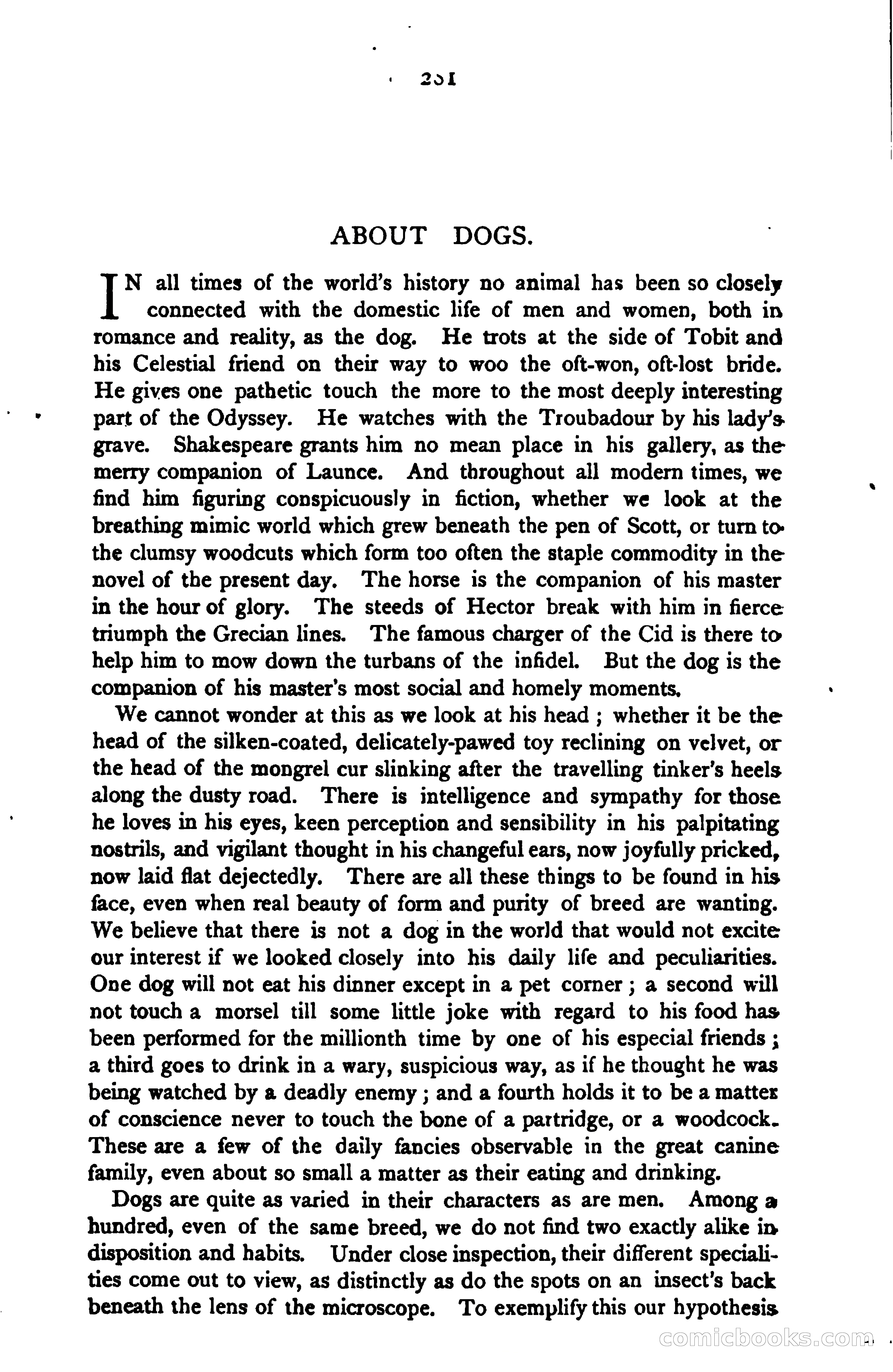
A restored page from Pulp Fiction, 1875. Page through the whole issue in the reader above.
📄 Transcribed text from this page (OCR, searchable)
Machine-transcribed from the original scan — historical spelling and the odd misread are preserved.
ABOUT DOGS. N all times of the world’s history no animal has been so closely connected with the domestic hfe of men and women, both in romance and reality, as the dog. He trots at the side of Tobit and his Celestial friend on their way to woo the oft-won, oft-lost bride. He gives one pathetic touch the more to the most deeply interesting part of the Odyssey. He watches with the Troubadour by his lady’s grave. Shakespeare grants him no mean place in his gallery, as the merry companion of Launce. And throughout all modern times, we find him figuring conspicuously in fiction, whether we look at the breathing mimic world which grew beneath the pen of Scott, or turn to. the clumsy woodcuts which form too often the staple commodity in the novel of the present day. The horse is the companion of his master in the hour of glory. The steeds of Hector break with him in fierce triumph the Grecian lines. The famous charger of the Cid is there to help him to mow down the turbans of the infidel. But the dog is the companion of his master’s most social and homely moments, We cannot wonder at this as we look at his head ; whether it be the head of the silken-coated, delicately-pawed toy reclining on velvet, or the head of the mongrel cur slinking after the travelling tinker’s heels along the dusty road. There 1s intelligence and sympathy for those he loves in his eyes, keen perception and sensibility in his palpitating nostrils, and vigilant thought in his changeful ears, now joyfully pricked, now laid flat dejectedly. There are all these things to be found in his face, even when real beauty of form and purity of breed are wanting. We believe that there is not a dog in the world that would not excite our interest if we looked closely into his daily life and peculiarities. One dog will not eat his dinner except in a pet corner ; a second will not touch a morsel till some little joke with regard to his food has been performed for the millionth time by one of his especial friends ; a third goes to drink in a wary, suspicious way, as if he thought he was being watched by a deadly enemy ; and a fourth holds it to be a matter of conscience never to touch the bone of a partridge, or a woodcock. These are a few of the daily fancies observable in the great canine family, even about so small a matter as their eating and dnnking. Dogs are quite as varied in their characters as aremen. Among a hundred, even of the same breed, we do not find two exactly alike in disposition and habits. Under close inspection, their different speciali- ties come out to view, as distinctly as do the spots on an insect’s back beneath the lens of the microscope. To exemplify this our hypothesis EOMRniilElooe _ SS (CO)