
Pulp Fiction, 1875 · page 232 of 400
The Argosy — page 232: what you’re looking at
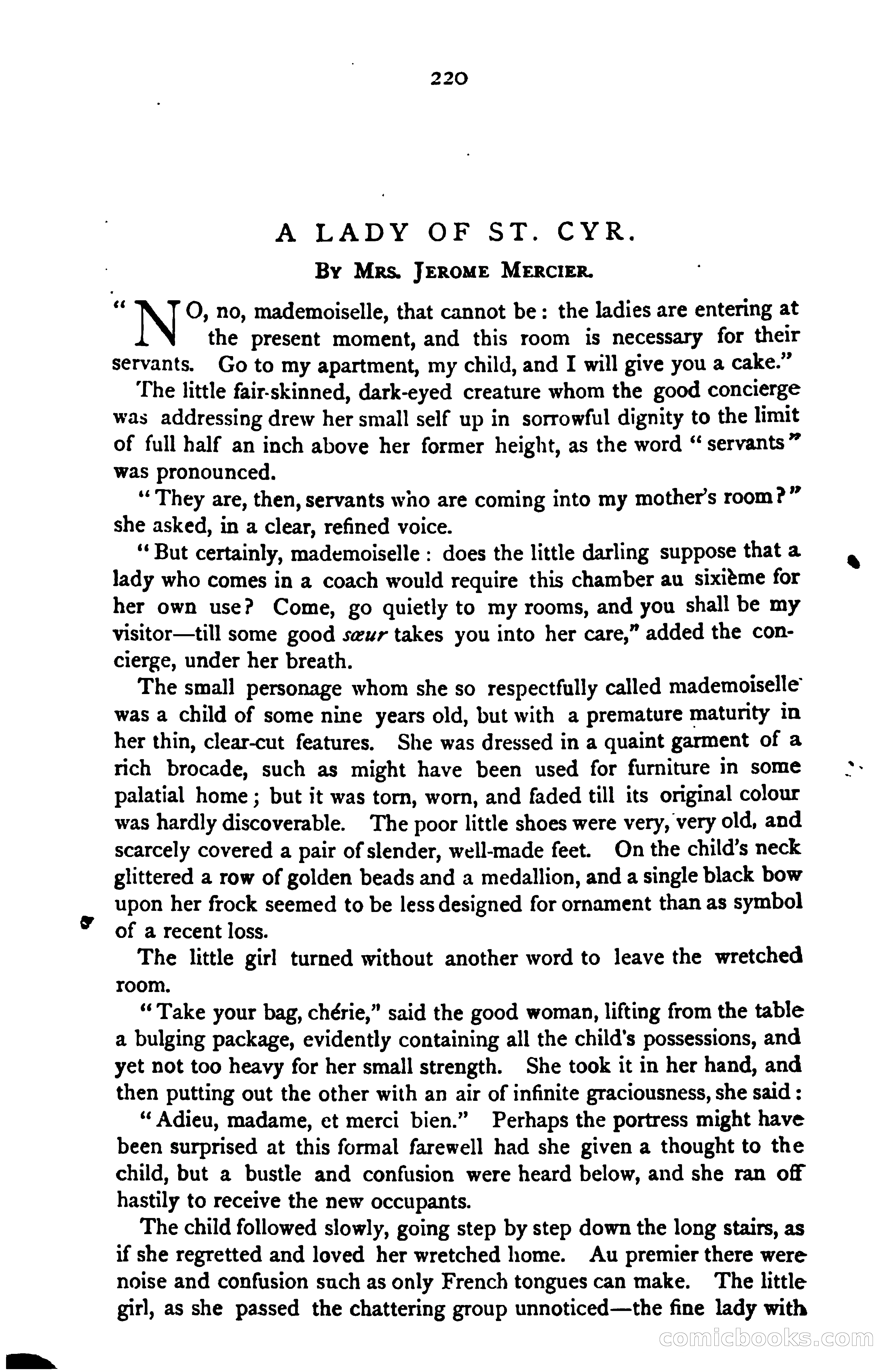
A restored page from Pulp Fiction, 1875. Page through the whole issue in the reader above.
📄 Transcribed text from this page (OCR, searchable)
Machine-transcribed from the original scan — historical spelling and the odd misread are preserved.
A LADY OF ST. CYR. By Mrs. JEROME MERCIER. “ N O, no, mademoiselle, that cannot be: the ladies are entering at the present moment, and this room is necessary for their servants. Go to my apartment, my child, and I will give you a cake.” The little fair-skinned, dark-eyed creature whom the good concierge was addressing drew her small self up in sorrowful dignity to the limit of full half an inch above her former height, as the word “ servants” was pronounced. ‘They are, then, servants wno are coming into my mother’s room?” she asked, in a clear, refined voice. ‘But certainly, mademoiselle : does the little darling suppose that a lady who comes in a coach would require this chamber au sixitme for her own use? Come, go quietly to my rooms, and you shall be my visitor—till some good saur takes you into her care,” added the con- cierge, under her breath. The small personage whom she so respectfully called mademoiselle was a child of some nine years old, but with a premature maturity in her thin, clear-cut features. She was dressed in a quaint garment of a rich brocade, such as might have been used for furniture in some palatial home ; but it was torn, worn, and faded till its original colour was hardly discoverable. The poor little shoes were very, very old, and scarcely covered a pair of slender, well-made feet. On the child’s neck glittered a row of golden beads and a medallion, and a single black bow upon her frock seemed to be less designed for ornament than as symbol of a recent loss. The little girl turned without another word to leave the wretched room. “Take your bag, chérie,” said the good woman, lifting from the table a bulging package, evidently containing all the child’s possessions, and yet not too heavy for her small strength. She took it in her hand, and then putting out the other with an air of infinite graciousness, she said : ‘“‘ Adieu, madame, et merci bien.” Perhaps the portress might have been surprised at this formal farewell had she given a thought to the child, but a bustle and confusion were heard below, and she ran off hastily to receive the new occupants. The child followed slowly, going step by step down the long stairs, as if she regretted and loved her wretched home. Au premier there were noise and confusion such as only French tongues can make. The little girl, as she passed the chattering group unnoticed—the fine lady with ecomniclooolkks _ (CO)