
Pulp Fiction, 1875 · page 179 of 400
The Argosy — page 179: what you’re looking at
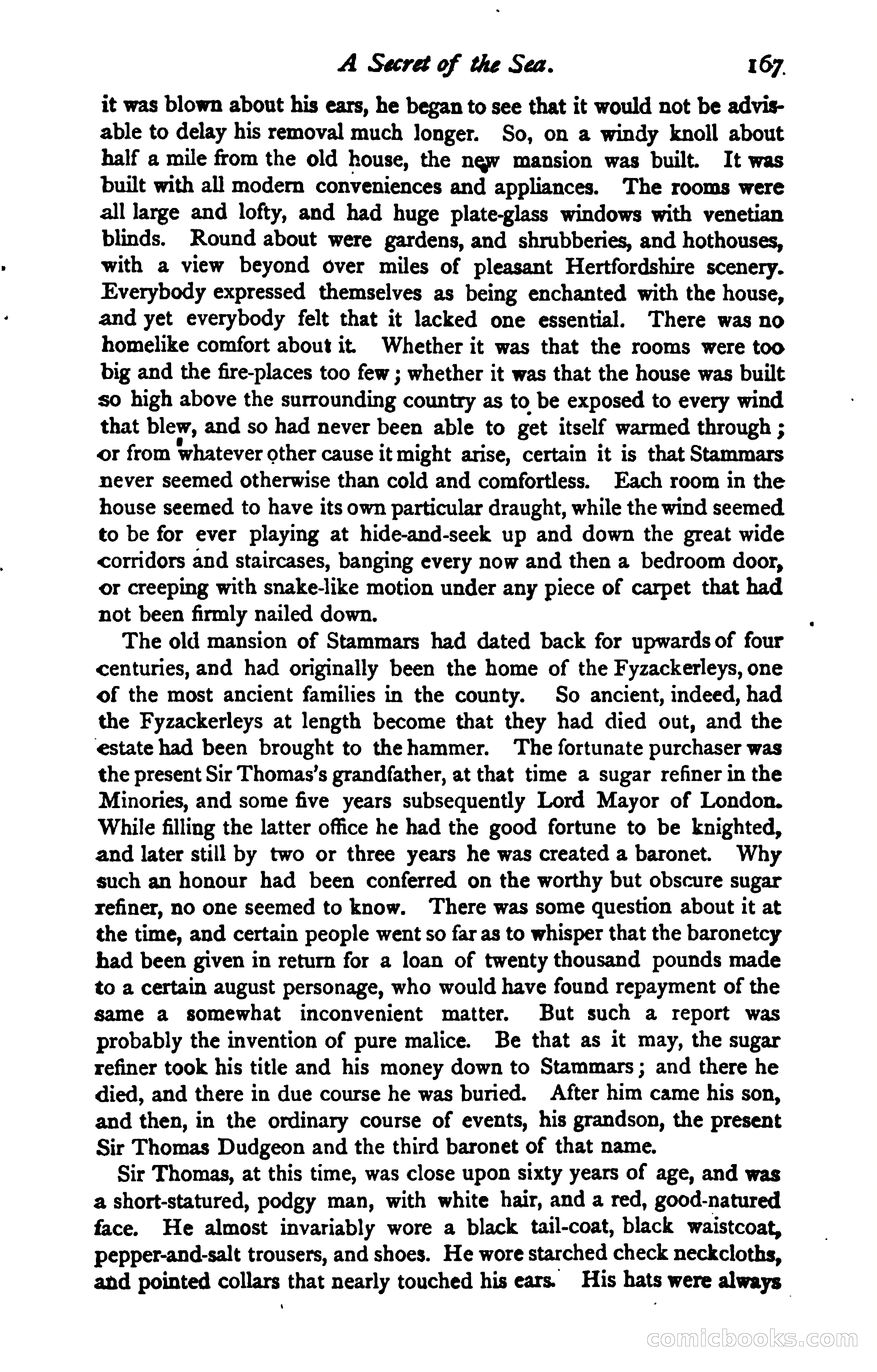
A restored page from Pulp Fiction, 1875. Page through the whole issue in the reader above.
📄 Transcribed text from this page (OCR, searchable)
Machine-transcribed from the original scan — historical spelling and the odd misread are preserved.
A Secret of the Sea. 167. it was blown about his ears, he began to see that it would not be advis- able to delay his removal much longer. So, on a windy knoll about half a mile from the old house, the new mansion was built. It was built with all modern conveniences and appliances. The rooms were all large and lofty, and had huge plate-glass windows with venetian blinds. Round about were gardens, and shrubberies, and hothouses, with a view beyond over miles of pleasant Hertfordshire scenery. Everybody expressed themselves as being enchanted with the house, and yet everybody felt that it lacked one essential. There was no homelike comfort about it. Whether it was that the rooms were too big and the fire-places too few ; whether it was that the house was built so high above the surrounding country as to be exposed to every wind that blew, and so had never been able to get itself warmed through ; or from whatever other cause it might arise, certain it is that Stammars never seemed otherwise than cold and comfortless. Each room in the house seemed to have its own particular draught, while the wind seemed. to be for ever playing at hide-and-seek up and down the great wide corridors and staircases, banging every now and then a bedroom door, or creeping with snake-like motion under any piece of carpet that had not been firmly nailed down. The old mansion of Stammars had dated back for upwards of four centuries, and had originally been the home of the Fyzackerleys, one of the most ancient families in the county. So ancient, indeed, had the Fyzackerleys at length become that they had died out, and the estate had been brought to thehammer. The fortunate purchaser was the present Sir Thomas’s grandfather, at that time a sugar refiner in the Minories, and some five years subsequently Lord Mayor of London. While filling the latter office he had the good fortune to be knighted, and later still by two or three years he was created a baronet. Why such an honour had been conferred on the worthy but obscure sugar refiner, no one seemed to know. ‘There was some question about it at the time, and certain people went so far as to whisper that the baronetcy had been given in return for a loan of twenty thousand pounds made to a certain august personage, who would have found repayment of the same a somewhat inconvenient matter. But such a report was probably the invention of pure malice. Be that as it may, the sugar refiner took his title and his money down to Stammars ; and there he died, and there in due course he was buried. After him came his son, and then, in the ordinary course of events, his grandson, the present Sir Thomas Dudgeon and the third baronet of that name. Sir Thomas, at this time, was close upon sixty years of age, and was a short-statured, podgy man, with white hair, and a red, good-natured face. He almost invariably wore a black tail-coat, black waistcoat, pepper-and-salt trousers, and shoes. He wore starched check neckcloths, and pointed collars that nearly touched his ears. His hats were always” CORNICE OOS (GO)