
Pulp Fiction, 1865 · page 355 of 399
The Argosy — page 355: what you’re looking at
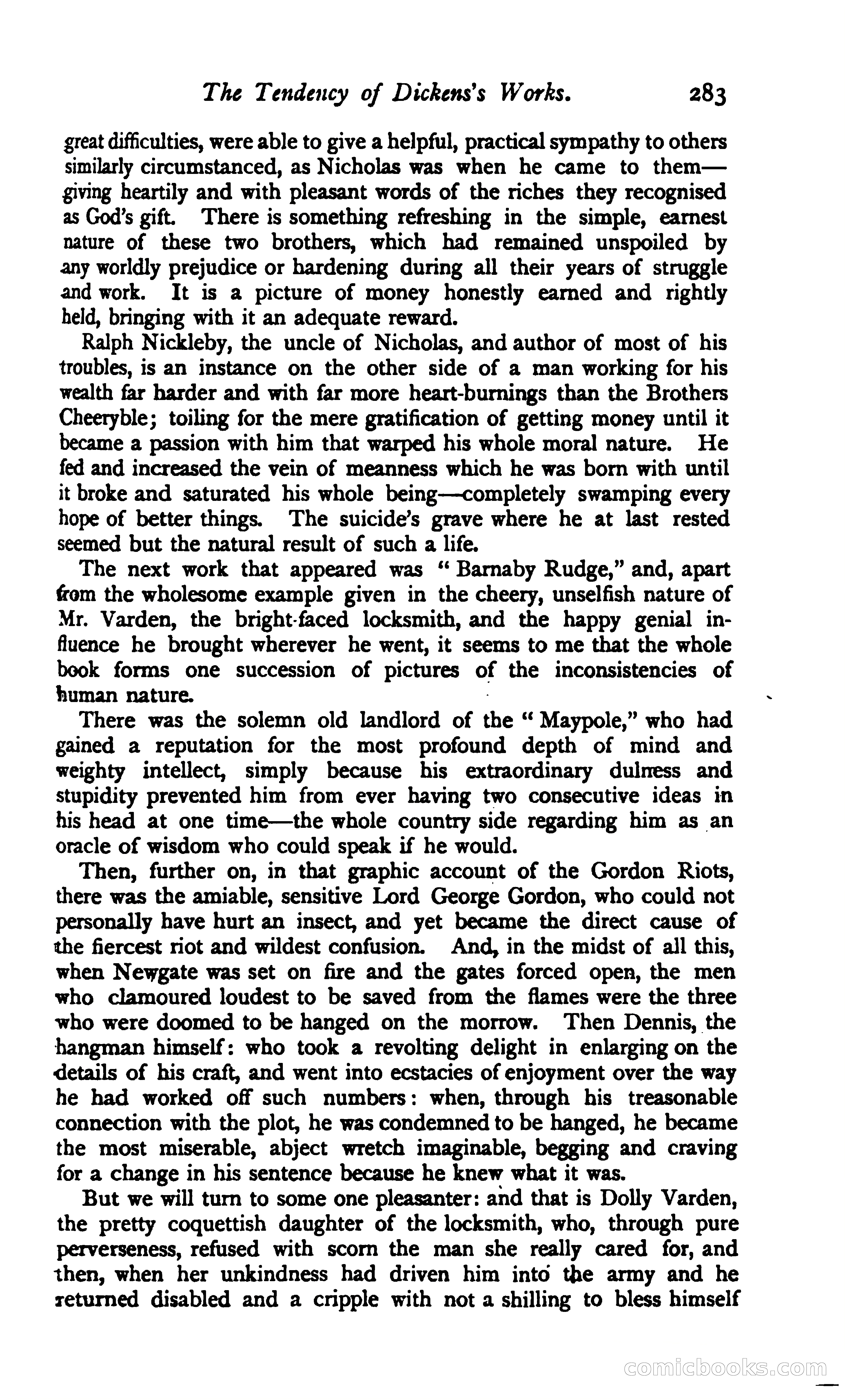
A restored page from Pulp Fiction, 1865. Page through the whole issue in the reader above.
📄 Transcribed text from this page (OCR, searchable)
Machine-transcribed from the original scan — historical spelling and the odd misread are preserved.
The Tendency of Dickens's Works. 283 great difficulties, were able to give a helpful, practical sympathy to others similarly circumstanced, as Nicholas was when he came to them— giving heartily and with pleasant words of the riches they recognised as God’s gift. There is something refreshing in the simple, earnest nature of these two brothers, which had remained unspoiled by any worldly prejudice or hardening during all their years of struggle and work. It is a picture of money honestly earned and rightly held, bringing with it an adequate reward. Ralph Nickleby, the uncle of Nicholas, and author of most of his troubles, is an instance on the other side of a man working for his wealth far harder and with far more heart-burnings than the Brothers Cheeryble; toiling for the mere gratification of getting money until it became a passion with him that warped his whole moral nature. He fed and increased the vein of meanness which he was born with until it broke and saturated his whole being—completely swamping every hope of better things. The suicide’s grave where he at last rested seemed but the natural result of such a life. The next work that appeared was ‘“‘ Barnaby Rudge,” and, apart fram the wholesome example given in the cheery, unselfish nature of Mr. Varden, the bright-faced locksmith, and the happy genial in- fluence he brought wherever he went, it seems to me that the whole beok forms one succession of pictures of the inconsistencies of human nature. There was the solemn old landlord of the “‘ Maypole,” who had gained a reputation for the most profound depth of mind and weighty intellect, simply because his extraordinary dulness and stupidity prevented him from ever having two consecutive ideas in his head at one time—the whole country side regarding him as an oracle of wisdom who could speak if he would. Then, further on, in that graphic account of the Gordon Riots, there was the amiable, sensitive Lord George Gordon, who could not personally have hurt an insect, and yet became the direct cause of the fiercest riot and wildest confusion. And, in the midst of all this, when Newgate was set on fire and the gates forced open, the men who clamoured loudest to be saved from the flames were the three who were doomed to be hanged on the morrow. Then Dennis, the hangman himself: who took a revolting delight in enlarging on the details of his craft, and went into ecstacies of enjoyment over the way he had worked off such numbers: when, through his treasonable connection with the plot, he was condemned to be hanged, he became the most miserable, abject wretch imaginable, begging and craving for a change in his sentence because he knew what it was. But we will turn to some one pleasanter: and that is Dolly Varden, the pretty coquettish daughter of the locksmith, who, through pure perverseness, refused with scorn the man she really cared for, and then, when her unkindness had driven him into the army and he returned disabled and a cripple with not a shilling to bless himself CORnICclooo SS (GO)