
Pulp Fiction, 1865 · page 223 of 399
The Argosy — page 223: what you’re looking at
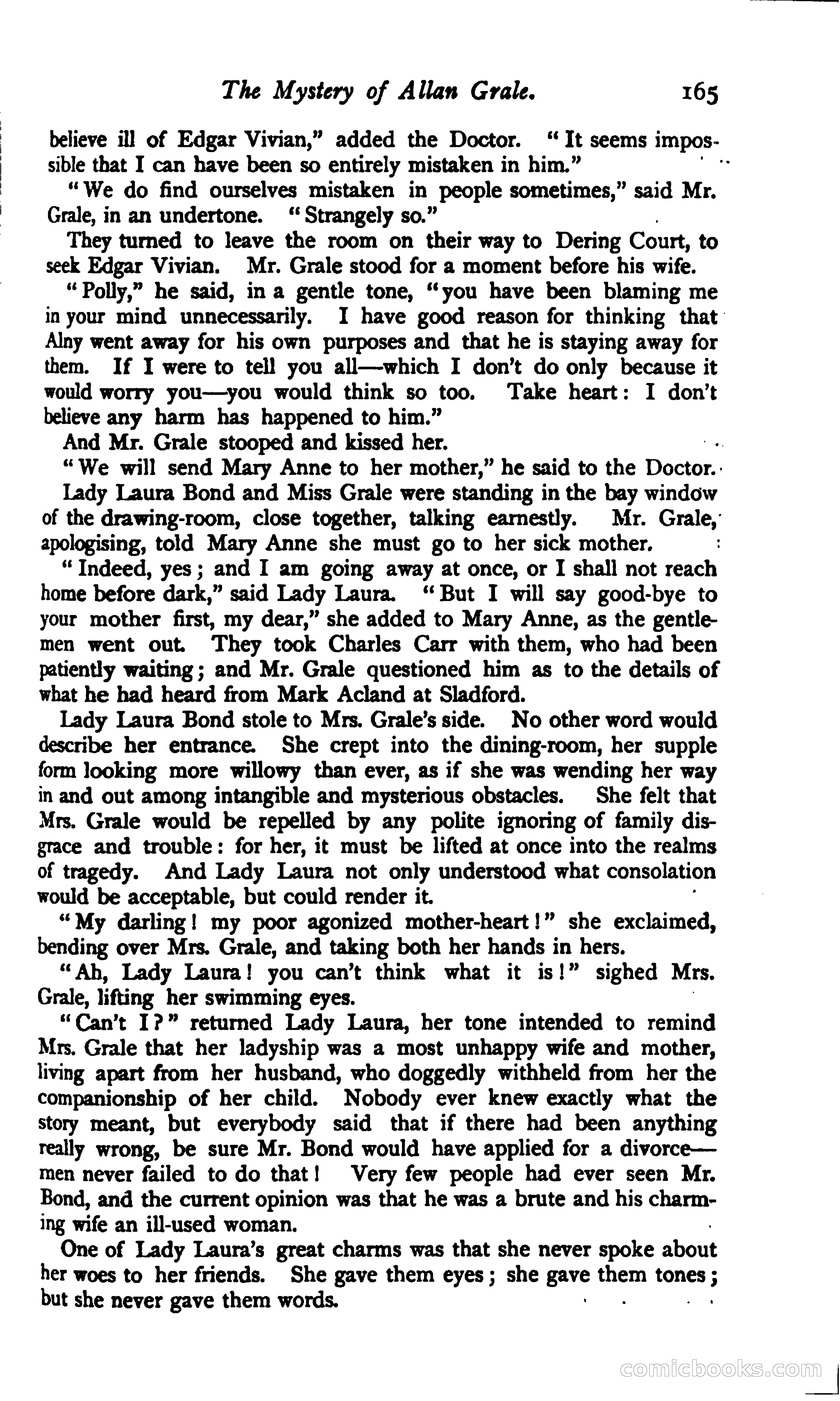
A restored page from Pulp Fiction, 1865. Page through the whole issue in the reader above.
📄 Transcribed text from this page (OCR, searchable)
Machine-transcribed from the original scan — historical spelling and the odd misread are preserved.
The Mystery of Allan Grale. 165 believe ill of Edgar Vivian,” added the Doctor. ‘“ It seems impos- sible that I can have been so entirely mistaken in him.” . “We do find ourselves mistaken in people sometimes,” said Mr. Grale, in an undertone. ‘“ Strangely so.” They turned to leave the room on their way to Dering Court, to seek Edgar Vivian. Mr. Grale stood for a moment before his wife. “Polly,” he said, ina gentle tone, “you have been blaming me in your mind unnecessarily. I have good reason for thinking that: Alny went away for his own purposes and that he is staying away for them. If I were to tell you all—which I don’t do only because it would worry you—you would think so too. Take heart: I don’t believe any harm has happened to him.” And Mr. Grale stooped and kissed her. | “We will send Mary Anne to her mother,” he said to the Doctor. . Lady Laura Bond and Miss Grale were standing in the bay window of the drawing-room, close together, talking earnestly. Mr. Grale,: apologising, told Mary Anne she must go to her sick mother. “ Indeed, yes; and I am going away at once, or I shall not reach home before dark,” said Lady Laura. ‘ But I will say good-bye to your mother first, my dear,” she added to Mary Anne, as the gentle- men went out. They took Charles Carr with them, who had been patiently waiting; and Mr. Grale questioned him as to the details of what he had heard from Mark Acland at Sladford. Lady Laura Bond stole to Mrs. Grale’s side. No other word would describe her entrance. She crept into the dining-room, her supple form looking more willowy than ever, as if she was wending her way in and out among intangible and mysterious obstacles. She felt that Mrs. Grale would be repelled by any polite ignoring of family dis- erace and trouble: for her, it must be lifted at once into the realms of tragedy. And Lady Laura not only understood what consolation would be acceptable, but could render it. “My darling! my poor agonized mother-heart!” she exclaimed, bending over Mrs. Grale, and taking both her hands in hers. “Ah, Lady Laura! you can’t think what it is!” sighed Mrs. Grale, lifting her swimming eyes. “Can’t I?” returned Lady Laura, her tone intended to remind Mrs. Grale that her ladyship was a most unhappy wife and mother, living apart from her husband, who doggedly withheld from her the companionship of her child. Nobody ever knew exactly what the story meant, but everybody said that if there had been anything really wrong, be sure Mr. Bond would have applied for a divorce— men never failed to do that! Very few people had ever seen Mr. Bond, and the current opinion was that he was a brute and his charm- ing wife an ill-used woman. One of Lady Laura’s great charms was that she never spoke about her woes to her friends. She gave them eyes; she gave them tones ; but she never gave them words. GOGO S (SO)