
Pulp Fiction, 1865 · page 200 of 399
The Argosy — page 200: what you’re looking at
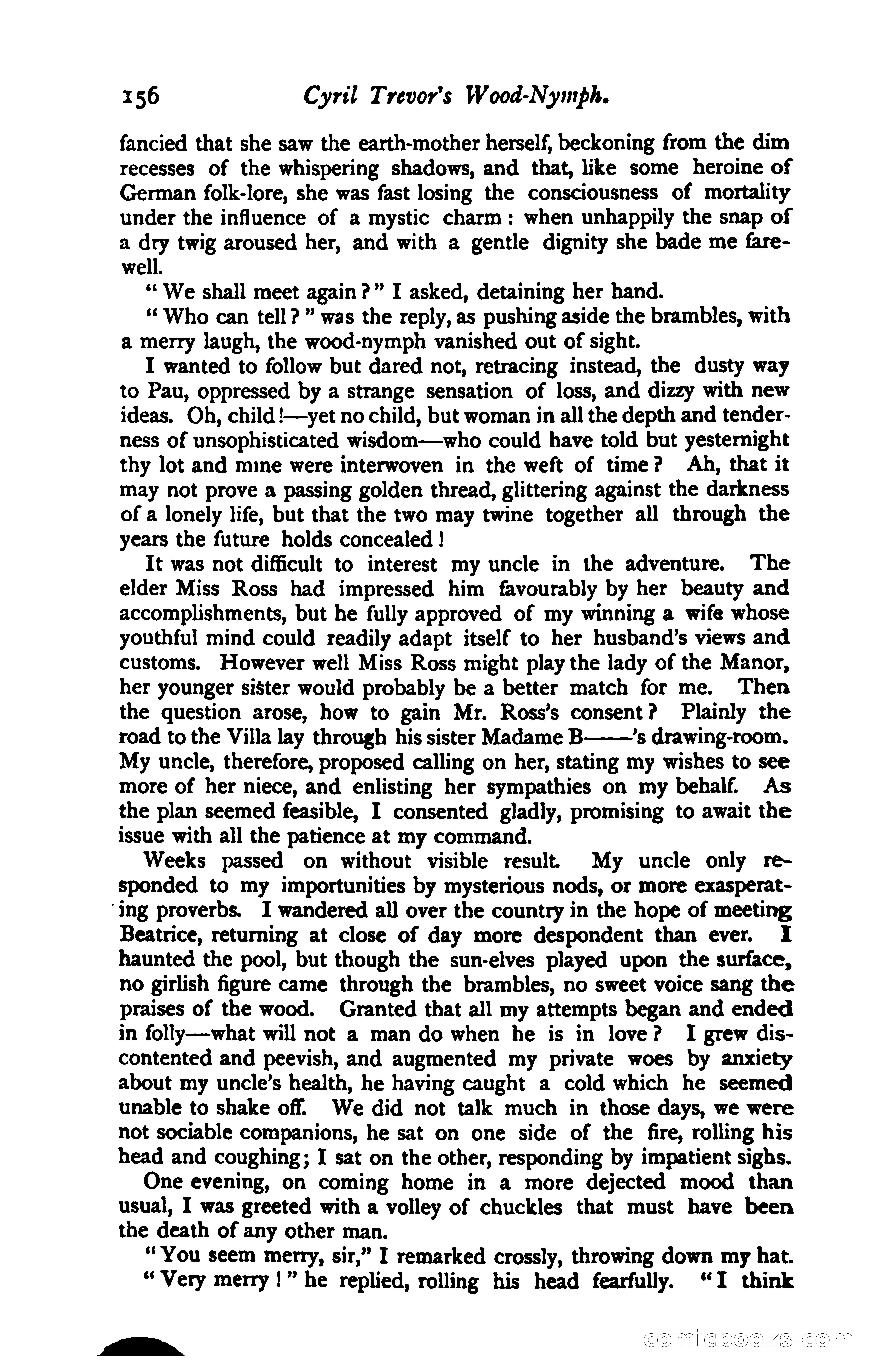
A restored page from Pulp Fiction, 1865. Page through the whole issue in the reader above.
📄 Transcribed text from this page (OCR, searchable)
Machine-transcribed from the original scan — historical spelling and the odd misread are preserved.
156 Cyril Trevor's Wood-Nymph. fancied that she saw the earth-mother herself, beckoning from the dim recesses of the whispering shadows, and that, like some heroine of German folk-lore, she was fast losing the consciousness of mortality under the influence of a mystic charm: when unhappily the snap of a dry twig aroused her, and with a gentle dignity she bade me fare- well. ‘‘ We shall meet again?” I asked, detaining her hand. ‘* Who can tell?” was the reply, as pushing aside the brambles, with a merry laugh, the wood-nymph vanished out of sight. I wanted to follow but dared not, retracing instead, the dusty way to Pau, oppressed by a strange sensation of loss, and dizzy with new ideas. Oh, child !—yet no child, but woman in all the depth and tender- ness of unsophisticated wisdom—who could have told but yesternight thy lot and mine were interwoven in the weft of time? Ah, that it may not prove a passing golden thread, glittering against the darkness of a lonely life, but that the two may twine together all through the years the future holds concealed ! It was not difficult to interest my uncle in the adventure. The elder Miss Ross had impressed him favourably by her beauty and accomplishments, but he fully approved of my winning a wife whose youthful mind could readily adapt itself to her husband’s views and customs. However well Miss Ross might play the lady of the Manor, her younger sister would probably be a better match for me. Then the question arose, how to gain Mr. Ross’s consent? Plainly the road to the Villa lay through his sister Madame B ’s drawing-room. My uncle, therefore, proposed calling on her, stating my wishes to see more of her niece, and enlisting her sympathies on my behalf. As the plan seemed feasible, I consented gladly, promising to await the issue with all the patience at my command. Weeks passed on without visible result. My uncle only re- sponded to my importunities by mysterious nods, or more exasperat- ‘ing proverbs. I wandered all over the country in the hope of meeting Beatrice, returning at close of day more despondent than ever. I haunted the pool, but though the sun-elves played upon the surface, no girlish figure came through the brambles, no sweet voice sang the praises of the wood. Granted that all my attempts began and ended in folly—what will not a man do when he is in love? I grew dis- contented and peevish, and augmented my private woes by anxiety about my uncle’s health, he having caught a cold which he seemed unable to shake off. We did not talk much in those days, we were not sociable companions, he sat on one side of the fire, rolling his head and coughing; I sat on the other, responding by impatient sighs. One evening, on coming home in a more dejected mood than usual, I was greeted with a volley of chuckles that must have been the death of any other man. “You seem merry, sir,” I remarked crossly, throwing down my hat. “ Very merry!” he replied, rolling his head fearfully. “I think (CO) y- ~ comniclooolkks