
Pulp Fiction, 1865 · page 62 of 399
The Argosy — page 62: what you’re looking at
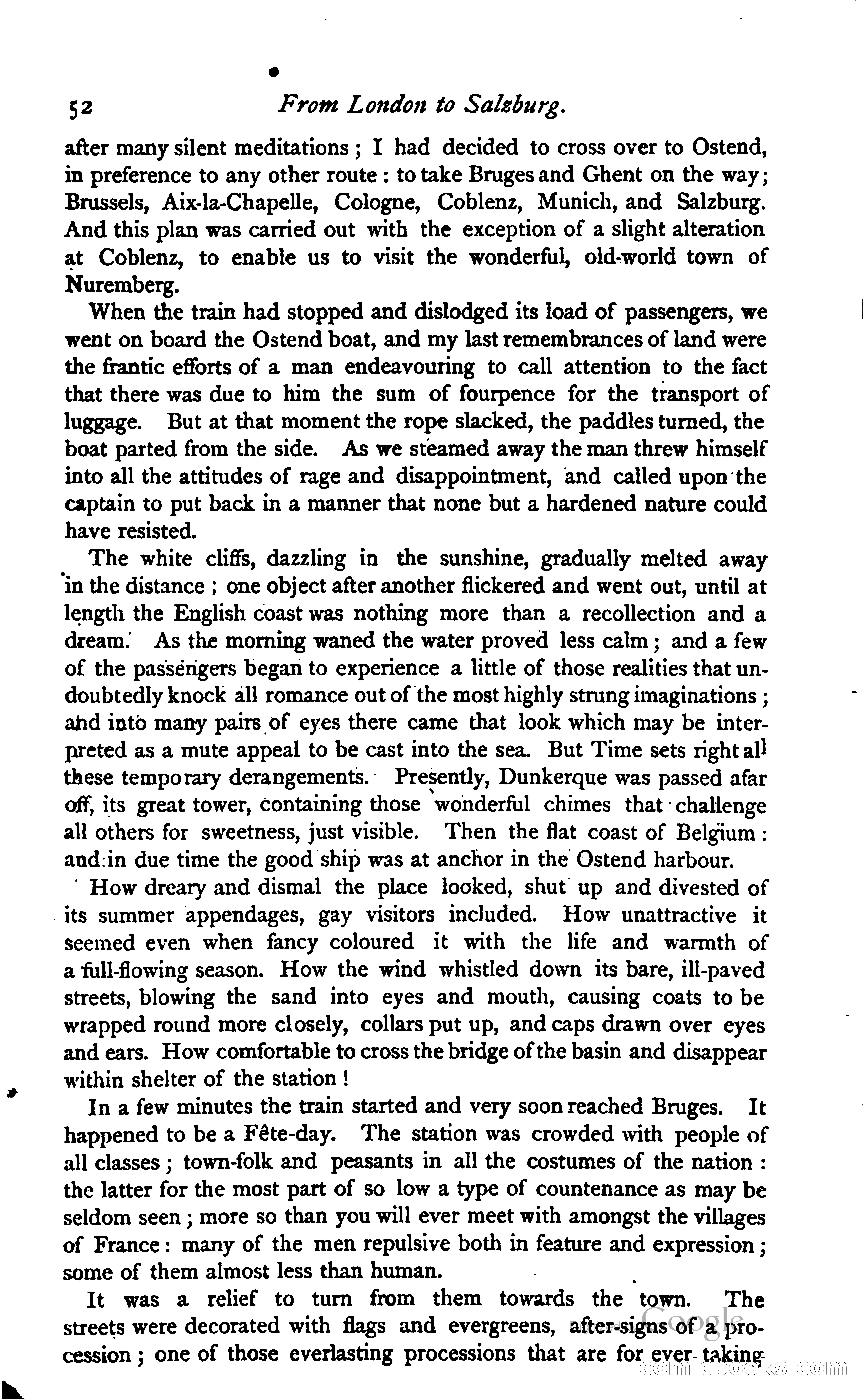
A restored page from Pulp Fiction, 1865. Page through the whole issue in the reader above.
📄 Transcribed text from this page (OCR, searchable)
Machine-transcribed from the original scan — historical spelling and the odd misread are preserved.
52 From London to Saleburg. after many silent meditations ; I had decided to cross over to Ostend, in preference to any other route : to take Bruges and Ghent on the way; Brussels, Aix-la-Chapelle, Cologne, Coblenz, Munich, and Salzburg. And this plan was carried out with the exception of a slight alteration at Coblenz, to enable us to visit the wonderful, old-world town of Nuremberg. When the train had stopped and dislodged its load of passengers, we went on board the Ostend boat, and my last remembrances of land were the frantic efforts of a man endeavouring to call attention to the fact that there was due to him the sum of fourpence for the transport of luggage. But at that moment the rope slacked, the paddles turned, the boat parted from the side. As we steamed away the man threw himself into all the attitudes of rage and disappointment, and called upon the captain to put back in a manner that none but a hardened nature could have resisted. The white cliffs, dazzling in the sunshine, gradually melted away in the distance ; one object after another flickered and went out, until at length the English coast was nothing more than a recollection and a dream. As the morning waned the water proved less calm; and a few of the passéngers began to experience a little of those realities that un- doubtedly knock all romance out of the most highly strung imaginations ; and into many pairs of eyes there came that look which may be inter- preted as a mute appeal to be cast into the sea. But Time sets right all these temporary derangements. Presently, Dunkerque was passed afar off, its great tower, containing those ‘wonderful chimes that: challenge all others for sweetness, just visible. Then the flat coast of Belgium: and:in due time the good ship was at anchor in the Ostend harbour. ' How dreary and dismal the place looked, shut up and divested of _its summer appendages, gay visitors included. How unattractive it seemed even when fancy coloured it with the hfe and warmth of a full-flowing season. How the wind whistled down its bare, ill-paved streets, blowing the sand into eyes and mouth, causing coats to be wrapped round more closely, collars put up, and caps drawn over eyes and ears. How comfortable to cross the bridge of the basin and disappear within shelter of the station ! In a few minutes the train started and very soon reached Bruges. It happened to be a Féte-day. ‘The station was crowded with people of all classes ; town-folk and peasants in all the costumes of the nation : the latter for the most part of so low a type of countenance as may be seldom seen ; more so than you will ever meet with amongst the villages of France: many of the men repulsive both in feature and expression ; some of them almost less than human. It was a relief to turn from them towards the town. The streets were decorated with flags and evergreens, after-signs‘of)a pro- cession ; one of those everlasting processions that are for ever taking OnKS (C(O) in —_)