
Pulp Fiction, 1865 · page 38 of 399
The Argosy — page 38: what you’re looking at
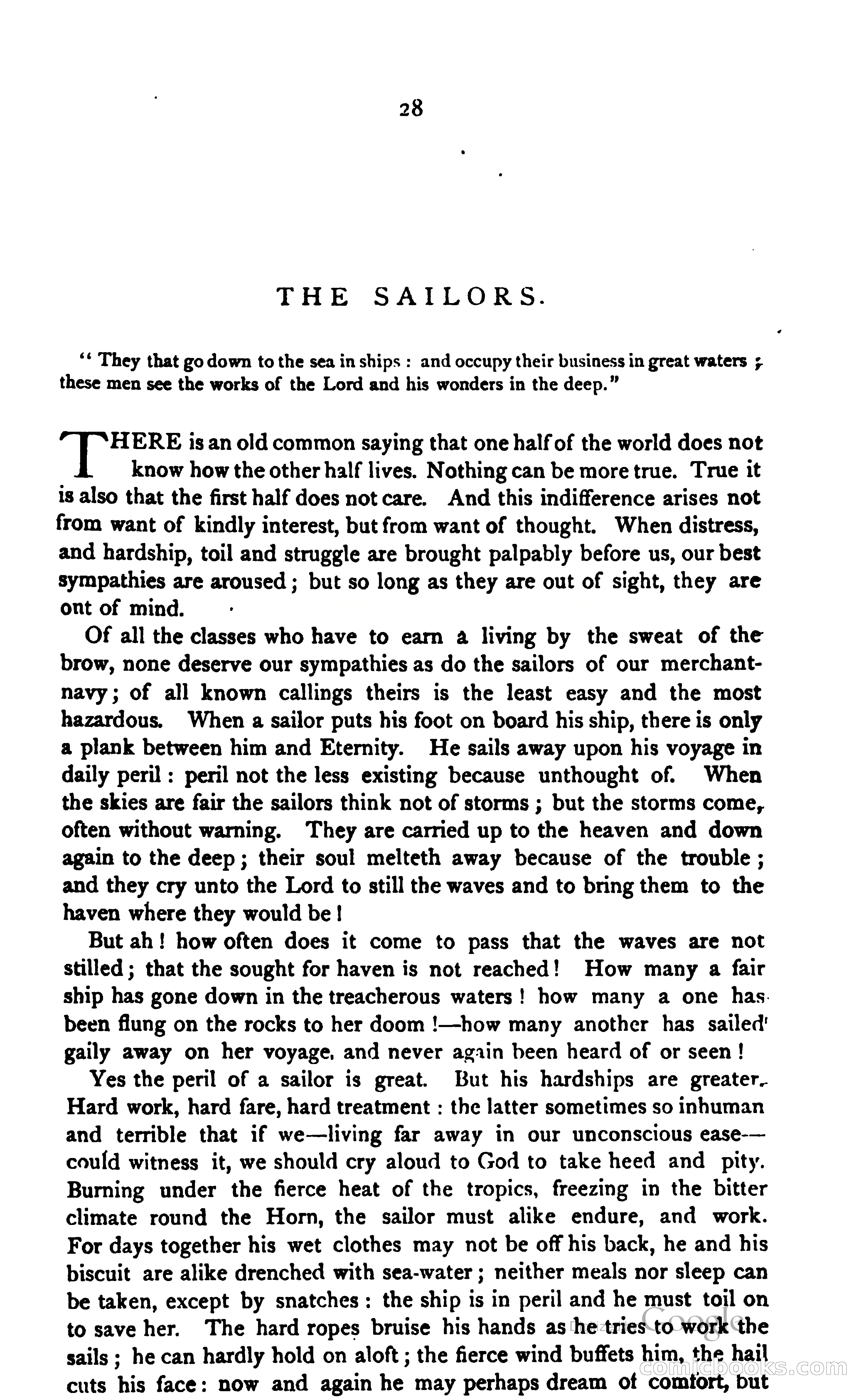
A restored page from Pulp Fiction, 1865. Page through the whole issue in the reader above.
📄 Transcribed text from this page (OCR, searchable)
Machine-transcribed from the original scan — historical spelling and the odd misread are preserved.
THE SAILORS. ‘* They that go down to the sea in ships : and occupy their business in great waters ; these men see the works of the Lord and his wonders in the deep.” HERE 1s an old common saying that one half of the world does not know how the other half lives. Nothing can be more true. True it is also that the first half does not care. And this indifference arises not from want of kindly interest, but from want of thought. When distress, and hardship, toil and struggle are brought palpably before us, our best sympathies are aroused ; but so long as they are out of sight, they are ont of mind. Of all the classes who have to earn a living by the sweat of the brow, none deserve our sympathies as do the sailors of our merchant- navy; of all known callings theirs is the least easy and the most hazardous. When a sailor puts his foot on board his ship, there is only a plank between him and Eternity. He sails away upon his voyage in daily peril : peril not the less existing because unthought of. When the skies are fair the sailors think not of storms ; but the storms come, often without warning. They are carried up to the heaven and down again to the deep; their soul melteth away because of the trouble ; and they cry unto the Lord to still the waves and to bring them to the haven where they would be! But ah! how often does it come to pass that the waves are not stilled ; that the sought for haven is not reached! How many a fair ship has gone down in the treacherous waters! how many a one has. been flung on the rocks to her doom !—how many another has sailed gaily away on her voyage, and never again been heard of or seen! Yes the peril of a sailor is great. But his hardships are greater. Hard work, hard fare, hard treatment : the latter sometimes so inhuman and terrible that if we—living far away in our unconscious ease-— could witness it, we should cry aloud to God to take heed and pity. Burning under the fierce heat of the tropics, freezing in the bitter climate round the Horn, the sailor must alike endure, and work. For days together his wet clothes may not be off his back, he and his biscuit are alike drenched with sea-water ; neither meals nor sleep can be taken, except by snatches: the ship is in peril and he must toil on to save her. The hard ropes bruise his hands as ‘he triesto work‘the (C(O) > sails ; he can hardly hold on aloft; the fierce wind buffets him, ienele . C cuts his face: now and again he may perhaps dream of comto