
Pulp Fiction, 1865 · page 334 of 399
The Argosy — page 334: what you’re looking at
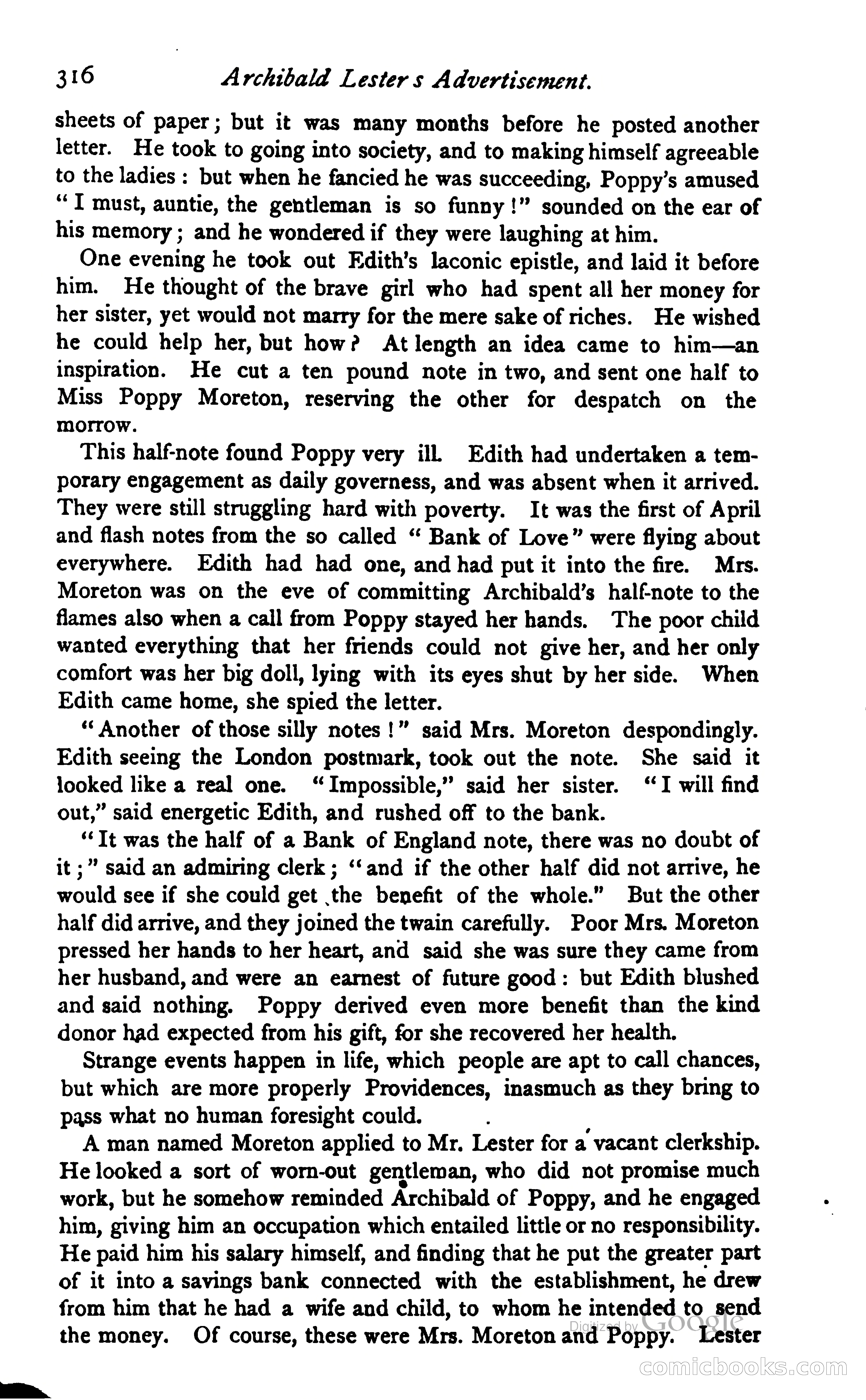
A restored page from Pulp Fiction, 1865. Page through the whole issue in the reader above.
📄 Transcribed text from this page (OCR, searchable)
Machine-transcribed from the original scan — historical spelling and the odd misread are preserved.
316 Archibald Lesters Advertisement. sheets of paper; but it was many months before he posted another letter. He took to going into society, and to making himself agreeable to the ladies : but when he fancied he was succeeding, Poppy’s amused ‘I must, auntie, the gentleman is so funny!” sounded on the ear of his memory ; and he wondered if they were laughing at him. One evening he took out Edith’s laconic epistle, and laid it before him. He thought of the brave girl who had spent all her money for her sister, yet would not marry for the mere sake of riches. He wished he could help her, but how? At length an idea came to him—an inspiration. He cut a ten pound note in two, and sent one half to Miss Poppy Moreton, reserving the other for despatch on the morrow. This half-note found Poppy very ill Edith had undertaken a tem- porary engagement as daily governess, and was absent when it arrived. They were still struggling hard with poverty. It was the first of April and flash notes from the so called “ Bank of Love” were flying about everywhere. Edith had had one, and had put it into the fire. Mrs. Moreton was on the eve of committing Archibald’s half-note to the flames also when a call from Poppy stayed her hands. The poor child wanted everything that her friends could not give her, and her only comfort was her big doll, lying with its eyes shut by her side. When Edith came home, she spied the letter. ‘Another of those silly notes!” said Mrs. Moreton despondingly. Edith seeing the London postmark, took out the note. She said it looked like a real one. “Impossible,” said her sister. ‘I will find out,” said energetic Edith, and rushed off to the bank. ‘Tt was the half of a Bank of England note, there was no doubt of it ;” said an admiring clerk ; ‘‘and if the other half did not arrive, he would see if she could get the benefit of the whole.” But the other half did arrive, and they joined the twain carefully. Poor Mrs. Moreton pressed her hands to her heart, and said she was sure they came from her husband, and were an earnest of future good: but Edith blushed and said nothing. Poppy derived even more benefit than the kind donor had expected from his gift, for she recovered her health. Strange events happen in life, which people are apt to call chances, but which are more properly Providences, inasmuch as they bring to pass what no human foresight could. A man named Moreton applied to Mr. Lester for a vacant clerkship. He looked a sort of worn-out gentleman, who did not promise much work, but he somehow reminded Archibald of Poppy, and he engaged him, giving him an occupation which entailed little or no responsibility. He paid him his salary himself, and finding that he put the greater part of it into a savings bank connected with the establishment, he drew from him that he had a wife and child, to whom he intended to send the money. Of course, these were Mrs. Moreton and Poppy. Lester ECORNICLOOO SS (C(O) mn —_)