
Pulp Fiction, 1865 · page 192 of 399
The Argosy — page 192: what you’re looking at
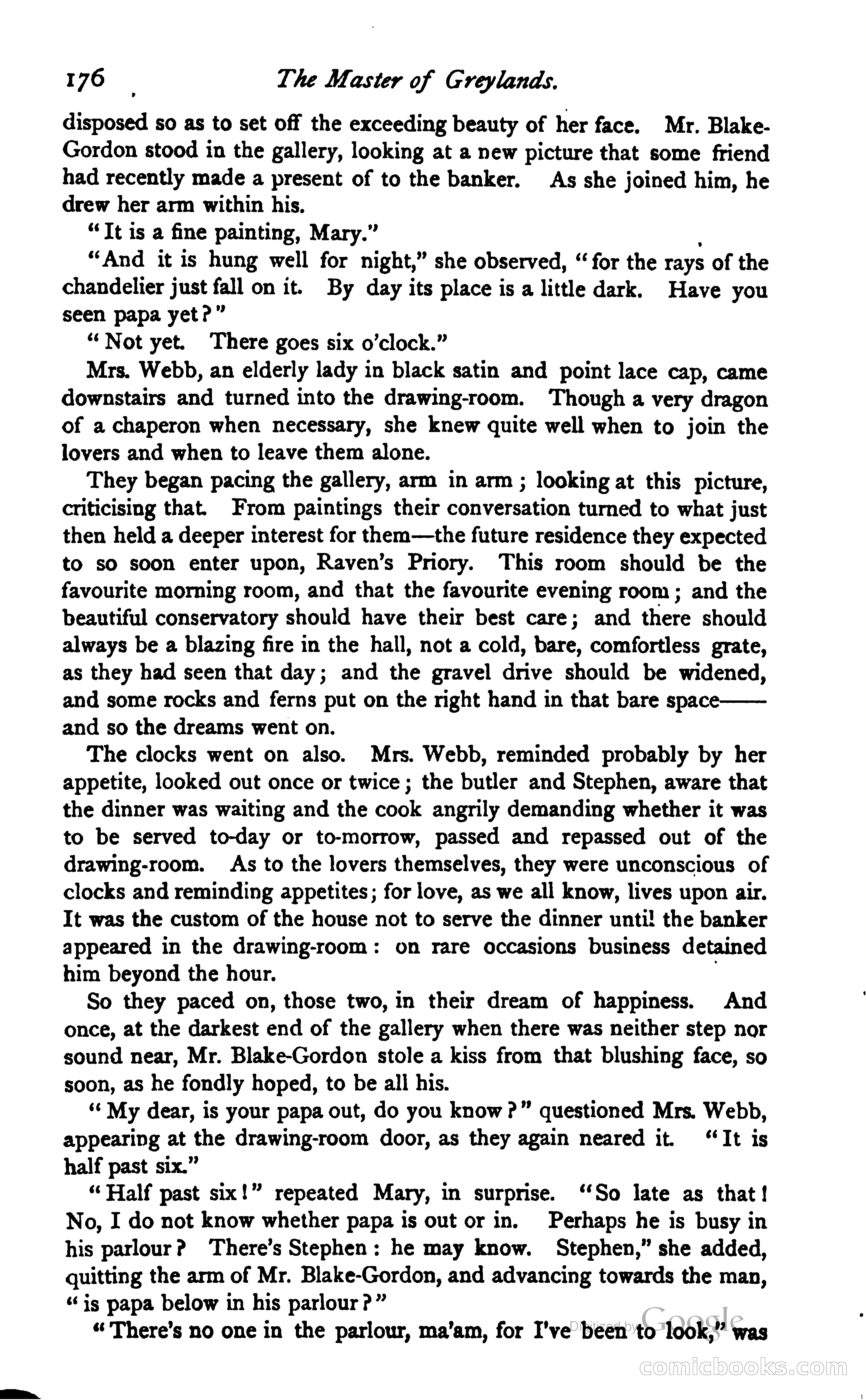
A restored page from Pulp Fiction, 1865. Page through the whole issue in the reader above.
📄 Transcribed text from this page (OCR, searchable)
Machine-transcribed from the original scan — historical spelling and the odd misread are preserved.
176 The Master of Greylands. disposed so as to set off the exceeding beauty of her face. Mr. Blake- Gordon stood in the gallery, looking at a new picture that some friend had recently made a present of to the banker. As she joined him, he drew her arm within his. “Tt is a fine painting, Mary.” “And it is hung well for night,” she observed, “ for the rays of the chandelier just fall on it. By day its place is a little dark. Have you seen papa yet?” ‘‘Not yet. There goes six o’clock.” Mrs. Webb, an elderly lady in black satin and point lace cap, came downstairs and turned into the drawing-room. ‘Though a very dragon of a chaperon when necessary, she knew quite well when to join the lovers and when to leave them alone. They began pacing the gallery, arm in arm ; looking at this picture, criticising that. From paintings their conversation turned to what just then held a deeper interest for them—the future residence they expected to so soon enter upon, Raven’s Pnory. This room should be the favourite morning room, and that the favourite evening room; and the beautiful conservatory should have their best care; and there should always be a blazing fire in the hall, not a cold, bare, comfortless grate, as they had seen that day; and the gravel drive should be widened, and some rocks and ferns put on the night hand in that bare space—— and so the dreams went on. The clocks went on also. Mrs. Webb, reminded probably by her appetite, looked out once or twice; the butler and Stephen, aware that the dinner was waiting and the cook angrily demanding whether it was to be served to-day or to-morrow, passed and repassed out of the drawing-room. As to the lovers themselves, they were unconscious of clocks and reminding appetites; for love, as we all know, lives upon air. It was the custom of the house not to serve the dinner unti! the banker appeared in the drawing-room: on rare occasions business detained him beyond the hour. } So they paced on, those two, in their dream of happiness. And once, at the darkest end of the gallery when there was neither step nor sound near, Mr. Blake-Gordon stole a kiss from that blushing face, so soon, as he fondly hoped, to be all his. ‘‘ My dear, is your papa out, do you know?” questioned Mrs. Webb, appearing at the drawing-room door, as they again neared it. “It is half past six.” “Half past six!” repeated Mary, in surprise. ‘So late as that! No, I do not know whether papa is out or in. Perhaps he is busy in his parlour? There’s Stephen: he may know. Stephen,” she added, quitting the arm of Mr. Blake-Gordon, and advancing towards the man, ‘is papa below in his parlour ?” ‘«‘'There’s no one in the parlour, ma’am, for I’ve been ‘to look,” was ECoOMmicloooks (C(O) in —_)