
Pulp Fiction, 1887 · page 76 of 399
The Argosy — page 76: what you’re looking at
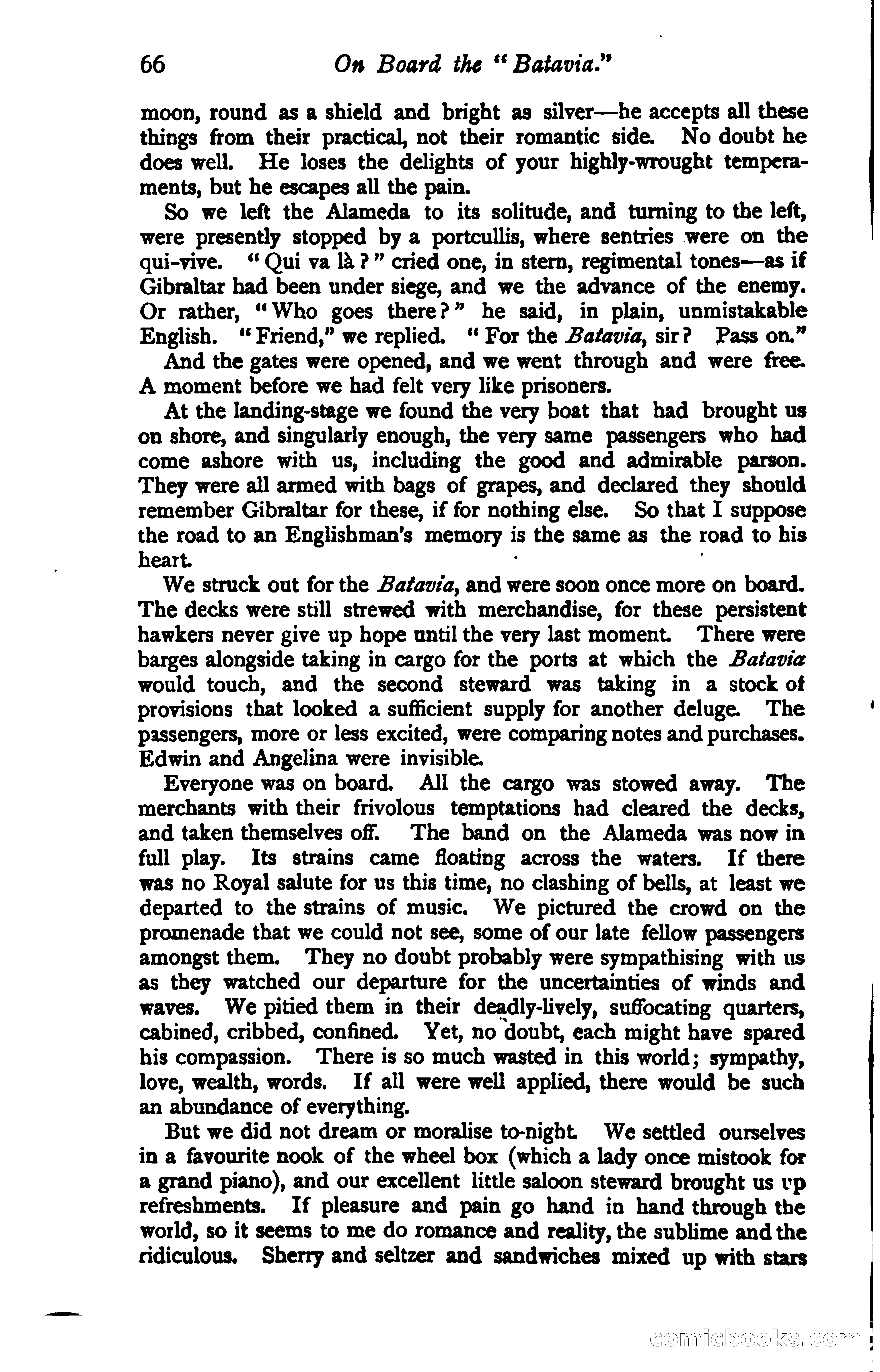
A restored page from Pulp Fiction, 1887. Page through the whole issue in the reader above.
📄 Transcribed text from this page (OCR, searchable)
Machine-transcribed from the original scan — historical spelling and the odd misread are preserved.
66 On Board the ** Batavia.” moon, round as a shield and bright as silver—he accepts all these things from their practical, not their romantic side. No doubt he does well. He loses the delights of your highly-wrought tempera- ments, but he escapes all the pain. So we left the Alameda to its solitude, and turning to the left, were presently stopped by a portcullis, where sentries were on the qui-vive. ‘Qui va 14?” cried one, in stern, regimental tones—as if Gibraltar had been under siege, and we the advance of the enemy. Or rather, ‘Who goes there?” he said, in plain, unmistakable English. ‘* Friend,” we replied. ‘ For the Batavia, sir? Pass on.” And the gates were opened, and we went through and were free. A moment before we had felt very like prisoners. At the landing-stage we found the very boat that had brought us on shore, and singularly enough, the very same passengers who had come ashore with us, including the good and admirable parson. They were all armed with bags of grapes, and declared they should remember Gibraltar for these, if for nothing else. So that I suppose the road to an Englishman’s memory 1 is the same as the road to his heart. We struck out for the Bafavia, and were soon once more on board. The decks were still strewed with merchandise, for these persistent hawkers never give up hope until the very last moment. There were barges alongside taking in cargo for the ports at which the Batavia would touch, and the second steward was taking in a stock of provisions that looked a sufficient supply for another deluge. The passengers, more or less excited, were comparing notes and purchases. Edwin and Angelina were invisible. Everyone was on board. All the cargo was stowed away. The merchants with their frivolous temptations had cleared the decks, and taken themselves off. The band on the Alameda was now in full play. Its strains came floating across the waters. If there was no Royal salute for us this time, no clashing of bells, at least we departed to the strains of music. We pictured the crowd on the promenade that we could not see, some of our late fellow passengers amongst them. They no doubt probably were sympathising with us as they watched our departure for the uncertainties of winds and waves. We pitied them in their deadly-lively, suffocating quarters, cabined, cribbed, confined. Yet, no doubt, each might have spared his compassion. There is so much wasted in this world; sympathy, love, wealth, words. If all were well applied, there would be such an abundance of everything. But we did not dream or moralise to-night. We settled ourselves in a favourite nook of the wheel box (which a lady once mistook for a grand piano), and our excellent little saloon steward brought us vp refreshments. If pleasure and pain go hand in hand through the world, so it seems to me do romance and reality, the sublime and the ridiculous. Sherry and seltzer and sandwiches mixed up with stars conniclooolkks CO