
Pulp Fiction, 1887 · page 65 of 399
The Argosy — page 65: what you’re looking at
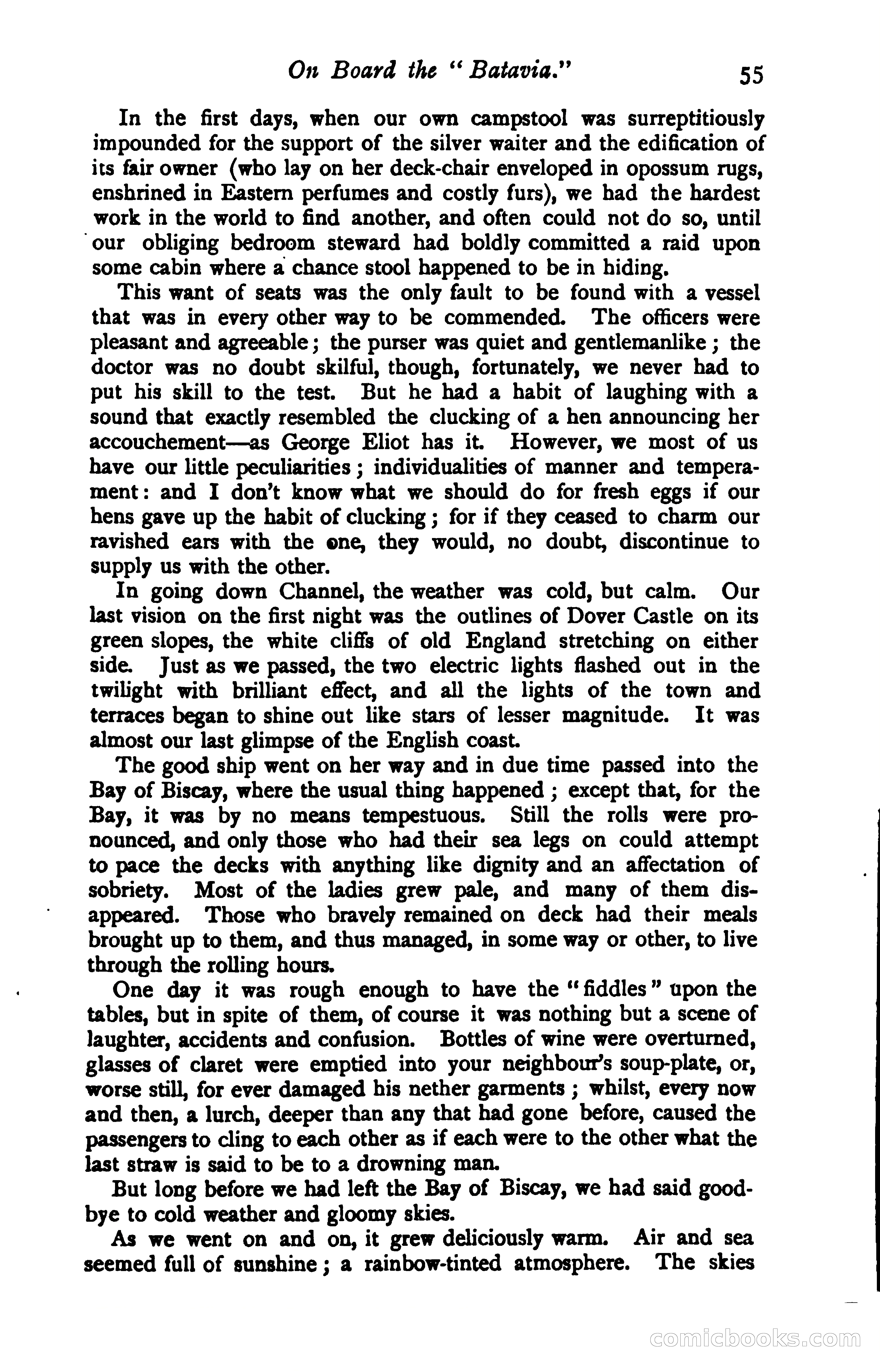
A restored page from Pulp Fiction, 1887. Page through the whole issue in the reader above.
📄 Transcribed text from this page (OCR, searchable)
Machine-transcribed from the original scan — historical spelling and the odd misread are preserved.
On Board the ‘‘ Batavia.” 55 In the first days, when our own campstool was surreptitiously impounded for the support of the silver waiter and the edification of its fair owner (who lay on her deck-chair enveloped in opossum rugs, enshrined in Eastern perfumes and costly furs), we had the hardest work in the world to find another, and often could not do so, until ‘our obliging bedroom steward had boldly committed a raid upon some cabin where a chance stool happened to be in hiding. This want of seats was the only fault to be found with a vessel that was in every other way to be commended. The officers were pleasant and agreeable; the purser was quiet and gentlemanlike ; the doctor was no doubt skilful, though, fortunately, we never had to put his skill to the test. But he had a habit of laughing with a sound that exactly resembled the clucking of a hen announcing her accouchement—as George Eliot has it. However, we most of us have our little peculiarities ; individualities of manner and tempera- ment: and I don’t know what we should do for fresh eggs if our hens gave up the habit of clucking ; for if they ceased to charm our ravished ears with the ene, they would, no doubt, discontinue to supply us with the other. In going down Channel, the weather was cold, but calm. Our last vision on the first night was the outlines of Dover Castle on its green slopes, the white cliffs of old England stretching on either side. Just as we passed, the two electric lights flashed out in the twilight with brilliant effect, and all the lights of the town and terraces began to shine out like stars of lesser magnitude. It was almost our last glimpse of the English coast. The good ship went on her way and in due time passed into the Bay of Biscay, where the usual thing happened ; except that, for the Bay, it was by no means tempestuous. Still the rolls were pro- nounced, and only those who had their sea legs on could attempt to pace the decks with anything like dignity and an affectation of sobriety. Most of the ladies grew pale, and many of them dis- appeared. ‘Those who bravely remained on deck had their meals brought up to them, and thus managed, in some way or other, to live through the rolling hours. One day it was rough enough to have the “ fiddles” upon the tables, but in spite of them, of course it was nothing but a scene of laughter, accidents and confusion. Bottles of wine were overturned, glasses of claret were emptied into your neighbour’s soup-plate, or, worse still, for ever damaged his nether garments ; whilst, every now and then, a lurch, deeper than any that had gone before, caused the passengers to cling to each other as if each were to the other what the last straw is said to be to a drowning man. But long before we had left the Bay of Biscay, we had said good- bye to cold weather and gloomy skies. As we went on and on, it grew deliciously warm. Aijr and sea seemed full of sunshine ; a rainbow-tinted atmosphere. The skies GOnnGaoOo SS CO