
Pulp Fiction, 1887 · page 39 of 399
The Argosy — page 39: what you’re looking at
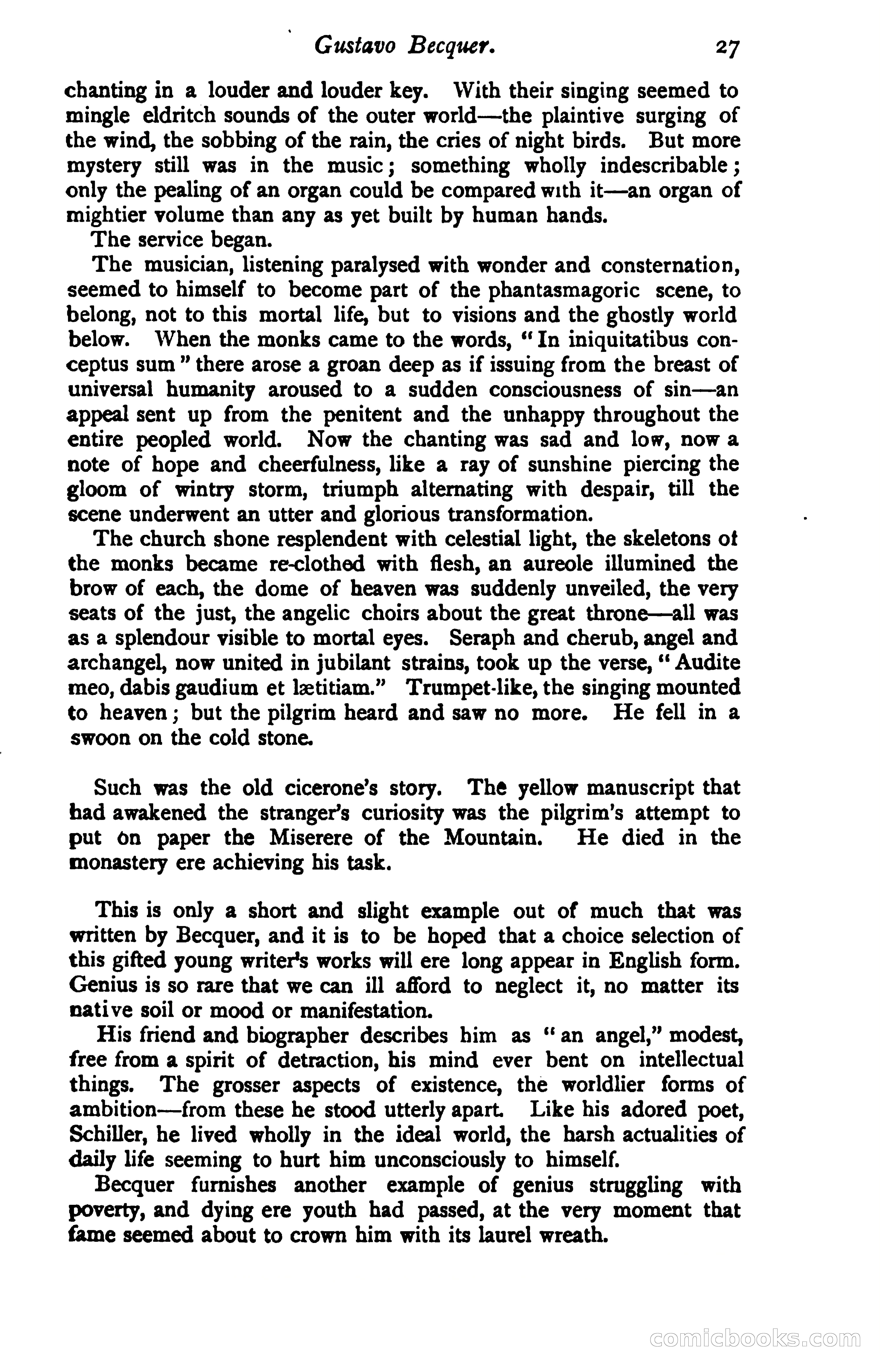
A restored page from Pulp Fiction, 1887. Page through the whole issue in the reader above.
📄 Transcribed text from this page (OCR, searchable)
Machine-transcribed from the original scan — historical spelling and the odd misread are preserved.
Gustavo Becquer. 27 chanting in a louder and louder key. With their singing seemed to mingle eldritch sounds of the outer world—the plaintive surging of the wind, the sobbing of the rain, the cries of night birds. But more mystery still was in the music; something wholly indescribable ; only the pealing of an organ could be compared with it—an organ of mightier volume than any as yet built by human hands. The service began. The musician, listening paralysed with wonder and consternation, seemed to himself to become part of the phantasmagoric scene, to belong, not to this mortal life, but to visions and the ghostly world below. When the monks came to the words, “In iniquitatibus con- ceptus sum ” there arose a groan deep as if issuing from the breast of universal humanity aroused to a sudden consciousness of sin—an appeal sent up from the penitent and the unhappy throughout the entire peopled world. Now the chanting was sad and low, now a note of hope and cheerfulness, like a ray of sunshine piercing the gloom of wintry storm, triumph alternating with despair, till the scene underwent an utter and glorious transformation. The church shone resplendent with celestial light, the skeletons ot the monks became re-clothed with flesh, an aureole illumined the brow of each, the dome of heaven was suddenly unveiled, the very seats of the just, the angelic choirs about the great throne—all was as a splendour visible to mortal eyes. Seraph and cherub, angel and archangel, now united in jubilant strains, took up the verse, ‘‘ Audite meo, dabis gaudium et letitiam.” Trumpet-like, the singing mounted to heaven; but the pilgrim heard and saw no more. He fell in a swoon on the cold stone. Such was the old cicerone’s story. The yellow manuscript that had awakened the stranger’s curiosity was the pilgrim’s attempt to put on paper the Miserere of the Mountain. He died in the monastery ere achieving his task. This is only a short and slight example out of much that was written by Becquer, and it is to be hoped that a choice selection of this gifted young writer's works will ere long appear in English form. Genius is so rare that we can ill afford to neglect it, no matter its native soil or mood or manifestation. His friend and biographer describes him as ‘an angel,” modest, free from a spirit of detraction, his mind ever bent on intellectual things. The grosser aspects of existence, the worldlier forms of ambition—from these he stood utterly apart. Like his adored poet, Schiller, he lived wholly in the ideal world, the harsh actualities of daily life seeming to hurt him unconsciously to himself. Becquer furnishes another example of genius struggling with poverty, and dying ere youth had passed, at the very moment that fame seemed about to crown him with its laurel wreath. GOnnGaoOo SS CO