
Pulp Fiction, 1887 · page 347 of 399
The Argosy — page 347: what you’re looking at
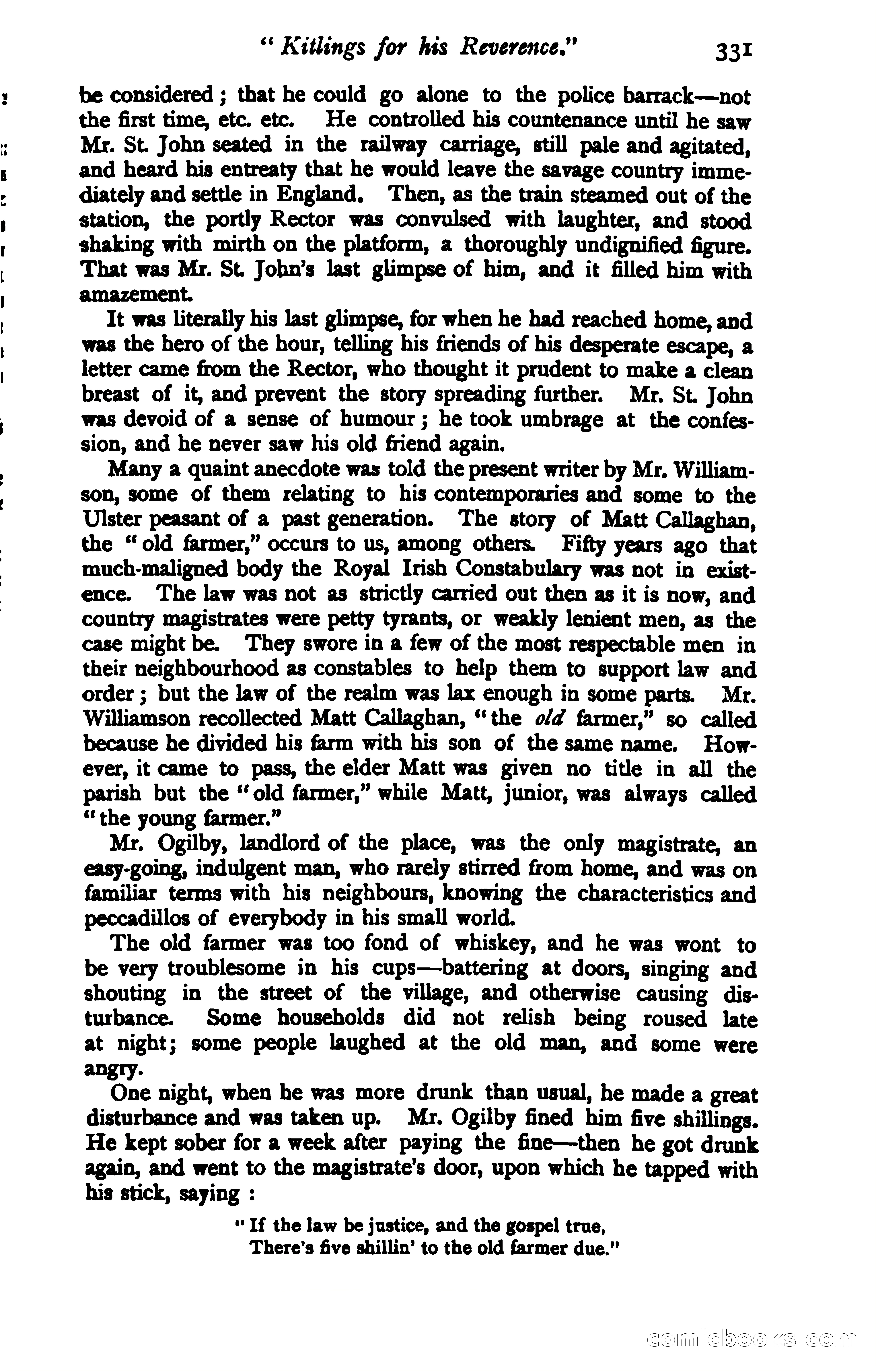
A restored page from Pulp Fiction, 1887. Page through the whole issue in the reader above.
📄 Transcribed text from this page (OCR, searchable)
Machine-transcribed from the original scan — historical spelling and the odd misread are preserved.
*““ Kitlings for his Reverence.” 331 be considered ; that he could go alone to the police barrack—not the first time, etc. etc. He controlled his countenance until he saw Mr. St. John seated in the railway carriage, still pale and agitated, and heard his entreaty that he would leave the savage country imme- diately and settle in England. Then, as the train steamed out of the station, the portly Rector was convulsed with laughter, and stood shaking with mirth on the platform, a thoroughly undignified figure. That was Mr. St. John’s last glimpse of him, and it filled him with amazement. It was literally his last glimpse, for when he had reached home, and was the hero of the hour, telling his friends of his desperate escape, a letter came from the Rector, who thought it prudent to make a clean breast of it, and prevent the story spreading further. Mr. St. John was devoid of a sense of humour ; he took umbrage at the confes- sion, and he never saw his old friend again. Many a quaint anecdote was told the present writer by Mr. William- son, some of them relating to his contemporaries and some to the Ulster peasant of a past generation. The story of Matt Callaghan, the “old farmer,” occurs to us, among others. Fifty years ago that much-maligned body the Royal Irish Constabulary was not in exist- ence. The law was not as strictly carried out then as it is now, and country magistrates were petty tyrants, or weakly lenient men, as the case might be. ‘They swore in a few of the most respectable men in their neighbourhood as constables to help them to support law and order ; but the law of the realm was lax enough in some parts. Mr. Williamson recollected Matt Callaghan, “the o/d@ farmer,” so called because he divided his farm with his son of the same name. How- ever, it came to pass, the elder Matt was given no title in all the parish but the “old farmer,” while Matt, junior, was always called “the young farmer.” Mr. Ogilby, landlord of the place, was the only magistrate, an easy-going, indulgent man, who rarely stirred from home, and was on familiar terms with his neighbours, knowing the characteristics and peccadillos of everybody in his small world. The old farmer was too fond of whiskey, and he was wont to be very troublesome in his cups—battering at doors, singing and shouting in the street of the village, and otherwise causing dis- turbance. Some households did not relish being roused late at night; some people laughed at the old man, and some were One night, when he was more drunk than usual, he made a great disturbance and was taken up. Mr. Ogilby fined him five shillings. He kept sober for a week after paying the fine—then he got drunk again, and went to the magistrate’s door, upon which he tapped with his stick, saying : If the law be justice, and the gospel true, There's five shillin’ to the old farmer due.” EOMRRIC OOO SS (GO) i