
Pulp Fiction, 1887 · page 25 of 399
The Argosy — page 25: what you’re looking at
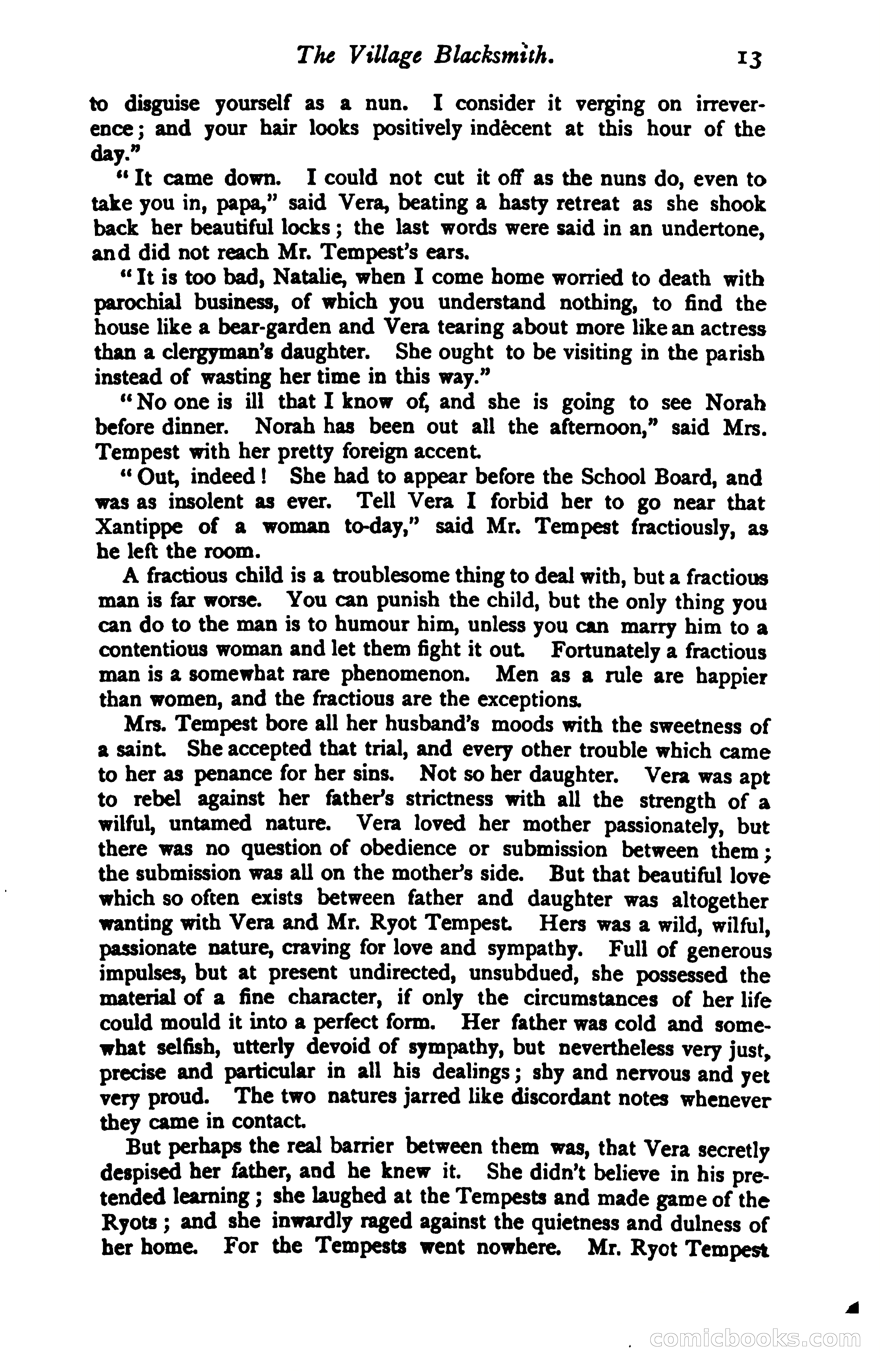
A restored page from Pulp Fiction, 1887. Page through the whole issue in the reader above.
📄 Transcribed text from this page (OCR, searchable)
Machine-transcribed from the original scan — historical spelling and the odd misread are preserved.
The Village Blacksmith. 13 to disguise yourself as a nun. I consider it verging on irrever- ence; and your hair looks positively indécent at this hour of the day.” ‘¢It came down. I could not cut it off as the nuns do, even to take you in, papa,” said Vera, beating a hasty retreat as she shook back her beautiful locks; the last words were said in an undertone, and did not reach Mr. Tempest’s ears. ‘It is too bad, Natalie, when I come home worried to death with parochial business, of which you understand nothing, to find the house like a bear-garden and Vera tearing about more like an actress than a clergyman’s daughter. She ought to be visiting in the parish instead of wasting her time in this way.” ‘No one is ill that I know of, and she is going to see Norah before dinner. Norah has been out all the afternoon,” said Mrs. Tempest with her pretty foreign accent. “Out, indeed! She had to appear before the School Board, and was as insolent as ever. Tell Vera I forbid her to go near that Xantippe of a woman to-day,” said Mr. Tempest fractiously, as he left the room. A fractious child is a troublesome thing to deal with, but a fractious man is far worse. You can punish the child, but the only thing you can do to the man is to humour him, unless you can marry him to a contentious woman and let them fight it out. Fortunately a fractious man is a somewhat rare phenomenon. Men as a rule are happier than women, and the fractious are the exceptions. Mrs. Tempest bore all her husband’s moods with the sweetness of a saint. She accepted that trial, and every other trouble which came to her as penance for her sins. Not so her daughter. Vera was apt to rebel against her father’s strictness with all the strength of a wilful, untamed nature. Vera loved her mother passionately, but there was no question of obedience or submission between them ; the submission was all on the mother’s side. But that beautiful love which so often exists between father and daughter was altogether wanting with Vera and Mr. Ryot Tempest. Hers was a wild, wilful, passionate nature, craving for love and sympathy. Full of generous impulses, but at present undirected, unsubdued, she possessed the material of a fine character, if only the circumstances of her life could mould it into a perfect form. Her father was cold and some- what selfish, utterly devoid of sympathy, but nevertheless very just, precise and particular in all his dealings; shy and nervous and yet very proud. The two natures jarred like discordant notes whenever they came in contact. But perhaps the real barrier between them was, that Vera secretly despised her father, and he knew it. She didn’t believe in his pre- tended learning ; she laughed at the Tempests and made game of the Ryots ; and she inwardly raged against the quietness and dulness of her home. For the Tempests went nowhere. Mr. Ryot Tempest —s COM|ELOO SS CO ul _