
Pulp Fiction, 1887 · page 143 of 399
The Argosy — page 143: what you’re looking at
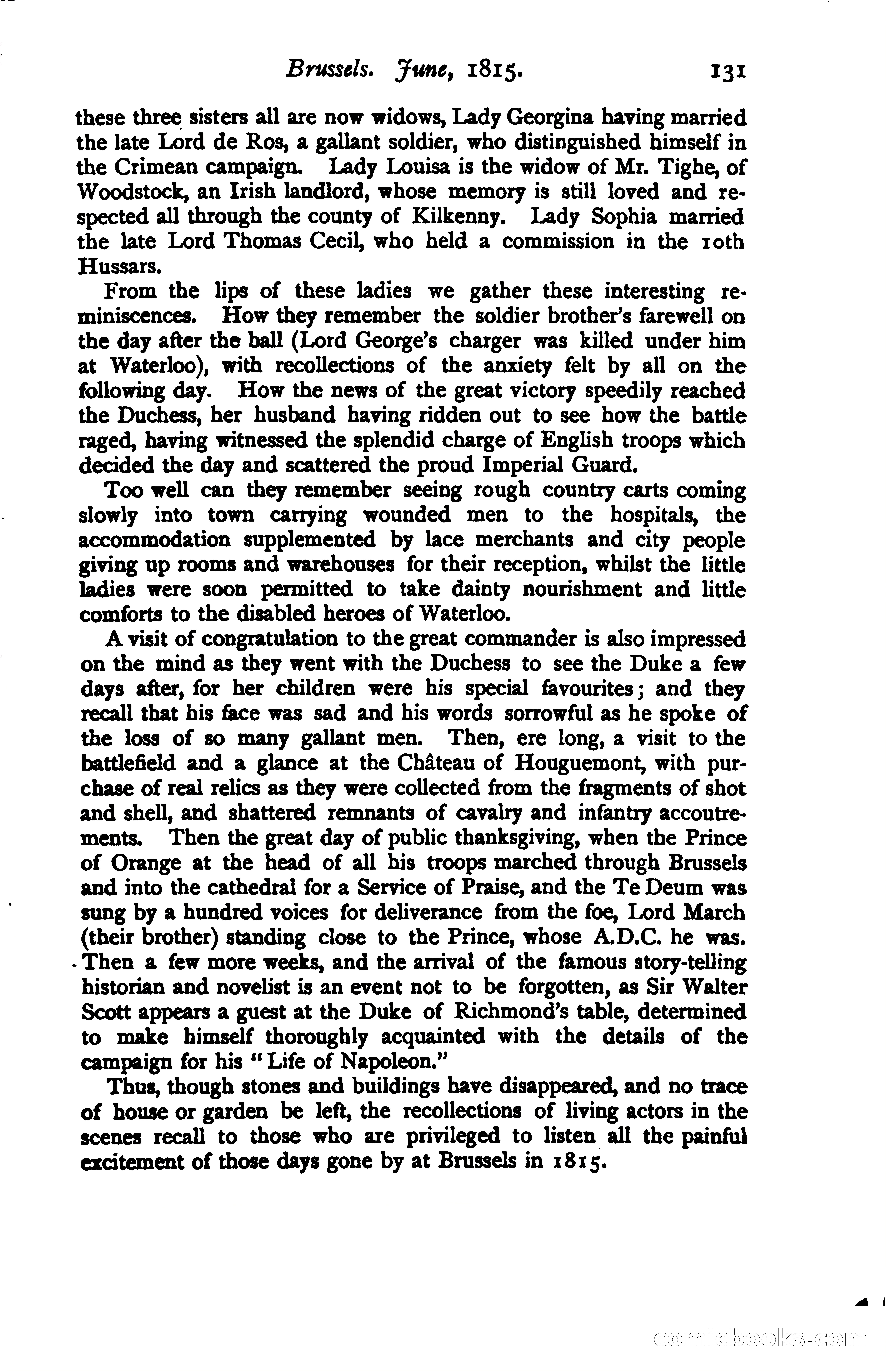
A restored page from Pulp Fiction, 1887. Page through the whole issue in the reader above.
📄 Transcribed text from this page (OCR, searchable)
Machine-transcribed from the original scan — historical spelling and the odd misread are preserved.
Brussels. Fune, 1815. 131 these three sisters all are now widows, Lady Georgina having married the late Lord de Ros, a gallant soldier, who distinguished himself in the Crimean campaign. Lady Louisa is the widow of Mr. Tighe, of Woodstock, an Irish landlord, whose memory is still loved and re- spected all through the county of Kilkenny. Lady Sophia married the late Lord Thomas Cecil, who held a commission in the roth Hussars. From the lips of these ladies we gather these interesting re- miniscences. How they remember the soldier brother’s farewell on the day after the ball (Lord George’s charger was killed under him at Waterloo), with recollections of the anxiety felt by all on the following day. How the news of the great victory speedily reached the Duchess, her husband having ridden out to see how the battle raged, having witnessed the splendid charge of English troops which decided the day and scattered the proud Imperial Guard. Too well can they remember seeing rough country carts coming slowly into town carrying wounded men to the hospitals, the accommodation supplemented by lace merchants and city people giving up rooms and warehouses for their reception, whilst the little ladies were soon permitted to take dainty nourishment and little comforts to the disabled heroes of Waterloo. A visit of congratulation to the great commander is also impressed on the mind as they went with the Duchess to see the Duke a few days after, for her children were his special favourites; and they recall that his face was sad and his words sorrowful as he spoke of the loss of so many gallant men. Then, ere long, a visit to the battlefield and a glance at the Chateau of Houguemont, with pur- chase of real relics as they were collected from the fragments of shot and shell, and shattered remnants of cavalry and infantry accoutre- ments. Then the great day of public thanksgiving, when the Prince of Orange at the head of all his troops marched through Brussels and into the cathedral for a Service of Praise, and the Te Deum was sung by a hundred voices for deliverance from the foe, Lord March (their brother) standing close to the Prince, whose A.D.C. he was. -Then a few more weeks, and the arrival of the famous story-telling historian and novelist is an event not to be forgotten, as Sir Walter Scott appears a guest at the Duke of Richmond’s table, determined to make himself thoroughly acquainted with the details of the campaign for his ‘ Life of Napoleon.” Thus, though stones and buildings have disappeared, and no trace of house or garden be left, the recollections of living actors in the scenes recall to those who are privileged to listen all the painful excitement of those days gone by at Brussels in 1815. COnmicloooel —_— SS (CO