
Pulp Fiction, 1887 · page 125 of 399
The Argosy — page 125: what you’re looking at
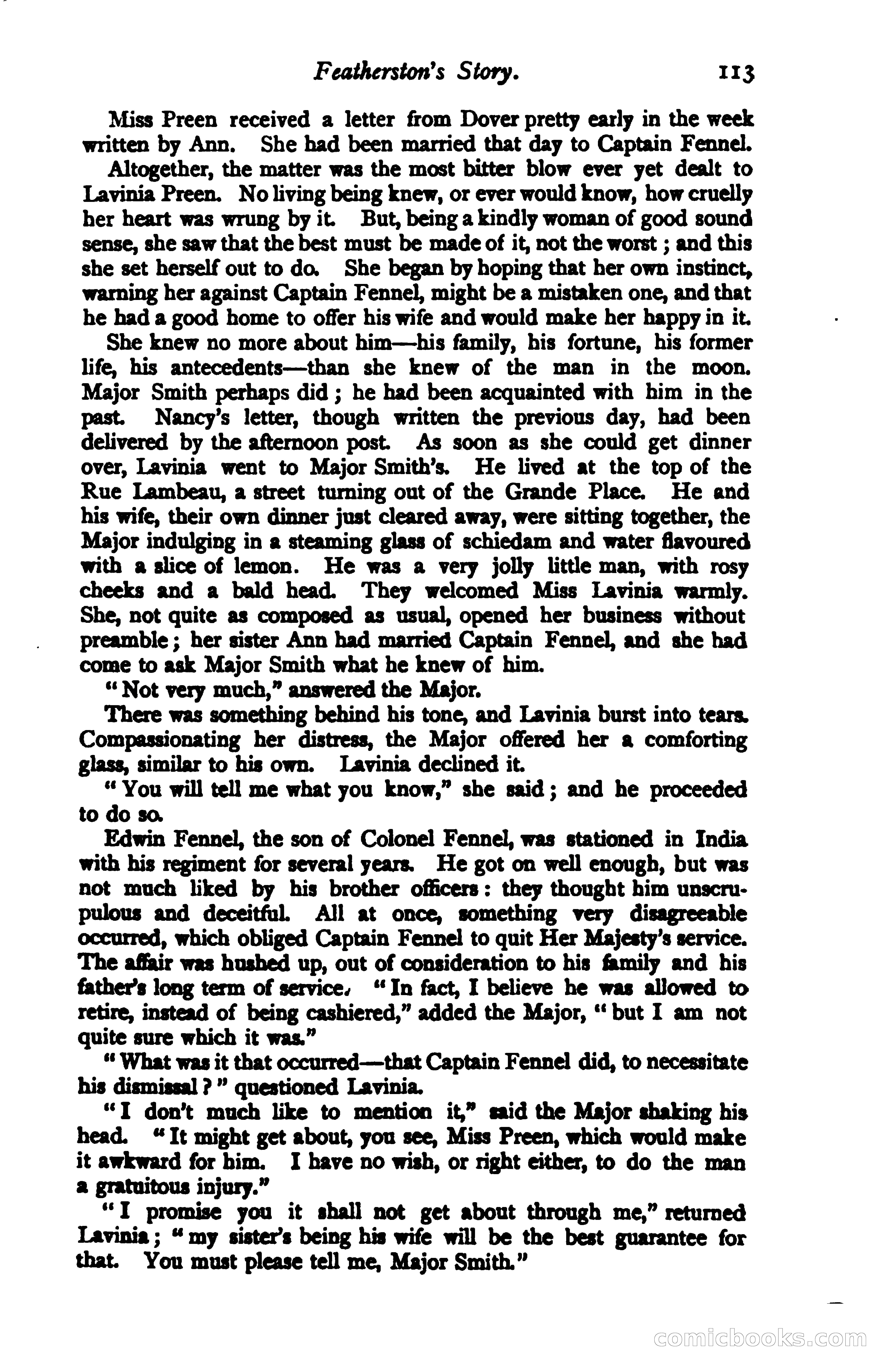
A restored page from Pulp Fiction, 1887. Page through the whole issue in the reader above.
📄 Transcribed text from this page (OCR, searchable)
Machine-transcribed from the original scan — historical spelling and the odd misread are preserved.
Featherston’s Story. II3 Miss Preen received a letter from Dover pretty early in the week written by Ann. She had been married that day to Captain Fennel. Altogether, the matter was the most bitter blow ever yet dealt to Lavinia Preen. No living being knew, or ever would know, how cruelly her heart was wrung by it. But, being a kindly woman of good sound sense, she saw that the best must be made of it, not the worst ; and this she set herself out to do. She began by hoping that her own instinct, warning her against Captain Fennel, might be a mistaken one, and that he had a good home to offer his wife and would make her happy in it. She knew no more about him—his family, his fortune, his former life, his antecedents—than she knew of the man in the moon. Major Smith perhaps did ; he had been acquainted with him in the past. Nancy’s letter, though written the previous day, had been delivered by the afternoon post. As soon as she could get dinner over, Lavinia went to Major Smith’s. He lived at the top of the Rue Lambeau, a street turning out of the Grande Place. He and his wife, their own dinner just cleared away, were sitting together, the Major indulging in a steaming glass of schiedam and water flavoured with a slice of lemon. He was a very jolly little man, with rosy cheeks and a bald head. They welcomed Miss Lavinia warmly. She, not quite as composed as usual, opened her business without preamble ; her sister Ann had married Captain Fennel, and she had come to ask Major Smith what he knew of him. ‘* Not very much,” answered the Major. There was something behind his tone, and Lavinia burst into tears. Compassionating her distress, the Major offered her a comforting glass, similar to his own. Lavinia declined it. * You will tell me what you know,” she said; and he proceeded to do so. Edwin Fennel, the son of Colonel Fennel, was stationed in India with his regiment for several years. He got on well enough, but was not much liked by his brother officers: they thought him unscru- pulous and deceitful. All at once, something very disagreeable occurred, which obliged Captain Fennel to quit Her Majesty’s service. The affair was hushed up, out of consideration to his family and his father’s long term of service. ‘In fact, I believe he was allowed to retire, instead of being cashiered,” added the Major, ‘‘ but I am not quite sure which it was.” ‘* What was it that occurred—-that Captain Fennel did, to necessitate his dismissal ?” questioned Lavinia. “I don’t much like to mention it,” said the Major shaking his head. “It might get about, you see, Miss Preen, which would make it awkward for him. I have no wish, or right either, to do the man a gratuitous injury.” “I promise you it shall not get about through me,” returned Lavinia ; “ my sister's being his wife will be the best guarantee for that. You must please tell me, Major Smith.” COnmicloooel —_— SS (CO