
Pulp Fiction, 1865 · page 152 of 399
The Argosy — page 152: what you’re looking at
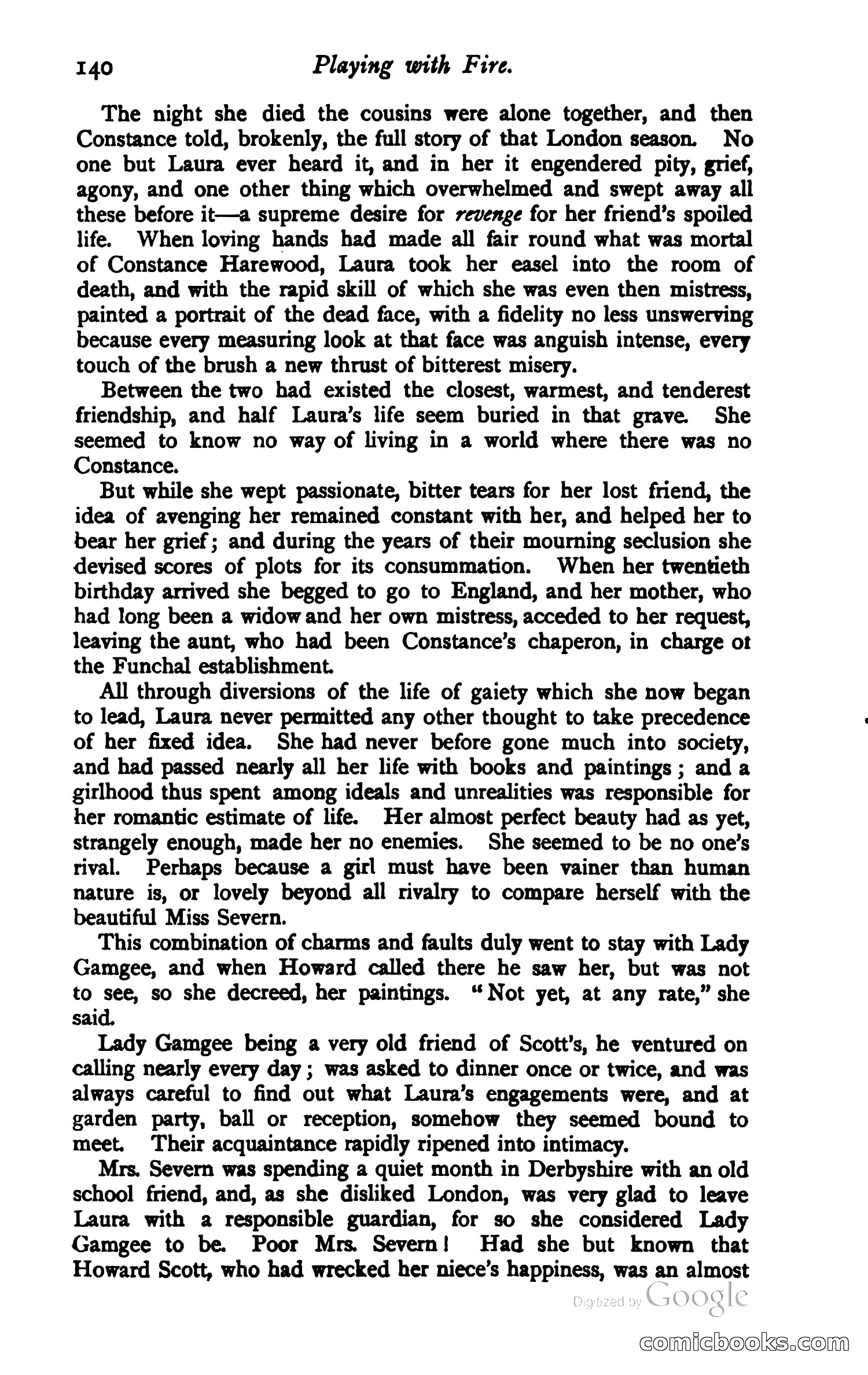
A restored page from Pulp Fiction, 1865. Page through the whole issue in the reader above.
📄 Transcribed text from this page (OCR, searchable)
Machine-transcribed from the original scan — historical spelling and the odd misread are preserved.
140 Playing with Fire. The night she died the cousins were alone together, and then Constance told, brokenly, the full story of that London season. No one but Laura ever heard it, and in her it engendered pity, grief, agony, and one other thing which overwhelmed and swept away all these before it—a supreme desire for revenge for her friend’s spoiled life. When loving hands had made all fair round what was mortal of Constance Harewood, Laura took her easel into the room of death, and with the rapid skill of which she was even then mistress, painted a portrait of the dead face, with a fidelity no less unswerving because every measuring look at that face was anguish intense, every touch of the brush a new thrust of bitterest misery. Between the two had existed the closest, warmest, and tenderest friendship, and half Laura’s life seem buried in that grave. She seemed to know no way of living in a world where there was no Constance. But while she wept passionate, bitter tears for her lost friend, the idea of avenging her remained constant with her, and helped her to bear her grief; and during the years of their mourning seclusion she devised scores of plots for its consummation. When her twentieth birthday arrived she begged to go to England, and her mother, who had long been a widow and her own mistress, acceded to her request, leaving the aunt, who had been Constance’s chaperon, in charge ot the Funchal establishment. All through diversions of the life of gaiety which she now began to lead, Laura never permitted any other thought to take precedence of her fixed idea. She had never before gone much into society, and had passed nearly all her life with books and paintings; and a girlhood thus spent among ideals and unrealities was responsible for her romantic estimate of life. Her almost perfect beauty had as yet, strangely enough, made her no enemies. She seemed to be no one’s rival. Perhaps because a girl must have been vainer than human nature is, or lovely beyond all rivalry to compare herself with the beautiful Miss Severn. This combination of charms and faults duly went to stay with Lady Gamgee, and when Howard called there he saw her, but was not to see, so she decreed, her paintings. “Not yet, at any rate,” she said. Lady Gamgee being a very old friend of Scott's, he ventured on calling nearly every day ; was asked to dinner once or twice, and was always careful to find out what Laura’s engagements were, and at garden party, ball or reception, somehow they seemed bound to meet. Their acquaintance rapidly ripened into intimacy. Mrs. Severn was spending a quiet month in Derbyshire with an old school friend, and, as she disliked London, was very glad to leave Laura with a responsible guardian, for so she considered Lady Gamgee to be. Poor Mrs. Severn! Had she but known that Howard Scott, who had wrecked her niece’s happiness, was an almost comicbooks.com