
Pulp Fiction, 1901 · page 86 of 400
The Argosy — page 86: what you’re looking at
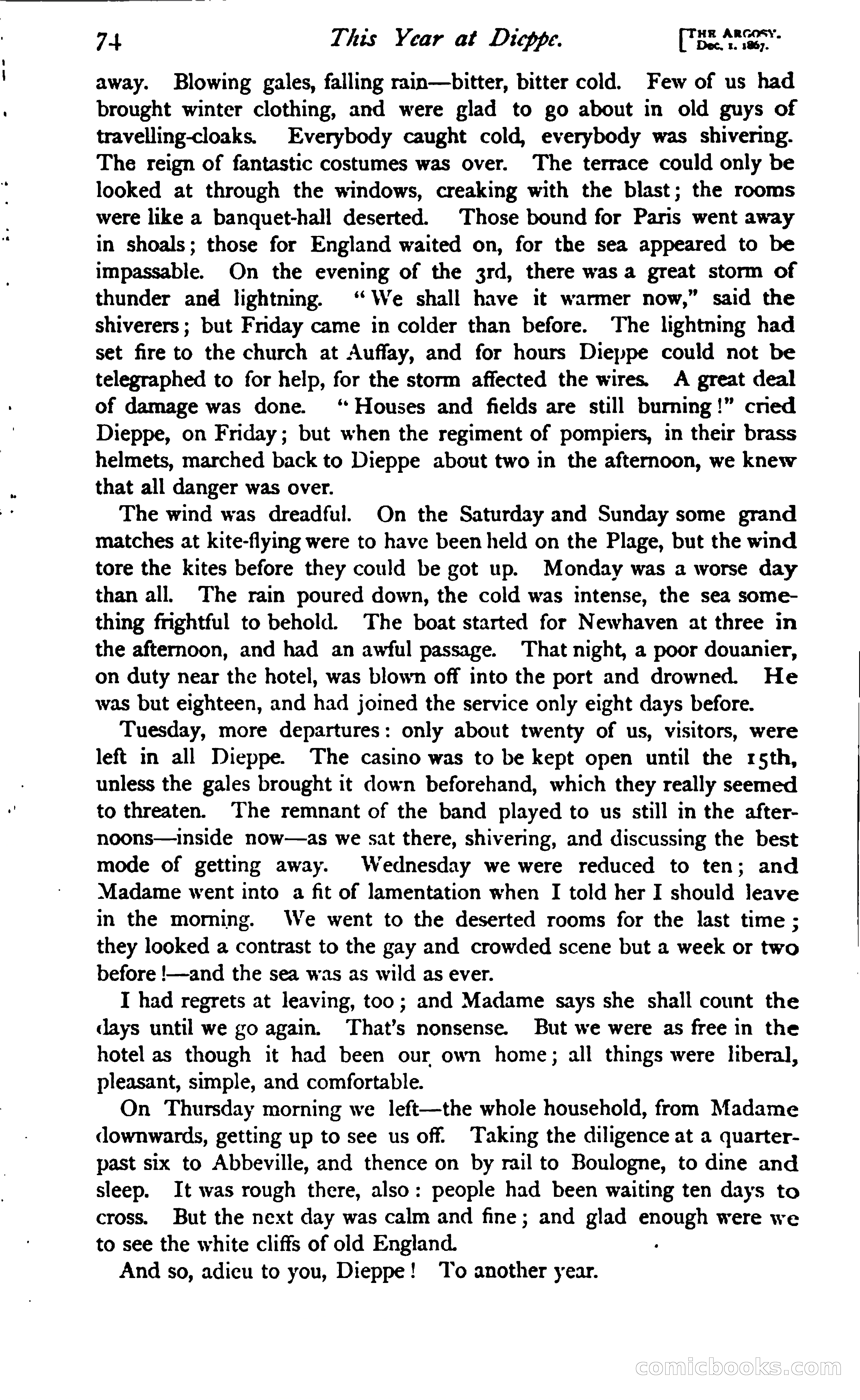
A restored page from Pulp Fiction, 1901. Page through the whole issue in the reader above.
📄 Transcribed text from this page (OCR, searchable)
Machine-transcribed from the original scan — historical spelling and the odd misread are preserved.
74 This Year at Dichpe. Dec. 11887. away. Blowing gales, falling rain—bitter, bitter cold. Few of us had brought winter clothing, and were glad to go about in old guys of travelling-cloaks. Everybody caught cold, everybody was shivering. The reign of fantastic costumes was over. The terrace could only be looked at through the windows, creaking with the blast; the rooms were like a banquet-hall deserted. Those bound for Paris went away in shoals; those for England waited on, for the sea appeared to be impassable. On the evening of the 3rd, there was a great storm of thunder and lightning. ‘We shall have it warmer now,” said the shiverers ; but Fnday came in colder than before. The lightning had set fire to the church at Auffay, and for hours Dieppe could not be telegraphed to for help, for the storm affected the wires. A great deal of damage was done. ‘Houses and fields are still burning!” cned Dieppe, on Friday; but when the regiment of pompliers, in their brass helmets, marched back to Dieppe about two 1n the afternoon, we knew that all danger was over. The wind was dreadful. On the Saturday and Sunday some grand matches at kite-flying were to have been held on the Plage, but the wind tore the kites before they could be got up. Monday was a worse day than all. The rain poured down, the cold was intense, the sea some- thing frightful to behold. The boat started for Newhaven at three in the afternoon, and had an awful passage. That night, a poor douanier, on duty near the hotel, was blown off into the port and drowned. He was but eighteen, and had joined the service only eight days before. Tuesday, more departures: only about twenty of us, visitors, were left in all Dieppe. The casino was to be kept open until the 15th, unless the gales brought it down beforehand, which they really seemed to threaten. ‘The remnant of the band played to us still in the after- noons—inside now—as we sat there, shivering, and discussing the best mode of getting away. Wednesday we were reduced to ten; and Madame went into a fit of lamentation when I told her I should leave in the moming. We went to the deserted rooms for the last time ; they looked a contrast to the gay and crowded scene but a week or two before !—and the sea was as wild as ever. I had regrets at leaving, too; and Madame says she shall count the days until we go again. That’s nonsense. But we were as free in the hotel as though it had been our own home; all things were hberal, pleasant, simple, and comfortable. On Thursday morning we left—the whole household, from Madame downwards, getting up to see us off. Taking the diligence at a quarter- past six to Abbeville, and thence on by rail to Boulogne, to dine and sleep. It was rough there, also: people had been waiting ten days to cross. But the next day was calm and fine; and glad enough were we to see the white cliffs of old England. And so, adicu to you, Dieppe! To another year. ECOMiIcoOolxs.cO©