
Pulp Fiction, 1901 · page 389 of 400
The Argosy — page 389: what you’re looking at
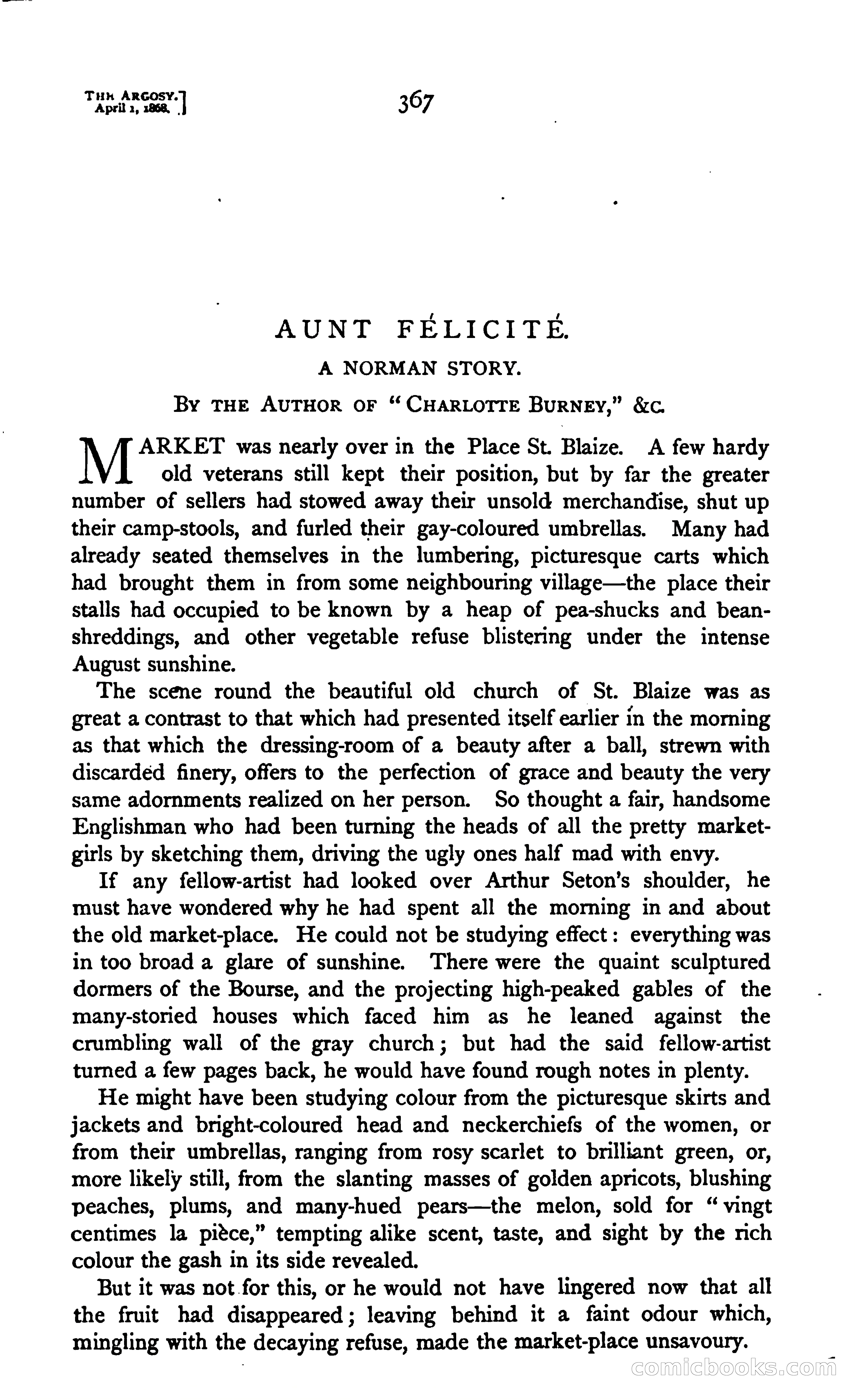
A restored page from Pulp Fiction, 1901. Page through the whole issue in the reader above.
📄 Transcribed text from this page (OCR, searchable)
Machine-transcribed from the original scan — historical spelling and the odd misread are preserved.
"Apri, 2808, 307 AUNT FELICITE. A NORMAN STORY. By THE AUTHOR OF “ CHARLOTTE BuRNEY,” &C. ARKET was nearly over in the Place St. Blaize. A few hardy old veterans still kept their position, but by far the greater number of sellers had stowed away their unsold merchandise, shut up their camp-stools, and furled their gay-coloured umbrellas. Many had already seated themselves in the lumbering, picturesque carts which had brought them in from some neighbouring village—the place their stalls had occupied to be known by a heap of pea-shucks and bean- shreddings, and other vegetable refuse blistering under the intense August sunshine. The scene round the beautiful old church of St. Blaize was as great a contrast to that which had presented itself earlier in the morning as that which the dressing-room of a beauty after a ball, strewn with discarded finery, offers to the perfection of grace and beauty the very same adornments realized on her person. So thought a fair, handsome Englishman who had been turning the heads of all the pretty market- girls by sketching them, driving the ugly ones half mad with envy. If any fellow-artist had looked over Arthur Seton’s shoulder, he must have wondered why he had spent all the morning in and about the old market-place. He could not be studying effect: everything was in too broad a glare of sunshine. There were the quaint sculptured dormers of the Bourse, and the projecting high-peaked gables of the many-storied houses which faced him as he leaned against the crumbling wall of the gray church; but had the said fellow-artist turned a few pages back, he would have found rough notes in plenty. He might have been studying colour from the picturesque skirts and jackets and bnght-coloured head and neckerchiefs of the women, or from their umbrellas, ranging from rosy scarlet to brilliant green, or, more likely still, from the slanting masses of golden apricots, blushing peaches, plums, and many-hued pears—the melon, sold for “ vingt centimes la piéce,” tempting alike scent, taste, and sight by the nch colour the gash in its side revealed. But it was not.for this, or he would not have lingered now that all the fruit had disappeared; leaving behind it a faint odour which, mingling with the decaying refuse, made the market-place unsavoury. comicloooks (CO)