
Pulp Fiction, 1901 · page 184 of 400
The Argosy — page 184: what you’re looking at
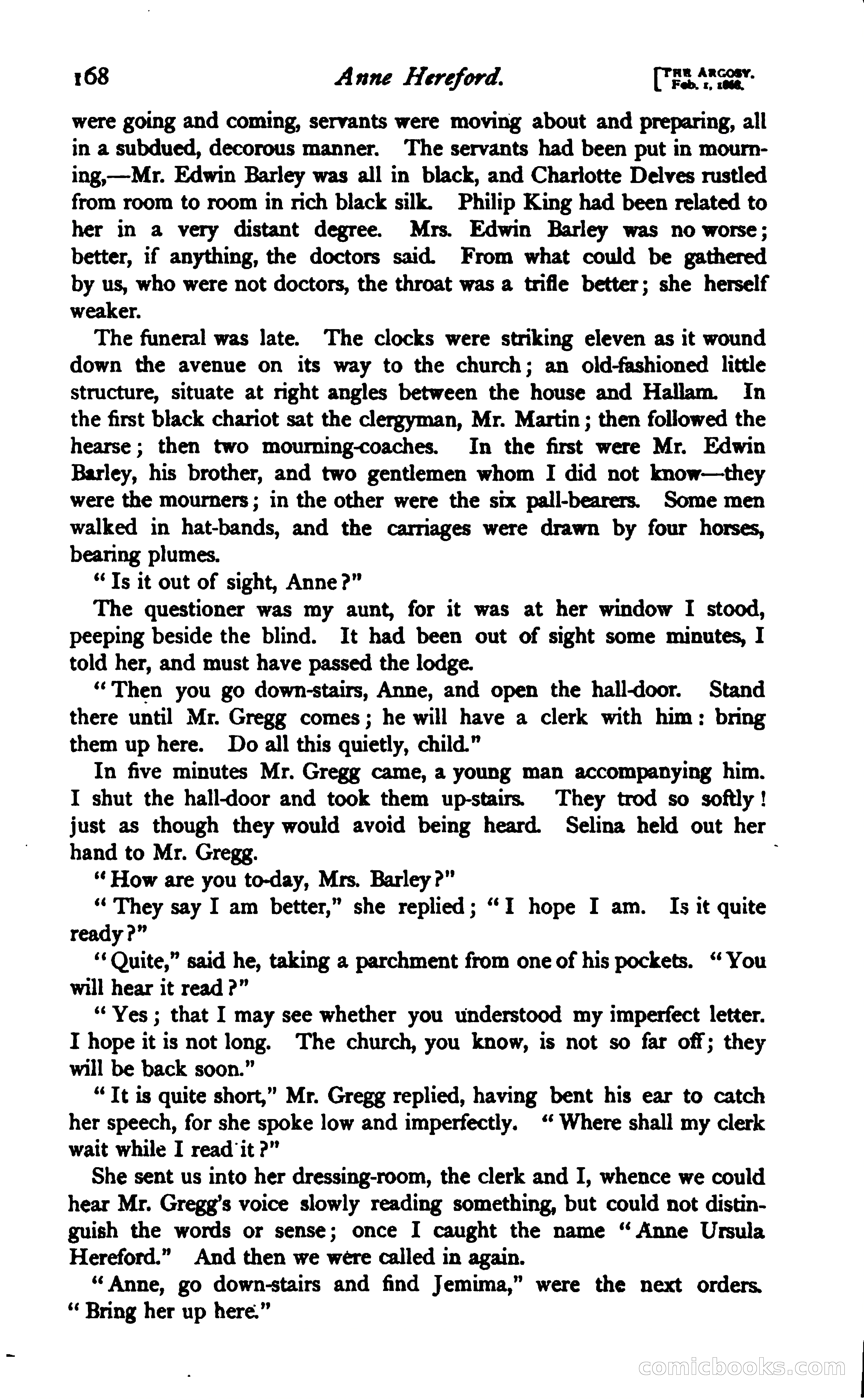
A restored page from Pulp Fiction, 1901. Page through the whole issue in the reader above.
📄 Transcribed text from this page (OCR, searchable)
Machine-transcribed from the original scan — historical spelling and the odd misread are preserved.
168 Anne Hereford. Feb. 1, 1a were going and coming, servants were moving about and preparing, all in a subdued, decorous manner. The servants had been put in mourn- ing,—Mr. Edwin Barley was all in black, and Charlotte Delves rustled from room to room in nich black silk. Philip King had been related to her in a very distant degree. Mrs. Edwin Barley was no worse; better, if anything, the doctors said. From what could be gathered by us, who were not doctors, the throat was a trifle better; she herself weaker. The funeral was late. The clocks were stnking eleven as it wound down the avenue on its way to the church; an old-fashioned little structure, situate at nght angles between the house and Hallam. In the first black chariot sat the clergyman, Mr. Martin ; then followed the hearse ; then two mourning-coaches. In the first were Mr. Edwin Barley, his brother, and two gentlemen whom I did not know—they were the mourners ; in the other were the st pall-bearers. Some men walked in hat-bands, and the carnages were drawn by four horses, bearing plumes. “Ts it out of sight, Anne ?” The questioner was my aunt, for it was at her window I stood, peeping beside the blind. It had been out of sight some munutes, I told her, and must have passed the lodge. ‘‘Then you go down-stairs, Anne, and open the hall-door. Stand there until Mr. Gregg comes; he will have a clerk with him: bnng them up here. Do all this quietly, child.” In five minutes Mr. Gregg came, a young man accompanying him. I shut the hall-door and took them up-stairs. They trod so softly! just as though they would avoid being heard. Selina held out her hand to Mr. Gregg. ‘* How are you to-day, Mrs. Barley?” ‘‘ They say I am better,” she replied; “I hope I am. Is it quite ready ?” ‘‘ Quite,” said he, taking a parchment from one of his pockets. “ You will hear it read ?” ‘Yes ; that I may see whether you understood my imperfect letter. I hope it 1s not long. The church, you know, is not so far off; they will be back soon.” “It is quite short,” Mr. Gregg replied, having bent his ear to catch her speech, for she spoke low and imperfectly. ‘“‘ Where shall my clerk wait while I read ‘it ?” She sent us into her dressing-room, the clerk and I, whence we could hear Mr. Gregg’s voice slowly reading something, but could not distin- guish the words or sense; once I caught the name “Anne Ursula Hereford.” And then we were called in again. ‘Anne, go down-stairs and find Jemima,” were the next orders. ‘* Bring her up here.” GOHRMGIOO <S GO) mn