
Pulp Fiction, 1901 · page 152 of 400
The Argosy — page 152: what you’re looking at
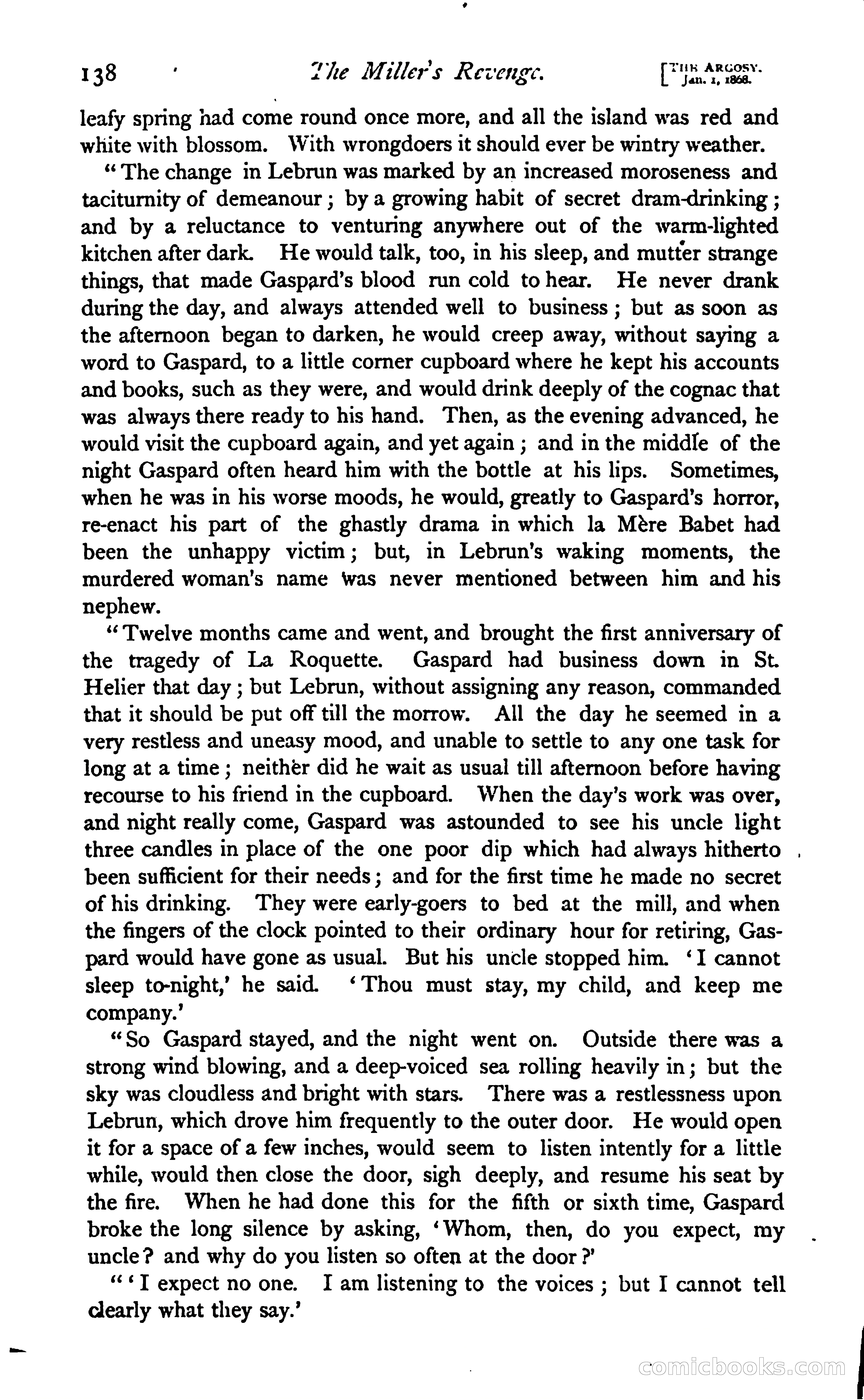
A restored page from Pulp Fiction, 1901. Page through the whole issue in the reader above.
📄 Transcribed text from this page (OCR, searchable)
Machine-transcribed from the original scan — historical spelling and the odd misread are preserved.
138 ! the Miller's Revenge. THR ARGOSV. leafy spring had come round once more, and all the island was red and white with blossom. With wrongdoers it should ever be wintry weather. ‘The change in Lebrun was marked by an increased moroseness and taciturnity of demeanour ; by a growing habit of secret dram-drinking ; and by a reluctance to venturing anywhere out of the warm-lighted kitchen after dark. He would talk, too, in his sleep, and mutter strange things, that made Gaspard’s blood run cold tohear. He never drank during the day, and always attended well to business ; but as soon as the afternoon began to darken, he would creep away, without saying a word to Gaspard, to a little corner cupboard where he kept his accounts and books, such as they were, and would drink deeply of the cognac that was always there ready to his hand. Then, as the evening advanced, he would visit the cupboard again, and yet again ; and in the middle of the night Gaspard often heard him with the bottle at his lips. Sometimes, when he was in his worse moods, he would, greatly to Gaspard’s horror, re-enact his part of the ghastly drama in which la Mére Babet had been the unhappy victim; but, in Lebrun’s waking moments, the murdered woman's name was never mentioned between him and his nephew. ‘Twelve months came and went, and brought the first anniversary of the tragedy of La Roquette. Gaspard had business down in St. Helier that day ; but Lebrun, without assigning any reason, commanded that it should be put off till the morrow. All the day he seemed in a very restless and uneasy mood, and unable to settle to any one task for long at a time; neither did he wait as usual till afternoon before having recourse to his friend in the cupboard. When the day’s work was over, and night really come, Gaspard was astounded to see his uncle light three candles in place of the one poor dip which had always hitherto . been sufficient for their needs; and for the first time he made no secret of his drinking. They were early-goers to bed at the mill, and when the fingers of the clock pointed to their ordinary hour for retiring, Gas- pard would have gone as usual. But his uncle stopped him. ‘I cannot sleep to-night,’ he said. ‘Thou must stay, my child, and keep me company.’ “So Gaspard stayed, and the night went on. Outside there was a strong wind blowing, and a deep-voiced sea rolling heavily in; but the sky was cloudless and bnght with stars. There was a restlessness upon Lebrun, which drove him frequently to the outer door. He would open it for a space of a few inches, would seem to listen intently for a little while, would then close the door, sigh deeply, and resume his seat by the fire. When he had done this for the fifth or sixth time, Gaspard broke the long silence by asking, ‘Whom, then, do you expect, my uncle? and why do you listen so often at the door ?" ‘“*T expect no one. I am listening to the voices ; but I cannot tell clearly what they say.’ comicaooks GO)