
Pulp Fiction, 1865 · page 306 of 399
The Argosy — page 306: what you’re looking at
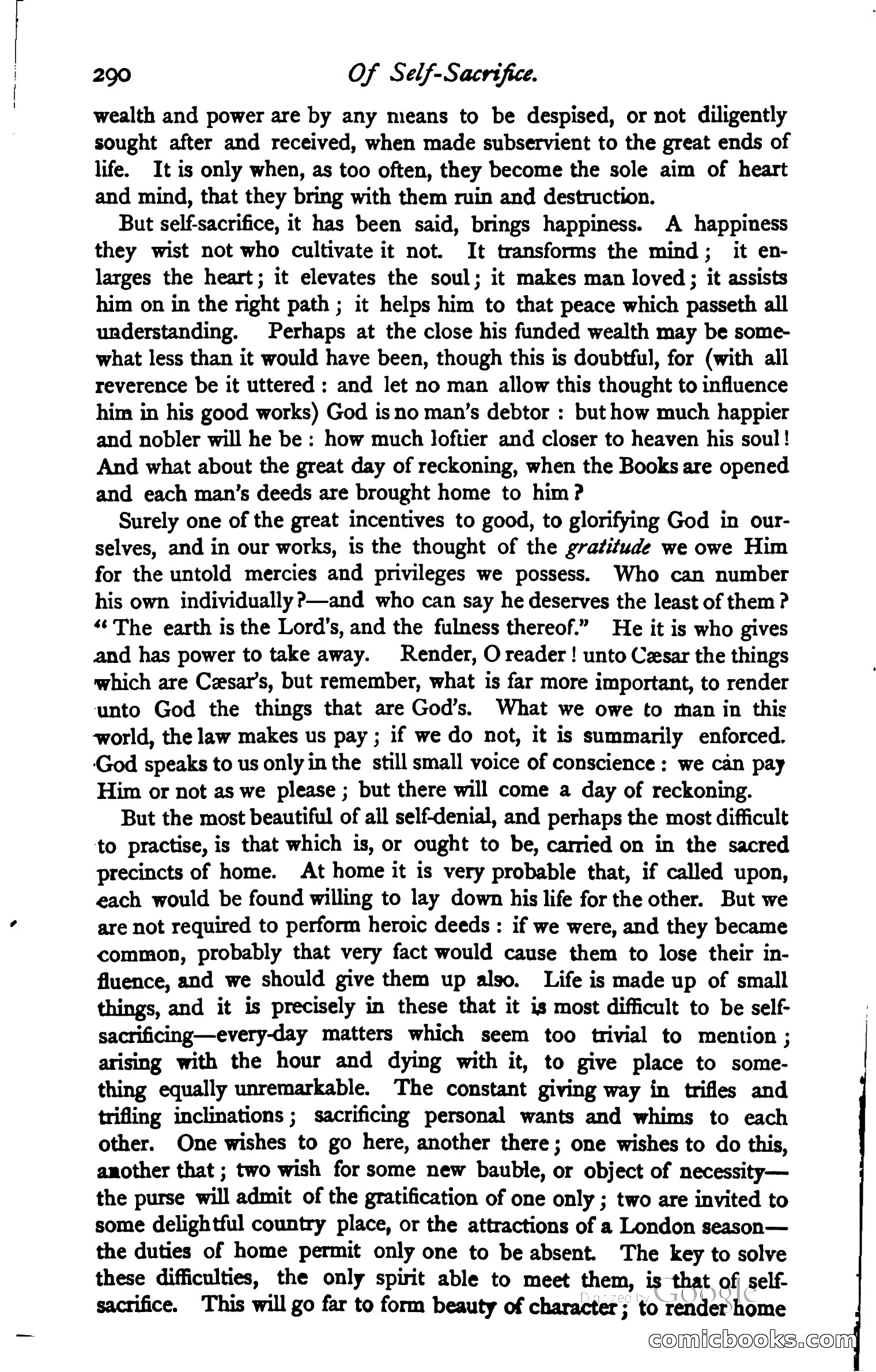
A restored page from Pulp Fiction, 1865. Page through the whole issue in the reader above.
📄 Transcribed text from this page (OCR, searchable)
Machine-transcribed from the original scan — historical spelling and the odd misread are preserved.
290 Of Self-Sacrifice. wealth and power are by any means to be despised, or not diligently sought after and received, when made subservient to the great ends of life. It is only when, as too often, they become the sole aim of heart and mind, that they bring with them ruin and destruction. But self-sacrifice, it has been said, brings happiness. A happiness they wist not who cultivate it not. It transforms the mind; it en- larges the heart; it elevates the soul; it makes man loved; it assists him on in the right path ; it helps him to that peace which passeth all understanding. Perhaps at the close his funded wealth may be some- what less than it would have been, though this is doubtful, for (with all reverence be it uttered : and let no man allow this thought to influence him in his good works) God is no man’s debtor : but how much happier and nobler will he be : how much loftier and closer to heaven his soul! And what about the great day of reckoning, when the Books are opened and each man’s deeds are brought home to him? Surely one of the great incentives to good, to glorifying God in our- selves, and in our works, is the thought of the gratitude we owe Him for the untold mercies and privileges we possess. Who can number his own individually ?—and who can say he deserves the least of them ? “The earth is the Lord’s, and the fulness thereof.” He it is who gives and has power to take away. Render, O reader! unto Cesar the things which are Cesar’s, but remember, what is far more important, to render unto God the things that are God’s. What we owe to man in this world, the law makes us pay ; if we do not, it is summarily enforced. ‘God speaks to us only in the still small voice of conscience : we can pay Him or not as we please ; but there will come a day of reckoning. But the most beautiful of all self-denial, and perhaps the most difficult to practise, is that which is, or ought to be, carried on in the sacred precincts of home. At home it is very probable that, if called upon, each would be found willing to lay down his life for the other. But we are not required to perform heroic deeds : if we were, and they became common, probably that very fact would cause them to lose their in- fluence, and we should give them up also. Life is made up of small things, and it is precisely in these that it is most difficult to be self- sacrificing—every-day matters which seem too trivial to mention ; arising with the hour and dying with it, to give place to some- thing equally unremarkable. The constant giving way in trifles and trifling inclinations ; sacrificing personal wants and whims to each other. One wishes to go here, another there; one wishes to do this, another that ; two wish for some new bauble, or object of necessity— the purse will admit of the gratification of one only ; two are invited to some delightful country place, or the attractions of a London season— the duties of home permit only one to be absent. The key to solve these difficulties, the only spirit able to meet them, is that of self- sacrifice. This will go far to form beauty of character; to renderhome comliclbooks.c@