
Pulp Fiction, 1865 · page 260 of 399
The Argosy — page 260: what you’re looking at
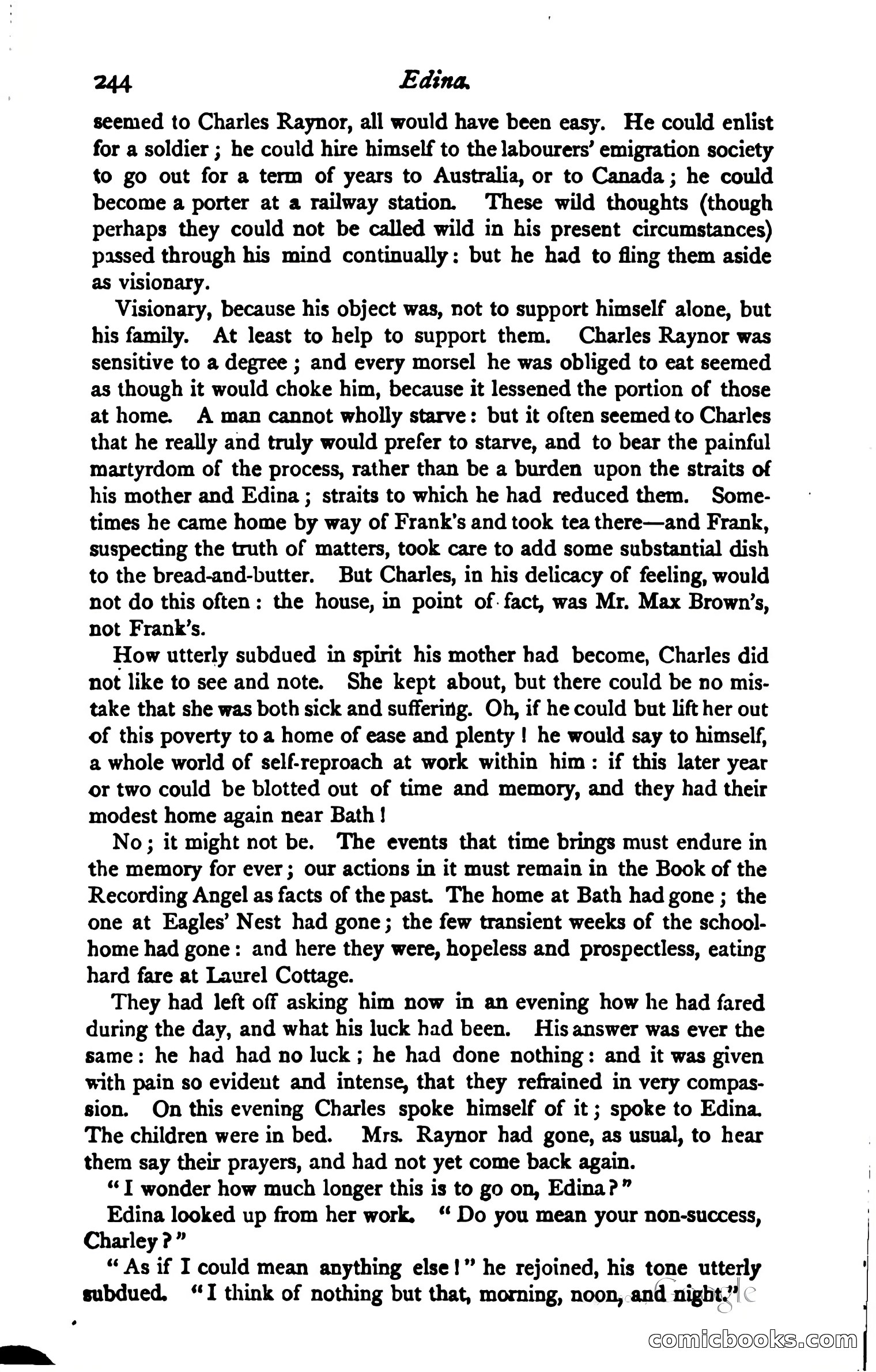
A restored page from Pulp Fiction, 1865. Page through the whole issue in the reader above.
📄 Transcribed text from this page (OCR, searchable)
Machine-transcribed from the original scan — historical spelling and the odd misread are preserved.
244 Edina, seemed to Charles Raynor, all would have been easy. He could enlist for a soldier ; he could hire himself to the labourers’ emigration society to go out for a term of years to Australia, or to Canada ; he could become a porter at a railway station. These wild thoughts (though perhaps they could not be called wild in his present circumstances) passed through his mind continually: but he had to fling them aside as visionary. Visionary, because his object was, not to support himself alone, but his family. At least to help to support them. Charles Raynor was sensitive to a degree ; and every morsel he was obliged to eat seemed as though it would choke him, because it lessened the portion of those at home. A man cannot wholly starve: but it often seemed to Charles that he really and truly would prefer to starve, and to bear the painful martyrdom of the process, rather than be a burden upon the straits of his mother and Edina ; straits to which he had reduced them. Some- times he came home by way of Frank's and took tea there—and Frank, suspecting the truth of matters, took care to add some substantial dish to the bread-and-butter. But Charles, in his delicacy of feeling, would not do this often: the house, in point of. fact, was Mr. Max Brown’s, not Frank’s. How utterly subdued in spirit his mother had become, Charles did not like to see and note. She kept about, but there could be no mis- take that she was both sick and suffering. Oh, if he could but lift her out of this poverty toa home of ease and plenty ! he would say to himself, a whole world of self-reproach at work within him: if this later year or two could be blotted out of time and memory, and they had their modest home again near Bath ! No; it might not be. The events that time brings must endure in the memory for ever; our actions in it must remain in the Book of the Recording Angel as facts of the past. The home at Bath had gone ; the one at Eagles’ Nest had gone; the few transient weeks of the school- home had gone: and here they were, hopeless and prospectless, eating hard fare at Laurel Cottage. They had left off asking him now in an evening how he had fared during the day, and what his luck had been. His answer was ever the same: he had had no luck; he had done nothing: and it was given with pain so evident and intense, that they refrained in very compas- sion. On this evening Charles spoke himself of it ; spoke to Edina. The children were in bed. Mrs. Raynor had gone, as usual, to hear them say their prayers, and had not yet come back again. “TI wonder how much longer this is to go on, Edina?” Edina looked up from her work. ‘ Do you mean your non-success, Charley ?” “ As if I could mean anything else!” he rejoined, his tone utterly subdued. “TI think of nothing but that, morning, noon, and night.” © comicbooks.com