
Pulp Fiction, 1865 · page 117 of 399
The Argosy — page 117: what you’re looking at
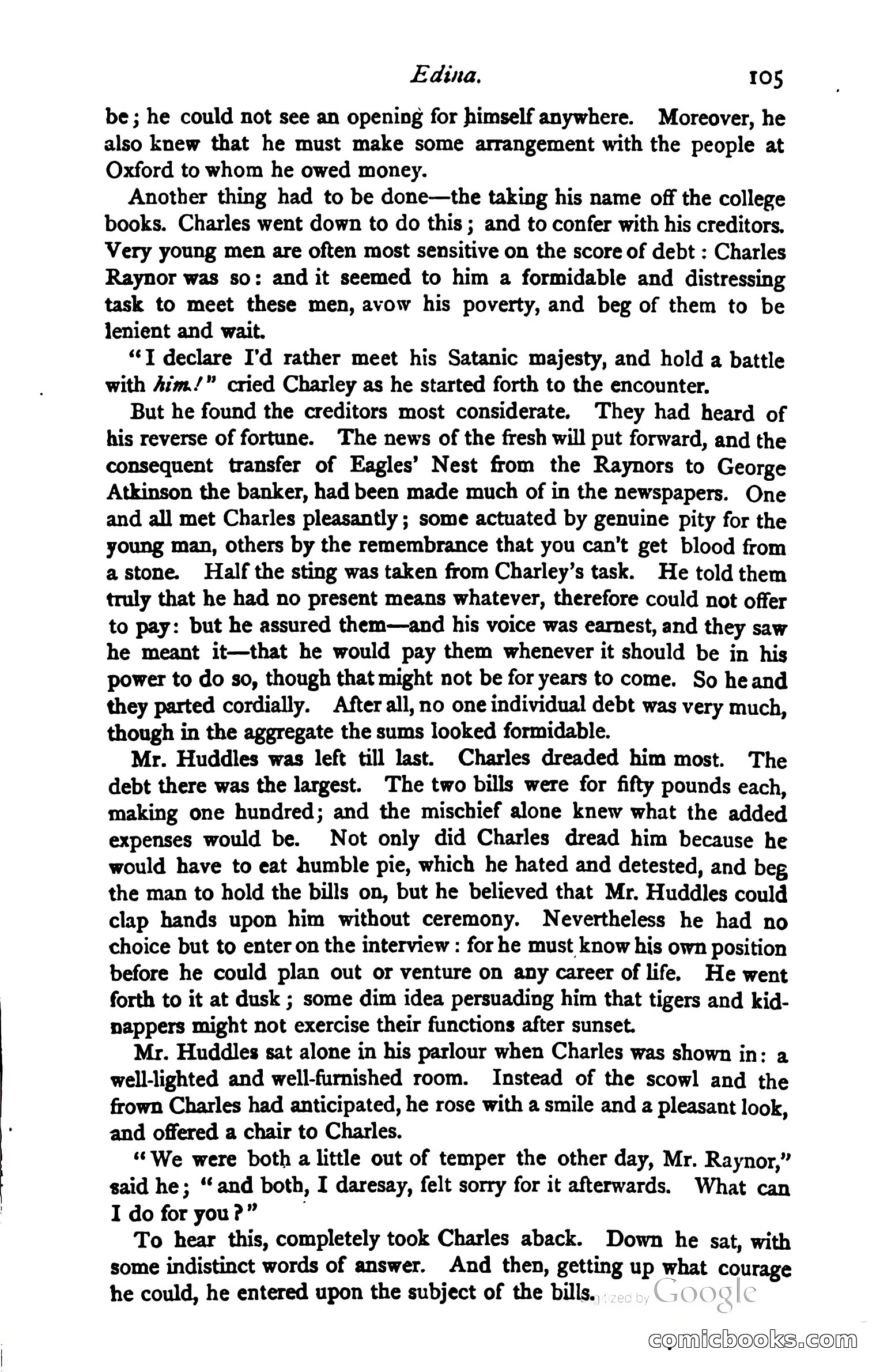
A restored page from Pulp Fiction, 1865. Page through the whole issue in the reader above.
📄 Transcribed text from this page (OCR, searchable)
Machine-transcribed from the original scan — historical spelling and the odd misread are preserved.
Edina. 105 be; he could not see an opening for himself anywhere. Moreover, he also knew that he must make some arrangement with the people at Oxford to whom he owed money. Another thing had to be done—the taking his name off the college books. Charles went down to do this ; and to confer with his creditors. Very young men are often most sensitive on the score of debt : Charles Raynor was so: and it seemed to him a formidable and distressing task to meet these men, avow his poverty, and beg of them to be lenient and wait. “YT declare I'd rather meet his Satanic majesty, and hold a battle with Aim/"” cried Charley as he started forth to the encounter. But he found the creditors most considerate. They had heard of his reverse of fortune. The news of the fresh will put forward, and the consequent transfer of Eagles’ Nest from the Raynors to George Atkinson the banker, had been made much of in the newspapers. One and all met Charles pleasantly ; some actuated by genuine pity for the young man, others by the remembrance that you can’t get blood from astone. Half the sting was taken from Charley’s task. He told them truly that he had no present means whatever, therefore could not offer to pay: but he assured them—and his voice was earnest, and they saw he meant it—that he would pay them whenever it should be in his power to do so, though that might not be for years to come. So heand they parted cordially. After all, no one individual debt was very much, though in the aggregate the sums looked formidable. Mr. Huddles was left till last. Charles dreaded him most. The debt there was the largest. The two bills were for fifty pounds each, making one hundred; and the mischief alone knew what the added expenses would be. Not only did Charles dread him because he would have to eat humble pie, which he hated and detested, and beg the man to hold the bills on, but he believed that Mr. Huddles could clap hands upon him without ceremony. Nevertheless he had no choice but to enter on the interview : for he must know his own position before he could plan out or venture on any career of life. He went forth to it at dusk ; some dim idea persuading him that tigers and kid- nappers might not exercise their functions after sunset. Mr. Huddles sat alone in his parlour when Charles was shown in: a well-lighted and well-furnished room. Instead of the scowl and the frown Charles had anticipated, he rose with a smile and a pleasant look, and offered a chair to Charles. “We were both a little out of temper the other day, Mr. Raynor,” said he; “and both, I daresay, felt sorry for it afterwards. What can I do for you?” To hear this, completely took Charles aback. Down he sat, with some indistinct words of answer. And then, getting up what courage he could, he entered upon the subject of the bills... comilcbootes.coun