
Pulp Fiction, 1904 · page 47 of 122
The Argosy, June 1904 — page 47: what you’re looking at
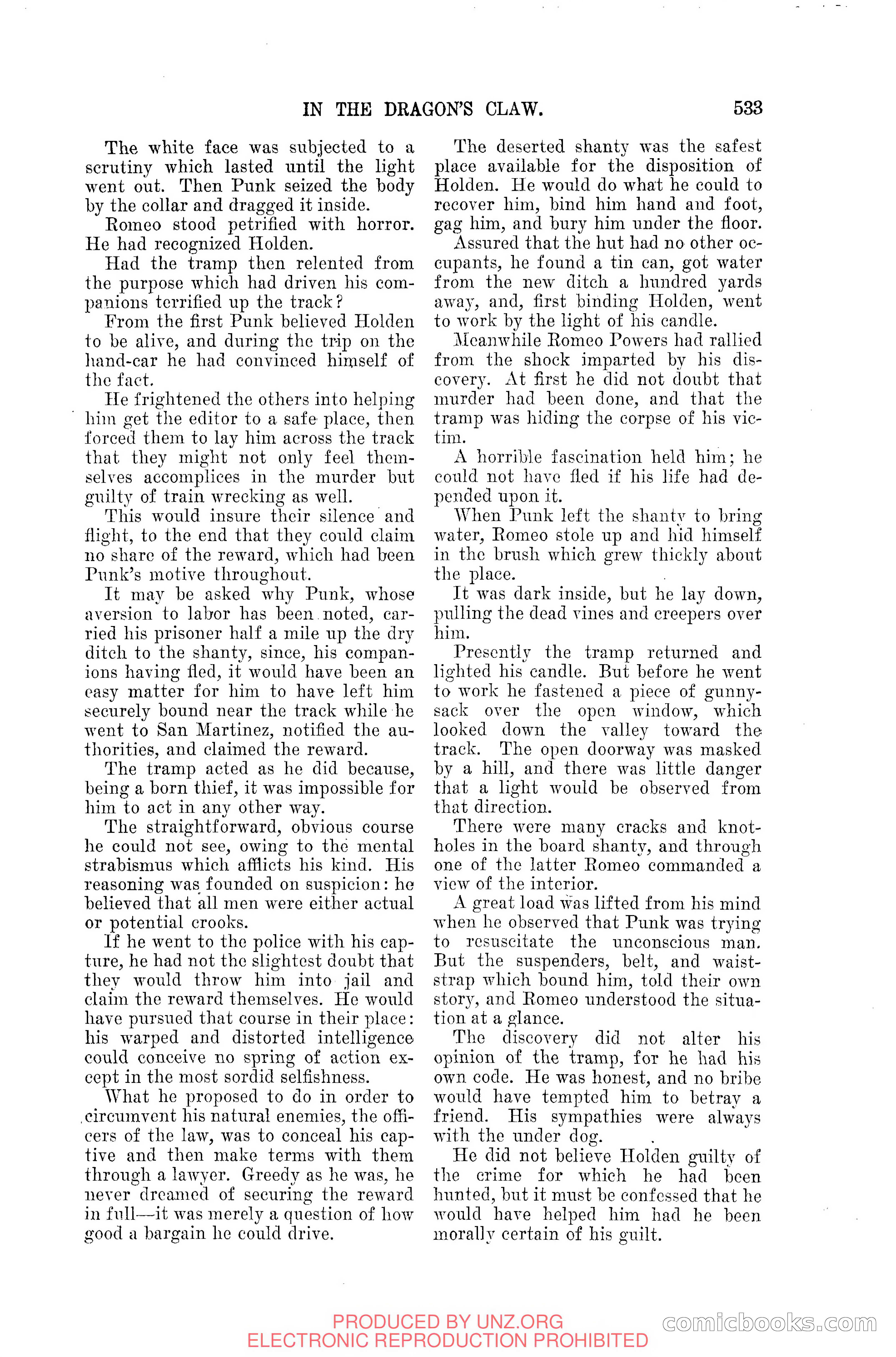
A restored page from Pulp Fiction, 1904. Page through the whole issue in the reader above.
📄 Transcribed text from this page (OCR, searchable)
Machine-transcribed from the original scan — historical spelling and the odd misread are preserved.
IN THE DRAGON'S CLAW. 533 The white face was subjected to a scrutiny which lasted until the light went out. Then Punk seized the body by the collar and dragged it inside. Romeo stood petrified with horror. He had recognized Holden. Had the tramp then relented from the purpose which had driven his com- panions terrified up the track? From the first Punk believed Holden to be alive, and during the trip on the hand-car he had convinced himself of the fact. He frightened the others into helping ~ him get the editor to a safe place, then forced them to lay him across the track that they might not only feel them- selves accomplices in the murder but euilty of train wrecking as well. This would insure their silence and flight, to the end that they could claim no share of the reward, which had been Punk’s motive throughout. It may be asked why Punk, whose aversion to labor has been noted, car- ried his prisoner half a mile up the dry ditch to the shanty, since, his compan- ions having fled, 1t would have been an easy matter for him to have left him securely bound near the track while he went to San Martinez, notified the au- thorities, and claimed the reward. The tramp acted as he did because, being a born thief, it was impossible for him to act in any other way. The straightforward, obvious course he could not see, owing to the mental strabismus which afflicts his kind. His reasoning was founded on suspicion: he believed that all men were either actual or potential crooks. If he went to the police with his cap- ture, he had not the slightest doubt that they would throw him into jail and claim the reward themselves. He would have pursued that course in their place: his warped and distorted intelligence could conceive no spring of action ex- cept in the most sordid selfishness. What he proposed to do in order to circumvent his natural enemies, the offi- cers of the law, was to conceal his cap- tive and then make terms with them through a lawyer. Greedy as he was, he never dreamed of securing the reward in full—it was merely a question of how good a bargain he could drive. The deserted shanty was the safest place available for the disposition of Holden. He would do what he could to recover him, bind him hand and foot, gag him, and bury him under the floor. Assured that the hut had no other oc- cupants, he found a tin can, got water from the new ditch a hundred yards away, and, first binding Holden, went to work by the light of his candle. Meanwhile Romeo Powers had rallied from the shock imparted by his dis- covery. At first he did not doubt that murder had been done, and that the tramp was hiding the corpse of his vic- tim. | A horrible fascination held him; he could not have fled if his life had de- pended upon it. When Punk left the shanty to bring water, Romeo stole up and hid himself in the brush which grew thickly about the place. It was dark inside, but he lay down, pulling the dead vines and creepers over him. Presently the tramp returned and lighted his candle. But before he went to work he fastened a piece of gunny- sack over the open window, which looked down the valley toward the track. The open doorway was masked by a hill, and there was little danger that a light would be observed from that direction. There were many cracks and knot- holes in the board shanty, and through one of the latter Romeo commanded a view of the interior. A great load was lifted from his mind when he observed that Punk was trying to resuscitate the unconscious man. But the suspenders, belt, and waist- strap which bound him, told their own story, and Romeo understood the situa- tion at a glance. The discovery did not alter his opinion of the tramp, for he had his own code. He was honest, and no bribe would have tempted him to betray a friend. His sympathies were always with the under dog. He did not believe Holden guilty of the crime for which he had been hunted, but it must be confessed that he would have helped him had he been morally certain of his guilt. PRODUCED BY UNZ.ORG GOMGooOo ELECTRONIC REPRODUCTION PROHIBITED CO